Globe Rocket · Ring Cake Molds & Flan
Ring Cake Molds & Flan: The Chocoflan Guide
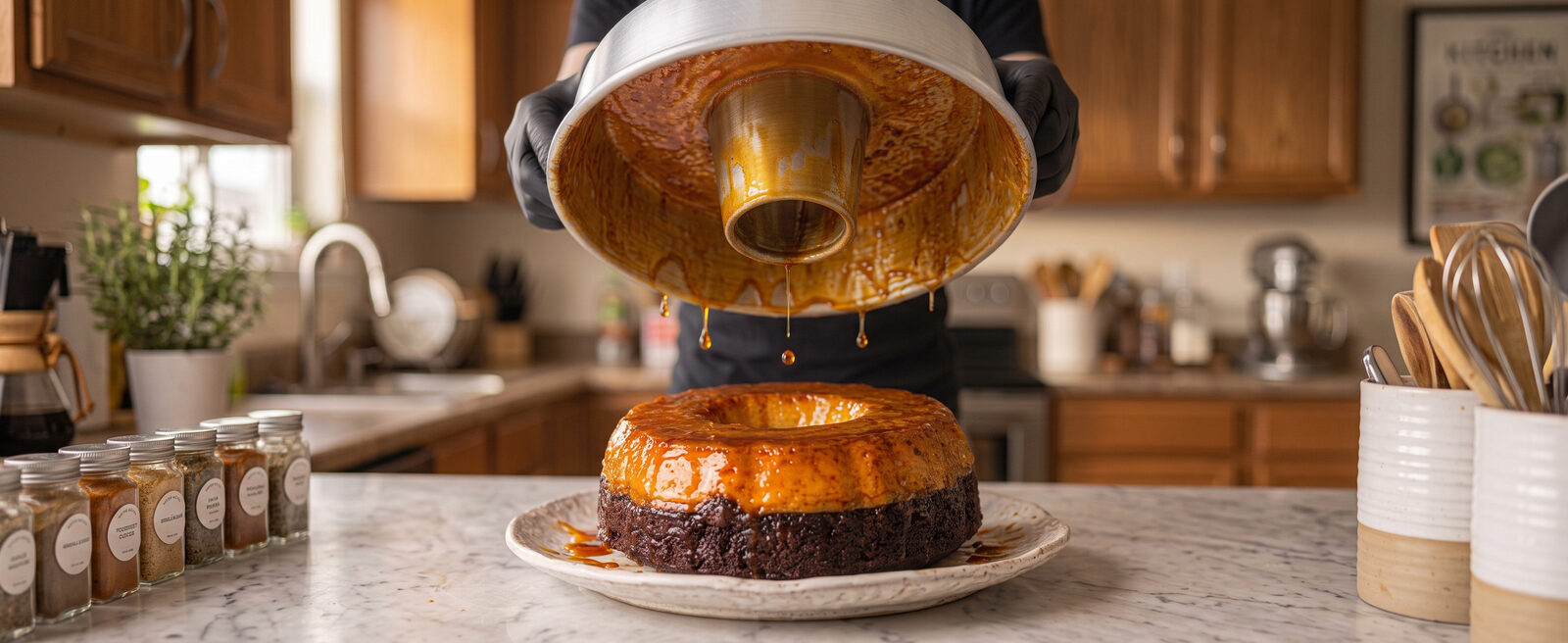
Chocoflan, also called the impossible cake, is where ring cake molds and flan genuinely overlap. It's a dessert made by pouring chocolate cake batter and flan custard into the same pan, baking them together in a water bath, and inverting the finished result — and it's the clearest example of why a ring cake mold and a traditional flan mold are related tools, not the same tool.
The order you pour things into the pan isn't the order they come out in. Caramel goes in first, then chocolate cake batter, then flan custard on top. But flan custard is denser than cake batter, so as the oven's heat sets both layers, the custard sinks and the batter rises — the two effectively swap positions inside the pan while they bake. By the time it's done, the cake has become the top layer and the custard has settled underneath it, which is the opposite of how they went in. That reversal, more than anything about the flavor, is where the "impossible" name comes from.
↓ poured in this order, before baking — after baking and inverting, the caramel and flan end up on top ↓
Chocoflan is traditionally baked in a tube-style pan, and a ring cake mold is exactly that: a pan built around a center tube, deep enough to hold two stacked layers, and baked using the same water-bath (Baño María) method a traditional flan mold relies on. The open center tube is one reason a ring cake mold works well for chocoflan. It gives the dessert the tube-style shape associated with this type of baking, while the water bath provides the gentle baking environment used for the flan component.
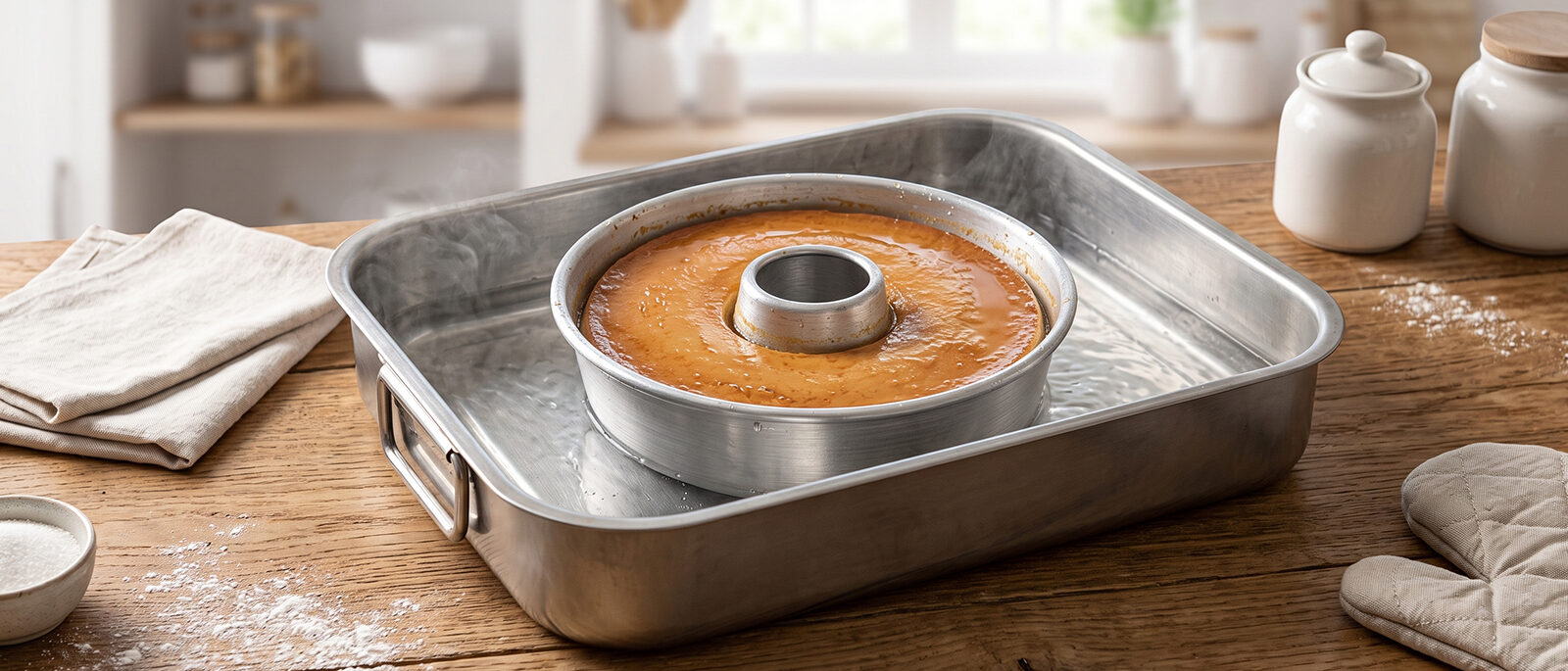
Traditional Mexican Kitchen's Flan Molds hub focuses specifically on the lidded flanera and single-layer flan recipes. This guide exists because chocoflan sits between that world and the ring cake mold's world — it uses flan's core technique (a custard, baked gently in a water bath) but in the pan shape built for tube-style baking. A lidded flan mold can work for chocoflan if it's deep enough for both layers, but the open center tube of a ring cake mold is a natural choice for this style of chocoflan.
Get the full recipe, or explore the rest of the Globe Rocket ring cake pan lineup.
Get the Recipe Back to Ring Cake Molds Hub Explore Traditional Mexican Cooking Tools