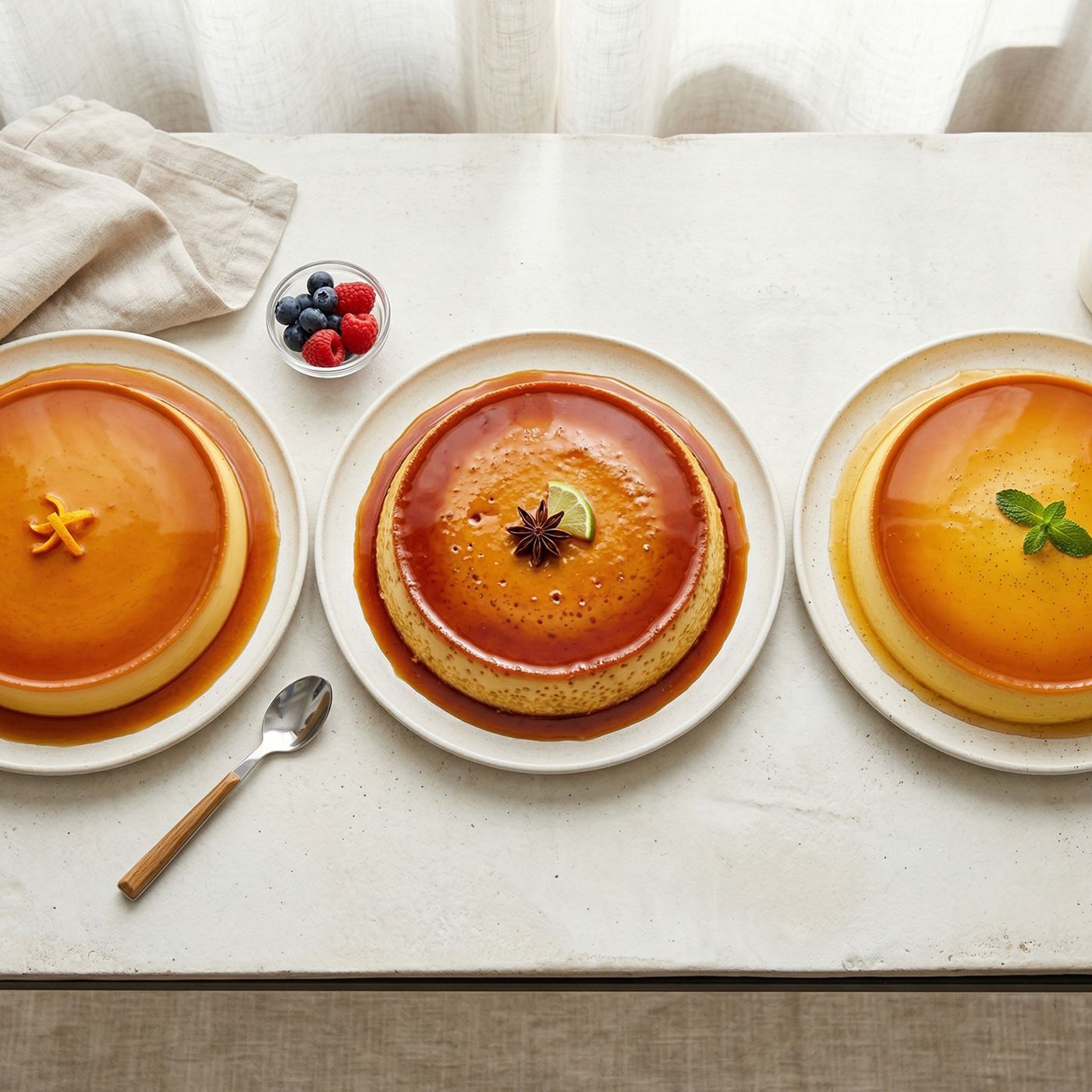
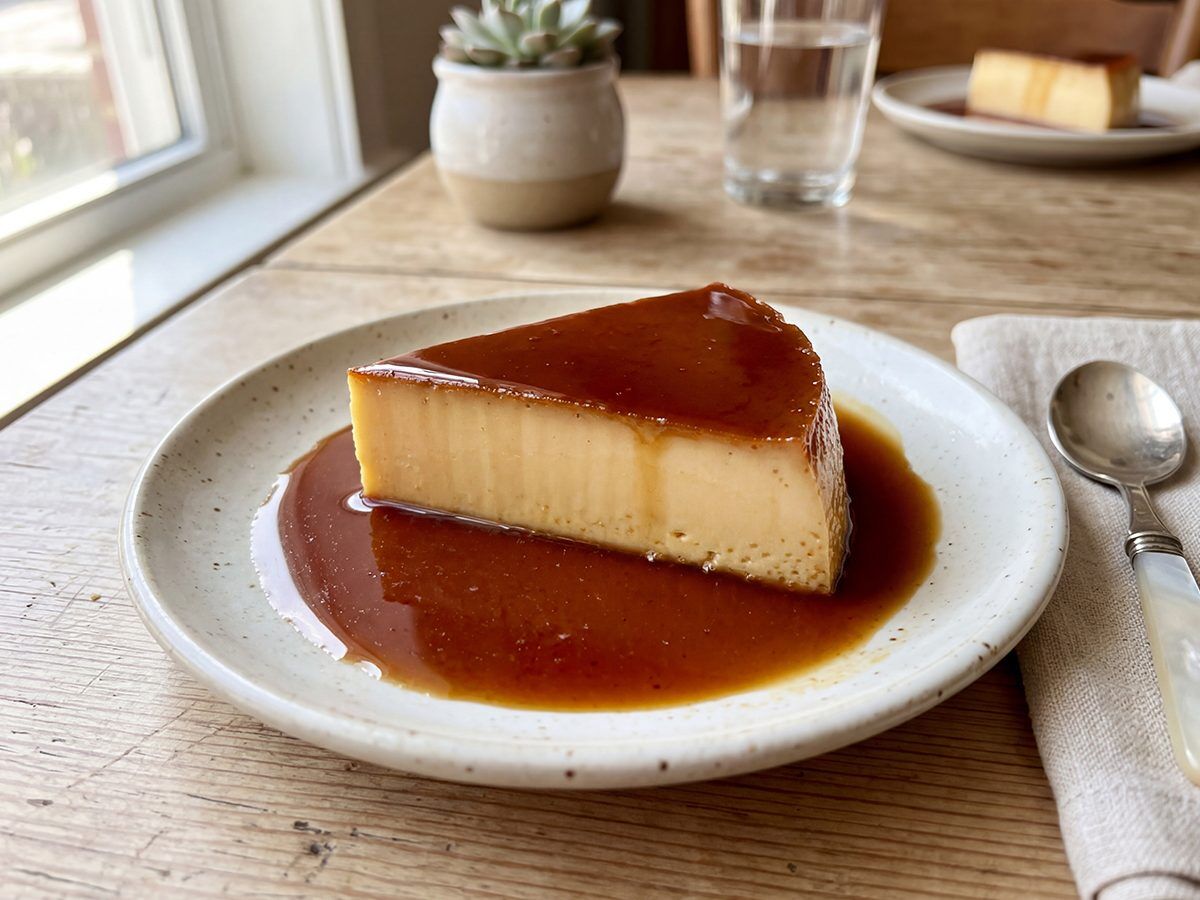
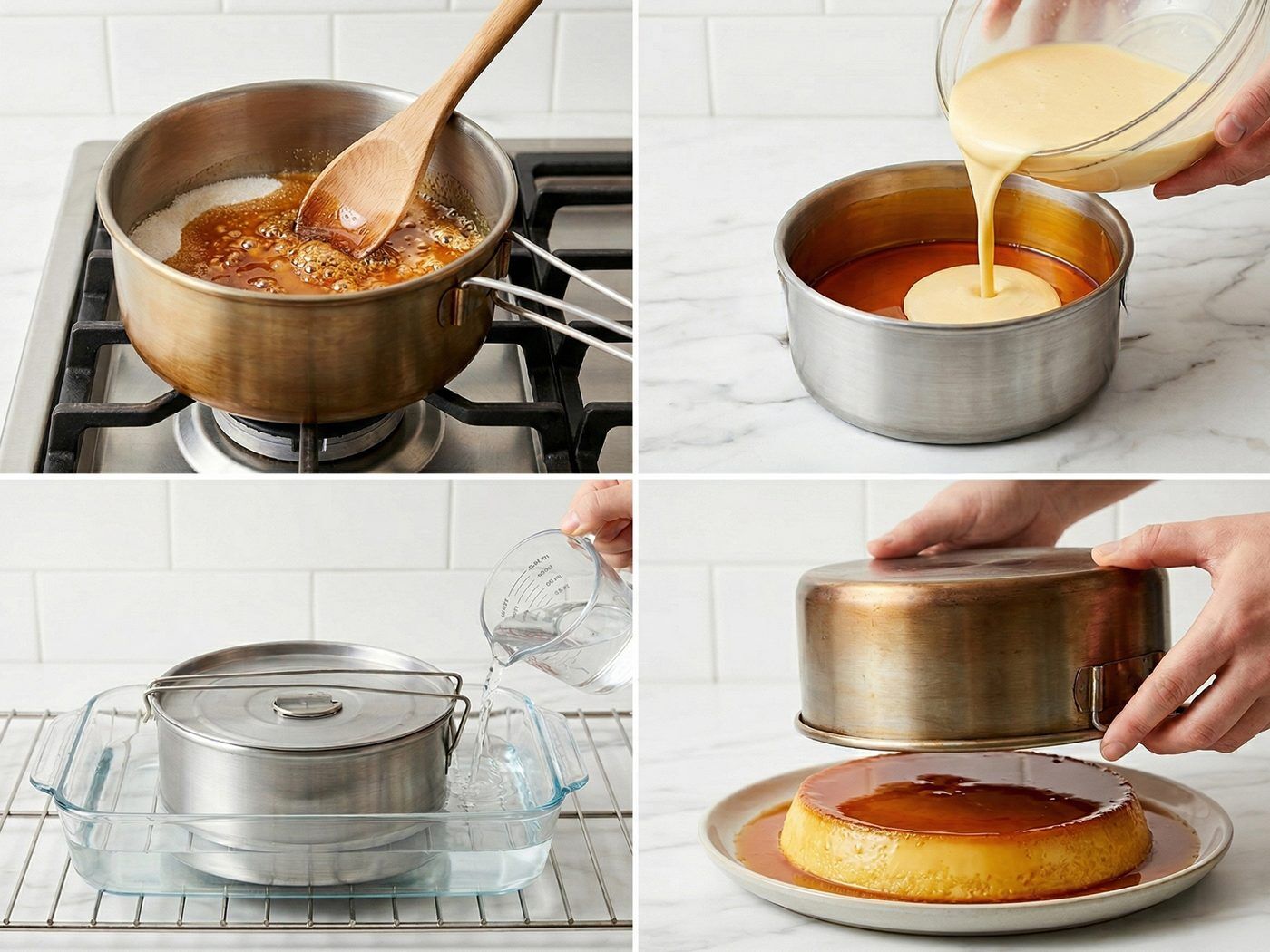
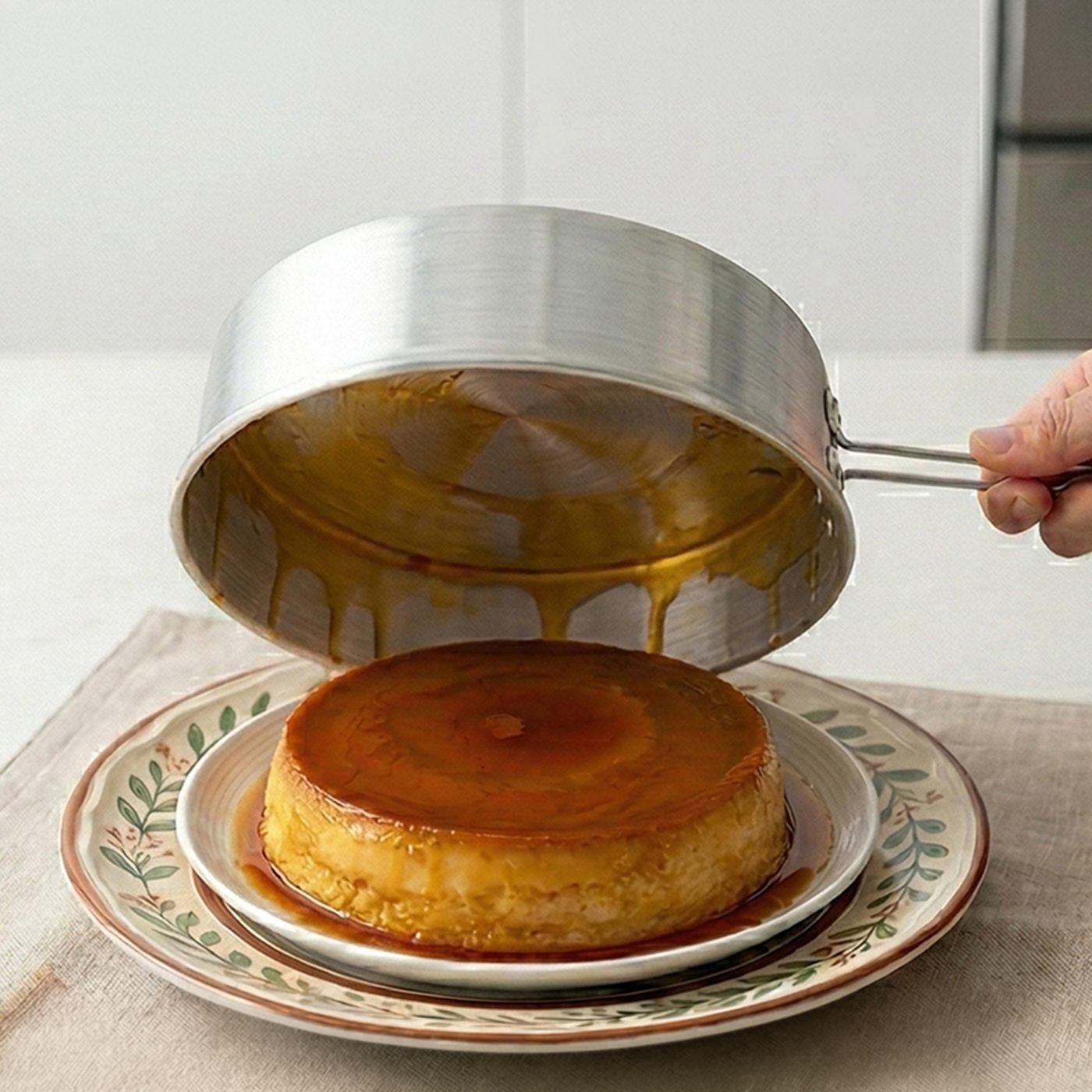
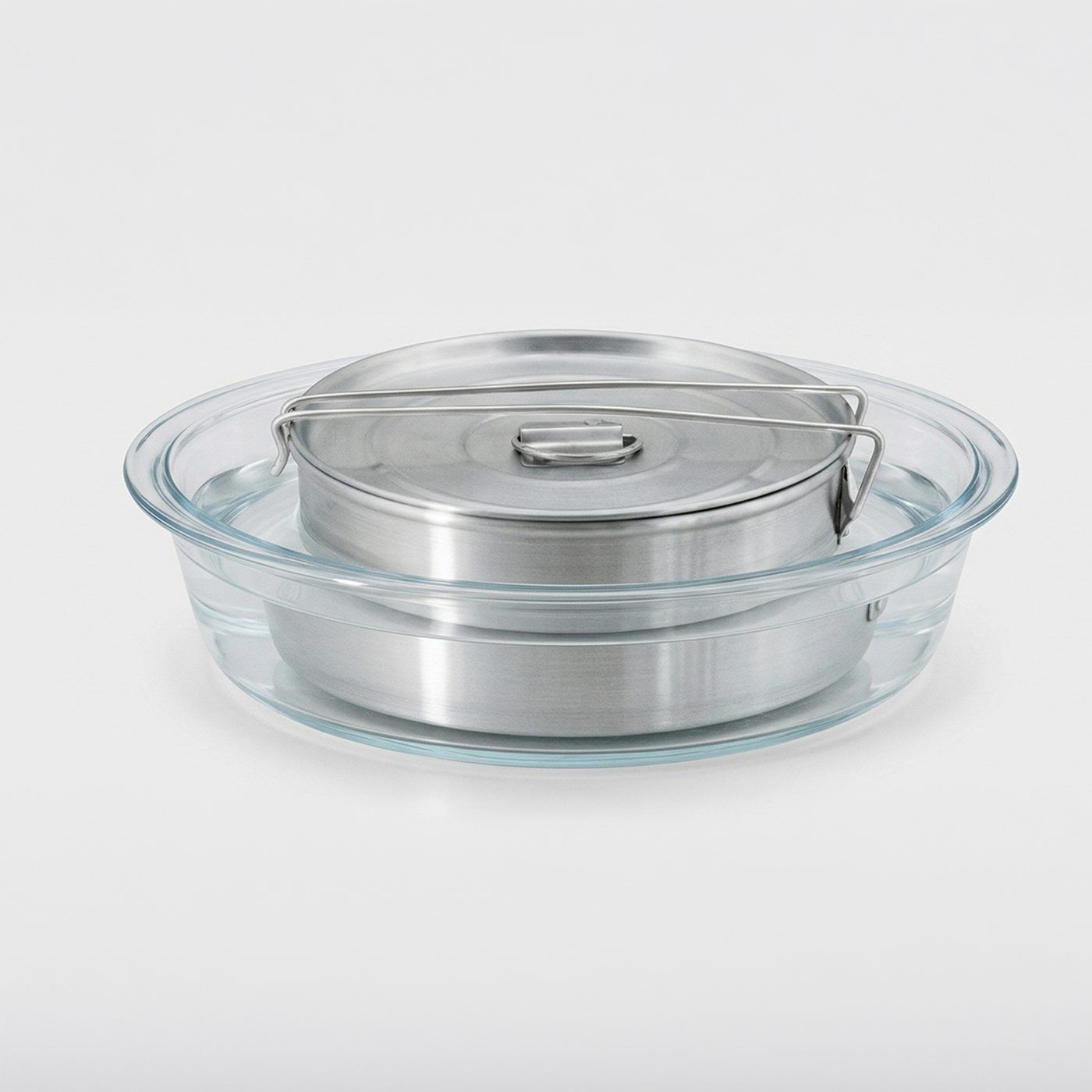
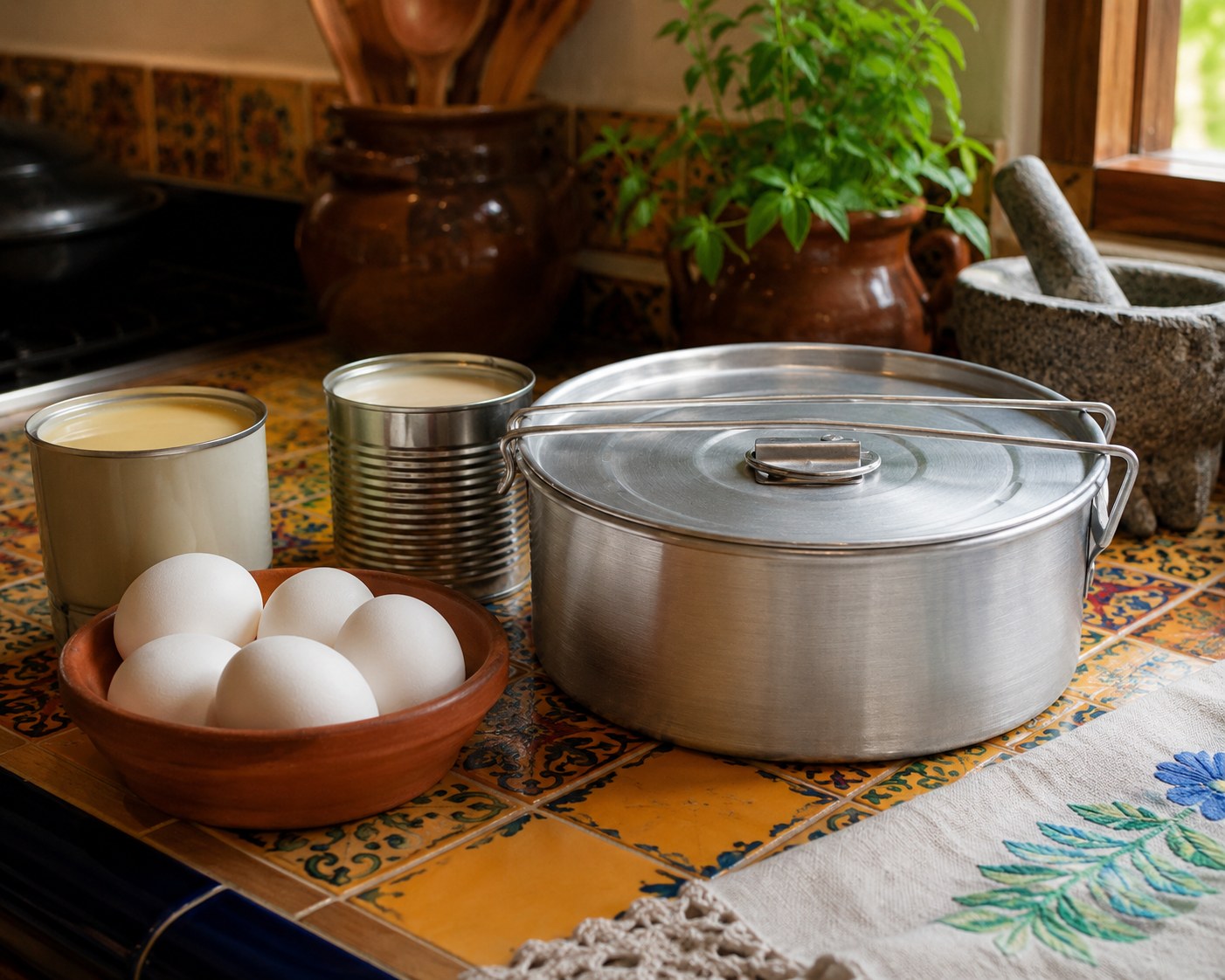
Flan is a baked egg custard finished with a layer of soft caramel sauce — which is why it's sometimes called caramel custard — and it's one of the most iconic desserts across Mexico, Spain, and Latin America. Made well, it's silky from edge to edge, with no cracks or curdling, and a pool of caramel that spreads evenly once the mold is turned out onto a plate. Getting there depends less on the recipe than most people expect, and more on technique: caramelizing sugar directly over heat, then baking the custard gently inside a Baño María water bath so it sets slowly instead of scrambling. The vessel that makes this possible is the flanera, a lidded round mold traditionally made of aluminum for fast, even heat. This hub walks through what flan actually is, why the water bath method matters, how to choose a flan mold sized to your household, and where to find real, tested recipes built around it.
Shop the Globe Rocket StoreFlan is one of the most beloved desserts in Mexico and Latin America: a silky egg custard baked low and slow until it sets, then turned out onto a plate so a pool of deep amber caramel spills over the top. It shows up at birthdays, holidays, and Sunday dinners alike, and nearly every family has an opinion about whose recipe is the right one. What almost every version has in common, though, is the tool it's made in.
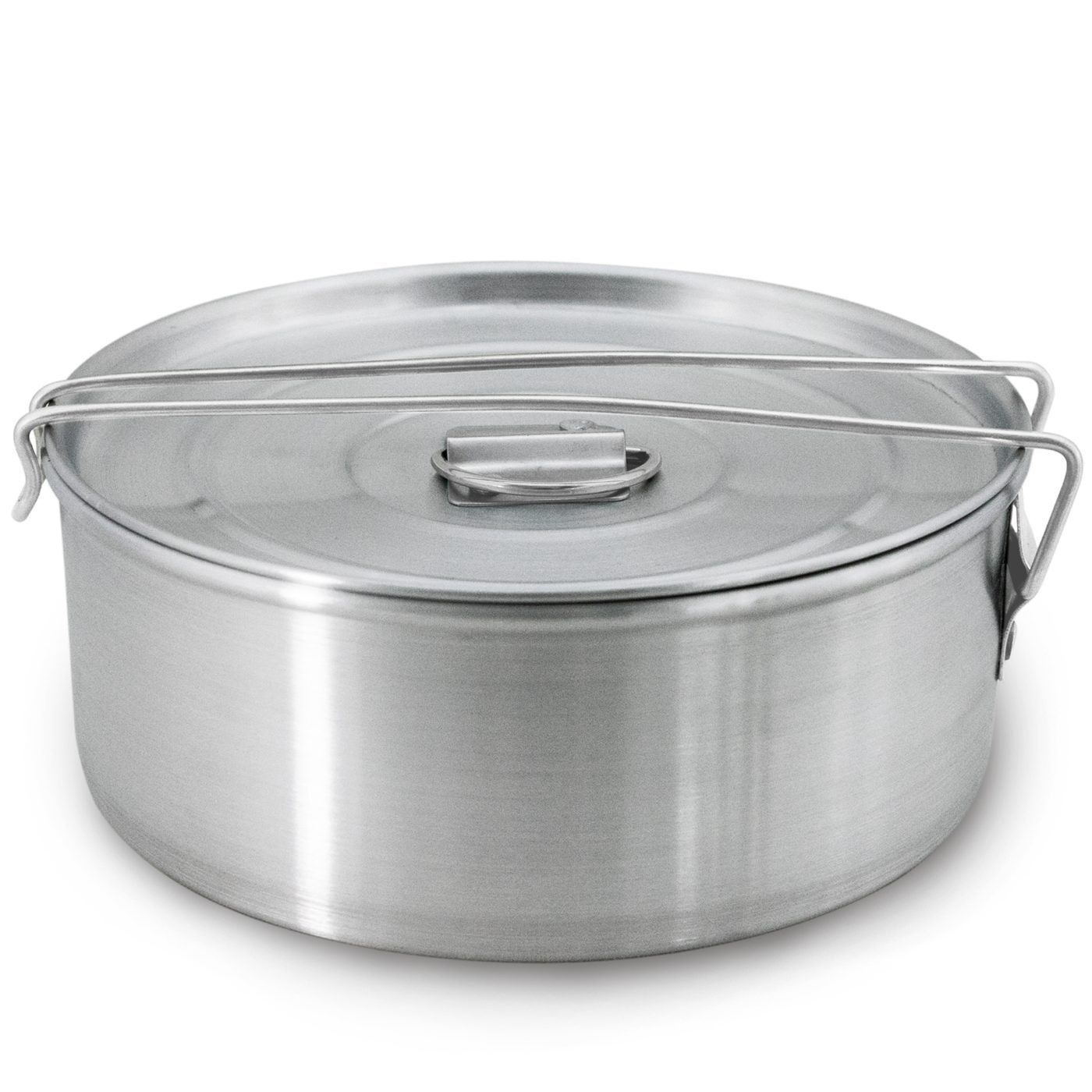
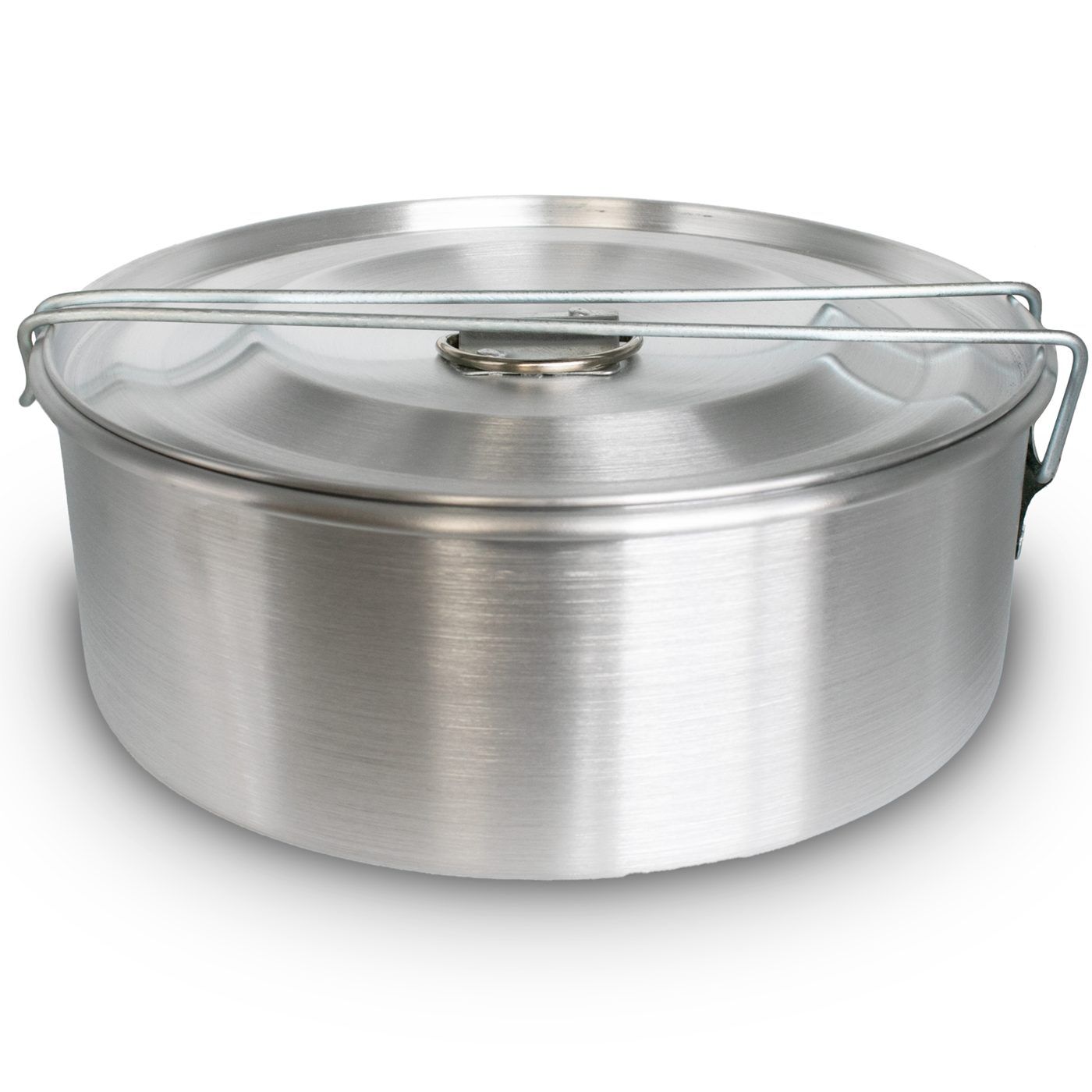
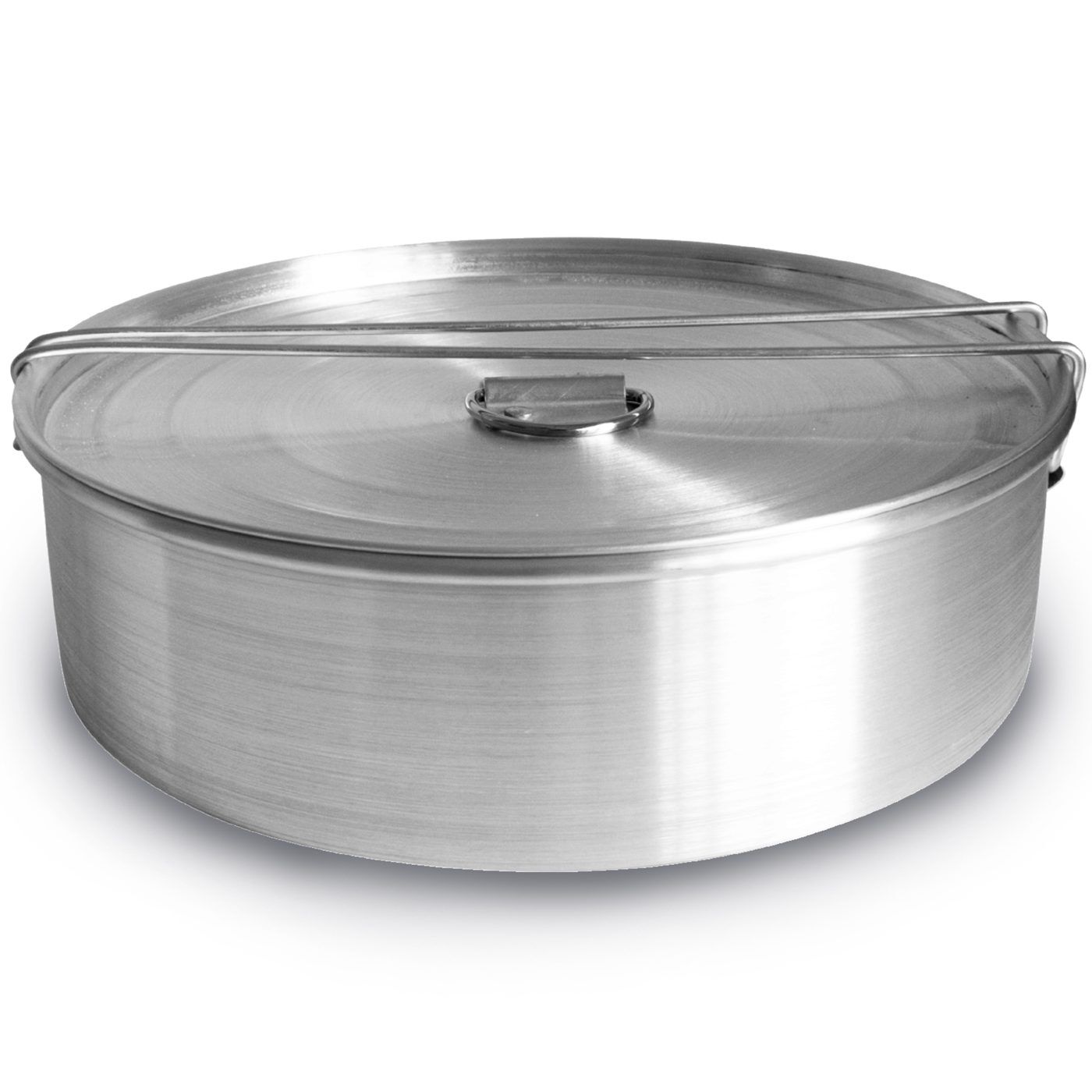
That tool is the flan mold — called a flanera in Spanish — a round, lidded pan used to caramelize sugar directly on the stovetop, hold the custard, and then bake both together inside a Baño María, or water bath. The water bath is what gives traditional flan its signature smooth, crack-free texture, and the mold is what makes the whole process possible in one piece of cookware, from stovetop to oven to serving plate.
Not all flan molds are built the same, and the material matters more than it might seem. An aluminum flan mold heats up quickly and spreads that heat evenly across the pan — exactly what you want when you're caramelizing sugar over direct heat and then need the custard to set gently and uniformly in the water bath. Stainless steel is more resistant to staining, but it heats far less evenly and holds heat longer after it's off the burner, which makes it easier to scorch a caramel or overcook the edges of a custard while the center is still loose. Aluminum has also simply been the traditional material for generations — the classic flanera passed down in Mexican and Latin American kitchens has almost always been aluminum, not stainless steel, which is part of why it's considered the authentic choice for making flan the way it's always been made.
Globe Rocket builds its flan molds around that same tradition: 75% aluminum for fast, even heat, reinforced with galvanized steel, and made in three sizes so every household — from a small kitchen to a multigenerational gathering — can carry the tradition forward with the mold that actually fits their table.
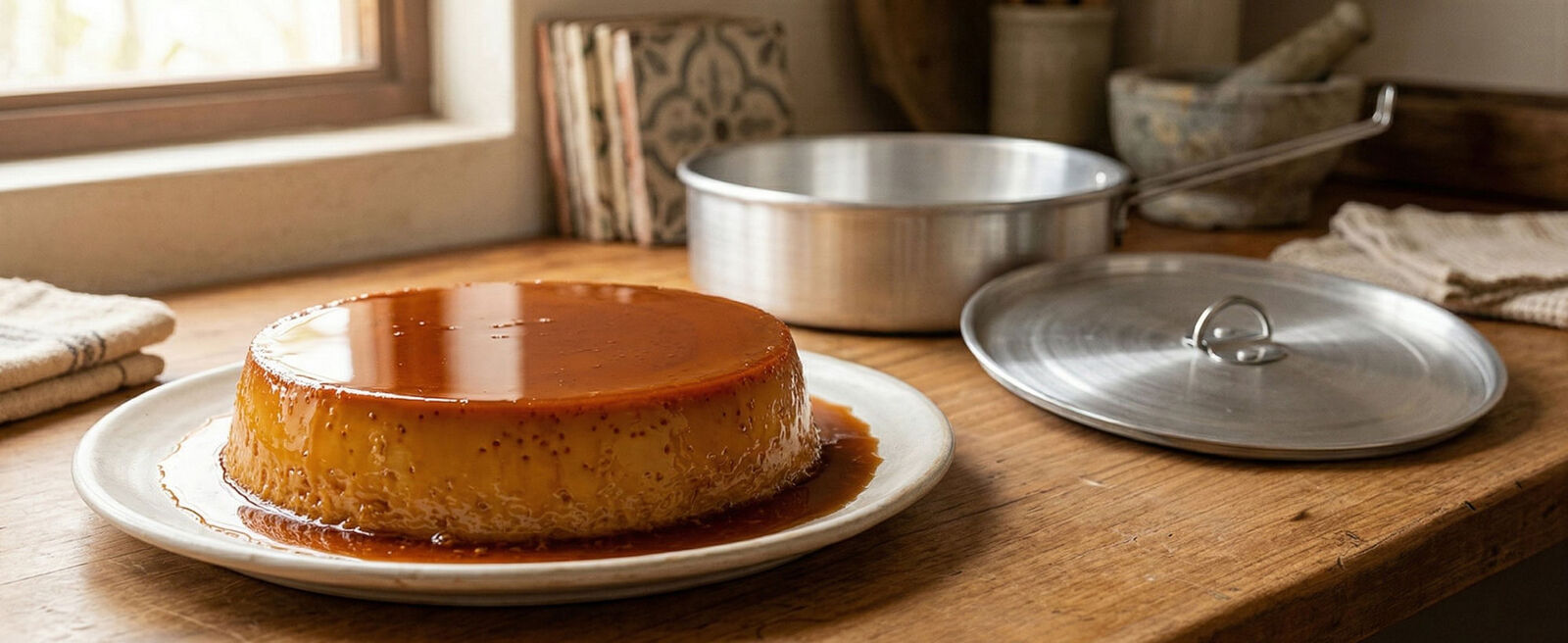
All three Globe Rocket flan molds share the same 75% aluminum / 25% galvanized steel construction and fitted lid for Baño María baking. The difference is capacity — and that's really a question of how many people you're feeding.
$28.99
Buy Now on Amazon
$32.99
Buy Now on Amazon
$37.99
Buy Now on AmazonNote: The Medium is the traditional size most commonly used in Mexican homes, sized for an everyday family dessert rather than a large centerpiece. If you're planning to serve more than 6–8 people, or if you like generous slices, sizing up to the Large is usually the better call.
Summarized from verified Amazon customer reviews, not copied word for word.
Buyers consistently describe the mold coming out cleanly and cooking evenly, and several mention appreciating that a recipe comes included. Feedback on the aluminum's build quality is mixed, and opinions on value for the price are split — a normal spread for a mid-priced specialty pan. Feedback on sizing points the same direction as Amazon's own return data: the Medium runs smaller than some buyers expect, so check the sizing guide above before you order.
Ratings and review counts reflect each product's Amazon listing at time of publishing and are subject to change. See each listing for current details.
This hub connects to the full Globe Rocket flan library — the technique guides, recipes, and equipment breakdowns that make up our complete flan knowledge base.
What flan actually is, where it comes from, and the science behind why it sets the way it does.
Read the guide →
Globe Rocket's signature Easy Bake Creamy Caramel Flan, Classic Mexican Flan, Venezuelan Quesillo, and more — with tips and mold sizing help.
See the recipes →
A complete breakdown of the Globe Rocket flan mold — materials, sizing, care instructions, and real customer feedback.
Read the guide →
Step-by-step water bath technique: how deep to fill the water, oven temperature, and how to tell when your flan is done.
Read the guide →Flan is a baked custard dessert topped with a rich caramel sauce that forms in the bottom of the mold while baking and becomes the topping when inverted onto a serving plate. It's popular in Mexico, Spain, and throughout Latin America, and is known for its smooth, creamy texture.
Flan originated in Europe, particularly Spain, but became deeply rooted in Mexican and Latin American cuisine. Mexican flan often uses sweetened condensed milk and evaporated milk for a richer texture.
Traditional flan uses eggs, sweetened condensed milk, evaporated milk or whole milk, sugar for caramel, and vanilla extract. Variations may include cream cheese, cinnamon, citrus, coconut, or coffee.
A Baño María (water bath) bakes the flan mold inside a larger pan of hot water, providing gentle, even heat that prevents curdling and creates a silky texture.
Without a water bath, flan often develops cracks, bubbles, graininess, or uneven cooking because of direct oven heat.
The edges should be set while the center still jiggles slightly. The custard will continue to set as it cools and chills.
Cracks are usually caused by excessive heat, overbaking, or skipping the water bath.
It usually needs more baking time or more chilling time. Refrigerate for at least four hours, preferably overnight.
The caramel naturally hardens before baking and melts again during baking to form the finished caramel sauce.
Chill for at least four hours, although overnight produces the best texture and makes unmolding easier.
Yes. Flan is an ideal make-ahead dessert because its flavor and texture improve after chilling overnight.
They are essentially the same dessert, but crème caramel is the French name while flan is commonly used in Spain and Latin America. Mexican flan is often richer due to condensed and evaporated milk.
Mexican flan is creamy, leche flan is richer because it uses more egg yolks, and Venezuelan quesillo often has a lighter texture with tiny air bubbles.
Traditional flan is baked in an aluminum flanera with a fitted lid, which distributes heat evenly for caramelizing sugar and baking in a water bath.
A medium-sized aluminum flan mold is the most versatile choice for beginners and is ideal for typical family-sized desserts.
Traditional Mexican Kitchen was built to help home cooks make real Mexican and Latin American food the way it has traditionally been made — not shortcuts or modern substitutions, but the techniques, ratios, and tools generations of home cooks have relied on. Flan is one of the clearest examples: a dessert that looks simple on the surface but depends entirely on getting a few traditional details right, from the flanera to the water bath that gives it a smooth, crack-free set.
Our goal is to document those details clearly, so anyone can follow them at home — however their family recipe was passed down, or even if they're starting from scratch. That means researching techniques carefully, explaining the reasoning behind them, and helping home cooks understand not just what to do, but why it works, for flan and for the wider world of Mexican and Latin American desserts we're continuing to cover. If a question comes up along the way, our FAQ below is a good place to start.
Every guide and recipe on this site is researched before publication, cross-checking traditional methods and ingredient ratios — like the balance of condensed and evaporated milk in a custard — rather than relying on a single source or a single test. When we describe a technique as traditional, it's because it reflects how flan and similar dishes have actually been prepared across Mexican and Latin American kitchens, not just what happened to work once in a test kitchen. Guides are revisited periodically to correct inaccuracies, refine sizing and measurement details, and improve clarity based on reader questions.
The goal throughout is practical accuracy: information a home cook can rely on and put to use right away, rather than content written mainly to rank well in search.
Five in-depth guides, each built around one specific piece of the flan puzzle. Explore whichever one matches what you're trying to figure out right now.
The core techniques and full recipe behind a flan that turns out silky every time.
Learn MoreWhy the water-bath method is what actually keeps flan smooth, crack-free, and evenly set.
Learn MoreWhat a traditional flanera does differently than a cake pan or glass dish — and why it matters.
Learn MoreThe complete family recipe, plus a full step-by-step visual guide for every stage.
Learn MoreA practical guide to matching Medium, Large, or X-Large to your household and how often you host.
Learn MorePick the flan mold that fits your table, then follow the Baño María method for the smooth, creamy texture flan is known for. One flanera, generations of tradition — now it's your turn.