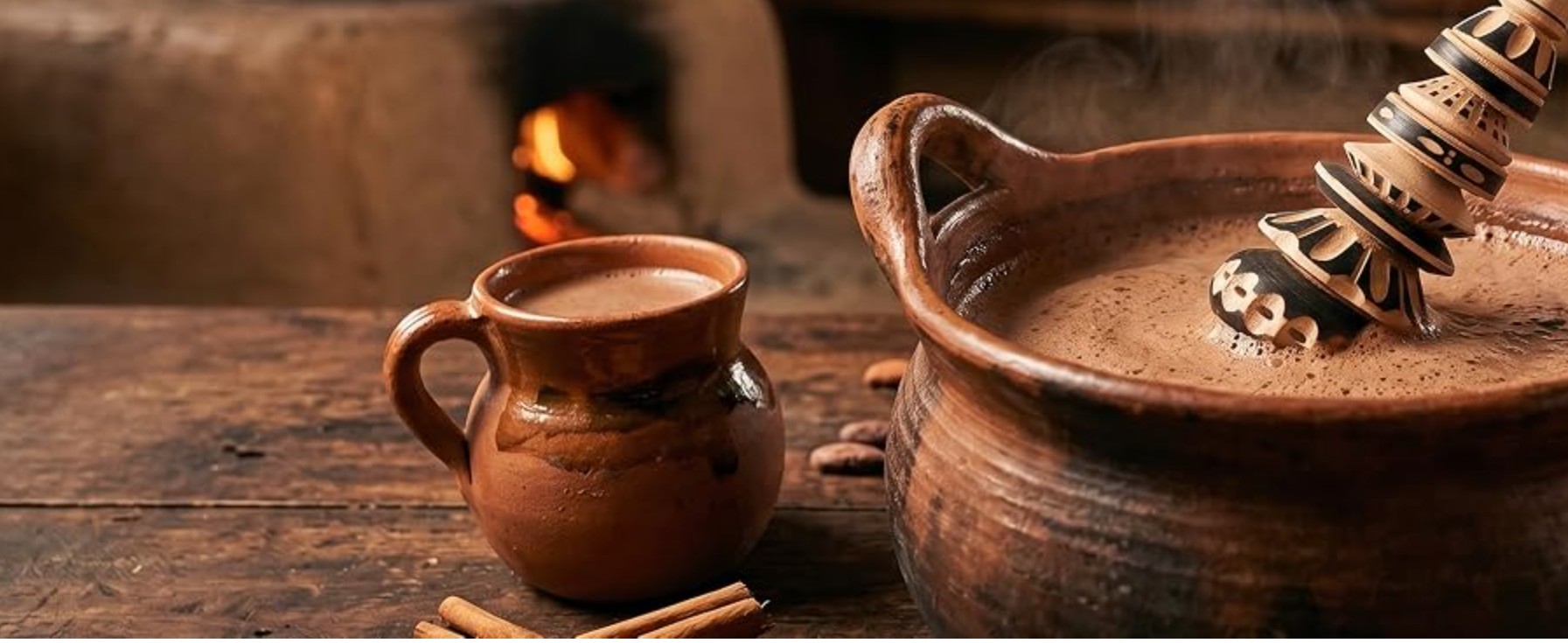
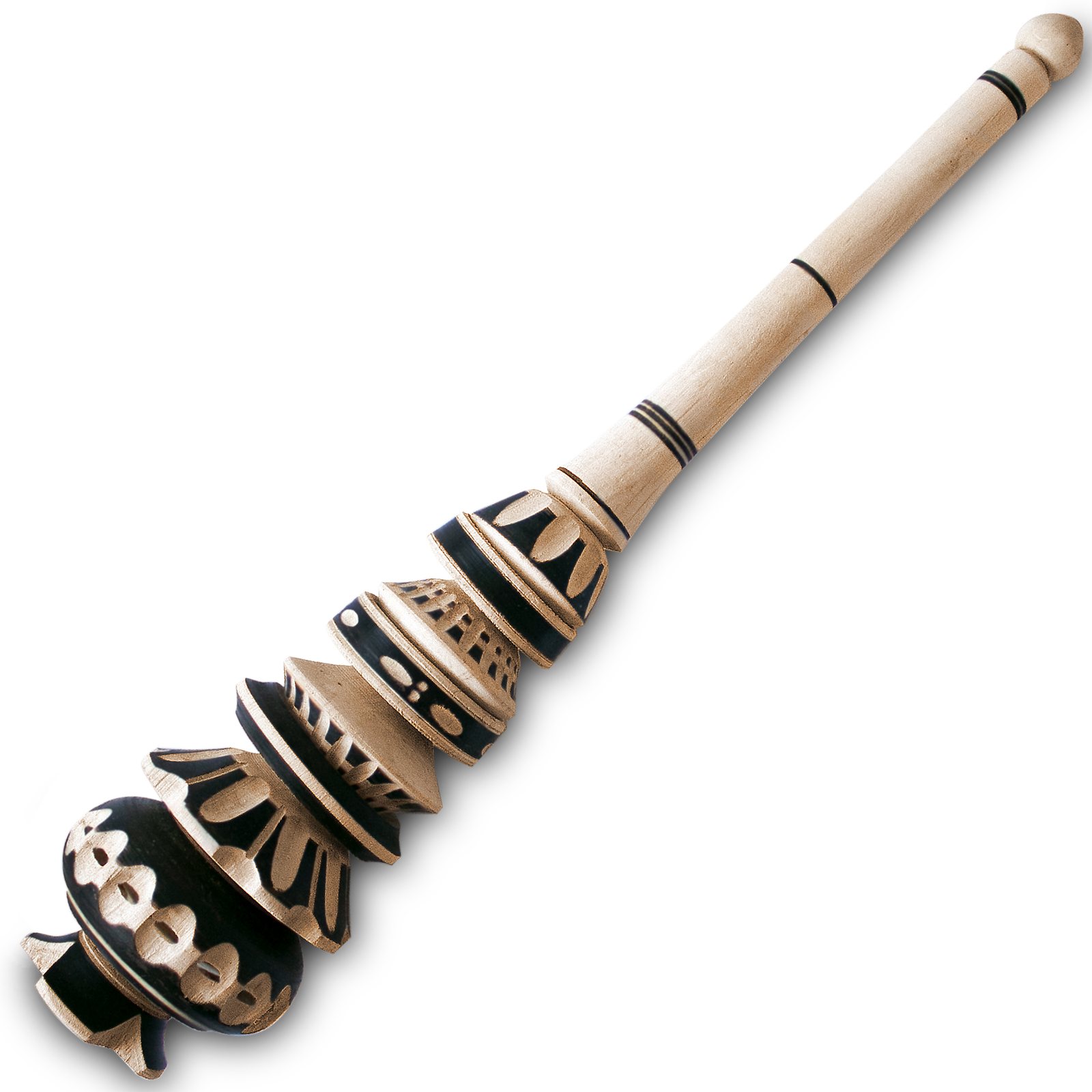
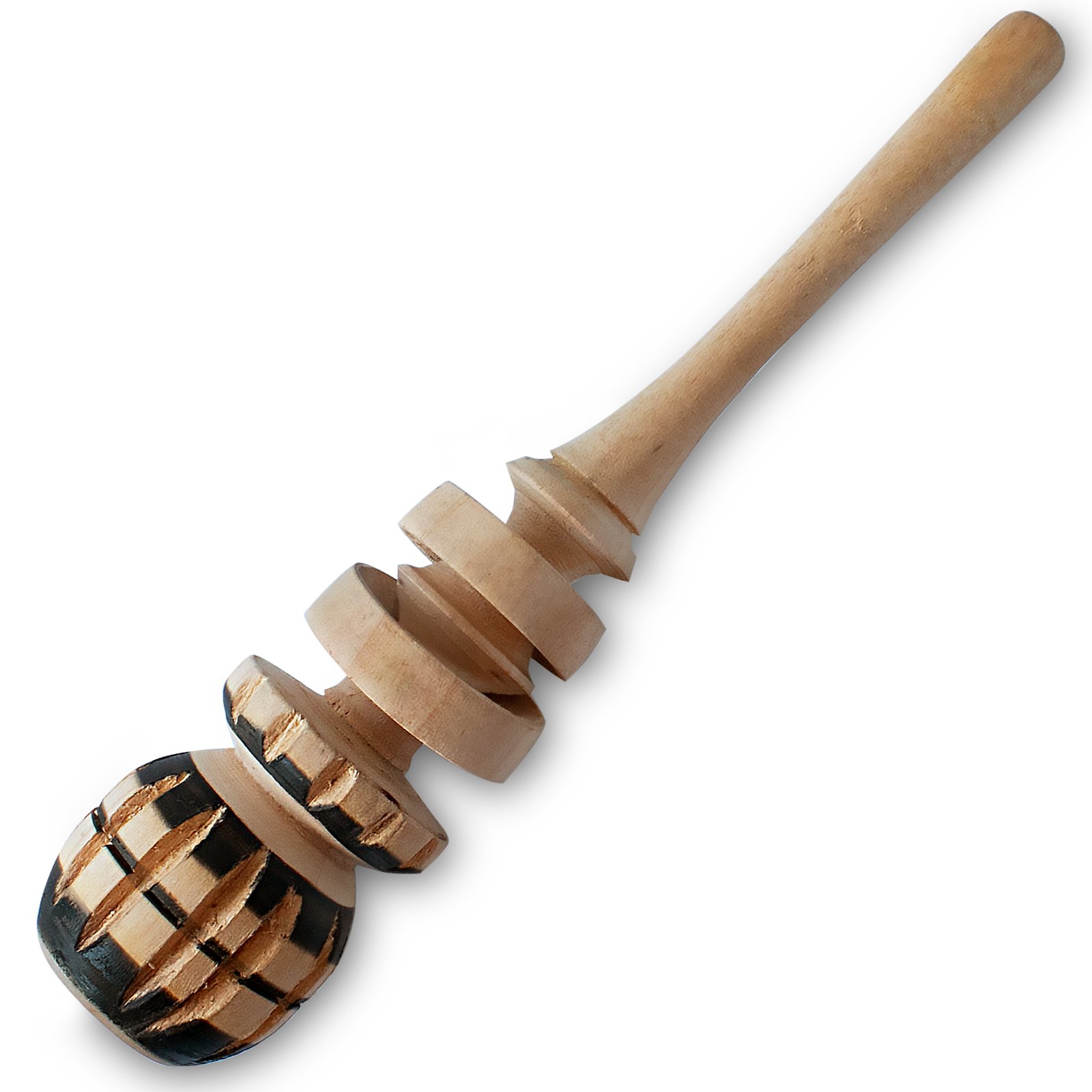
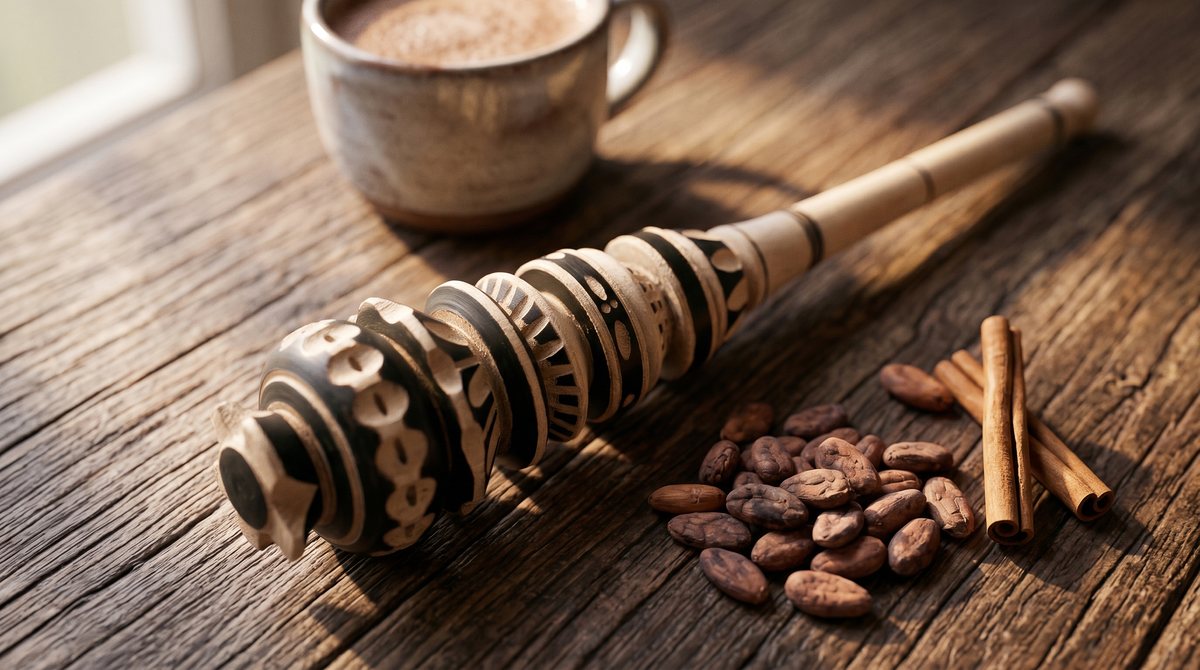
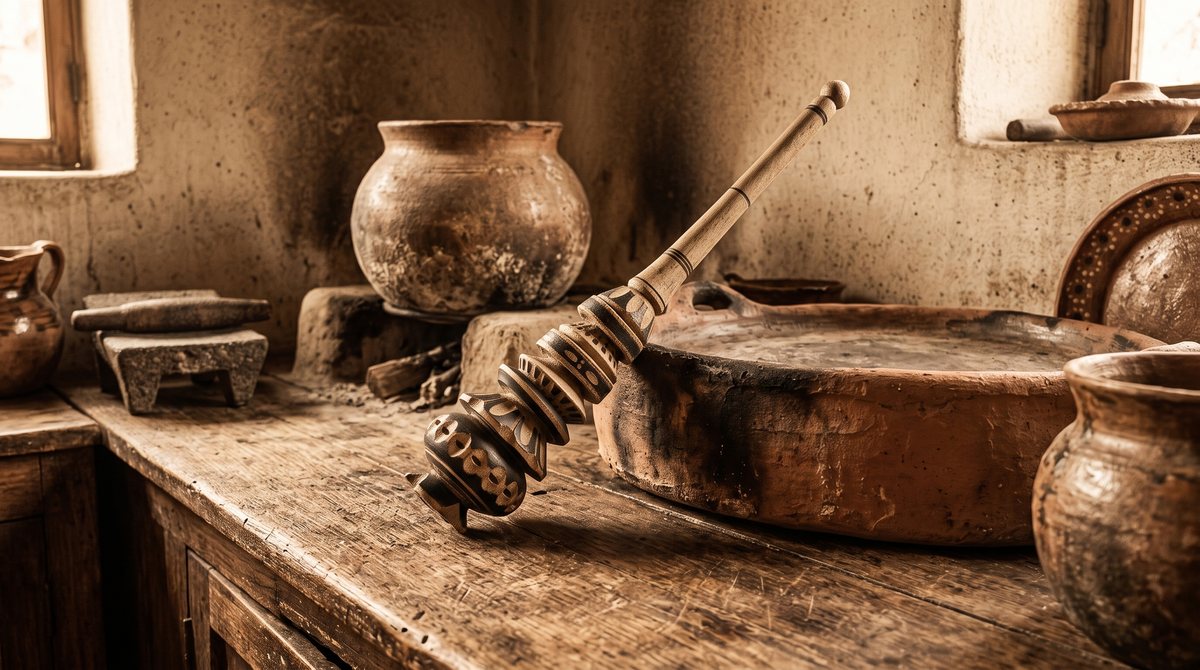
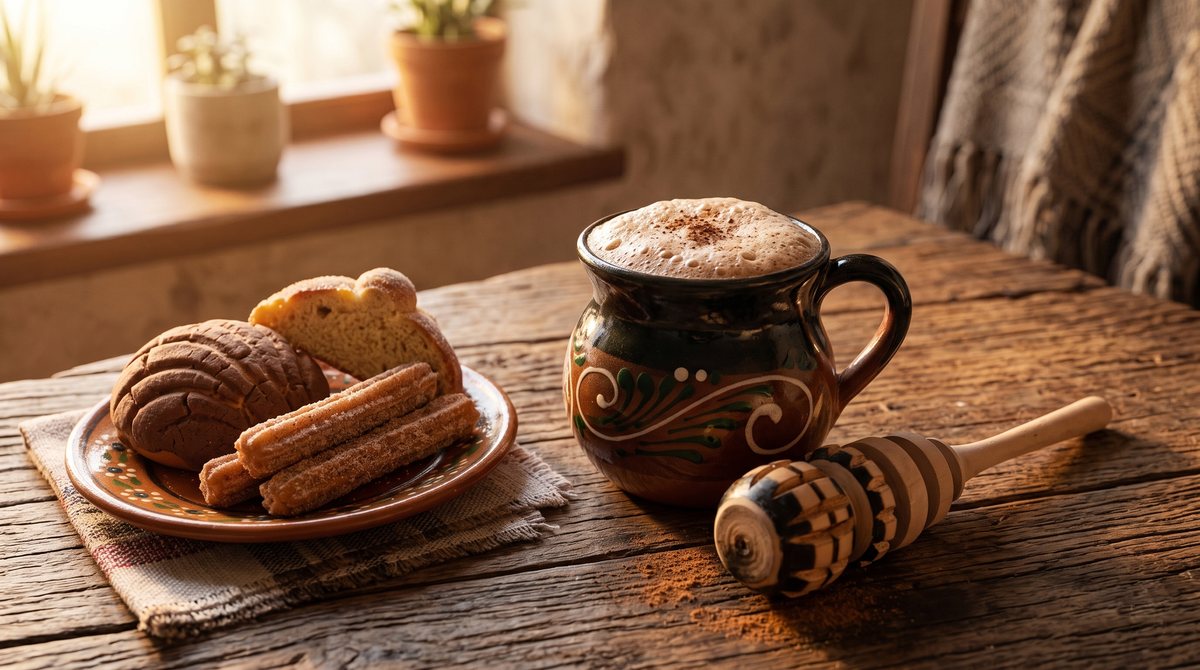
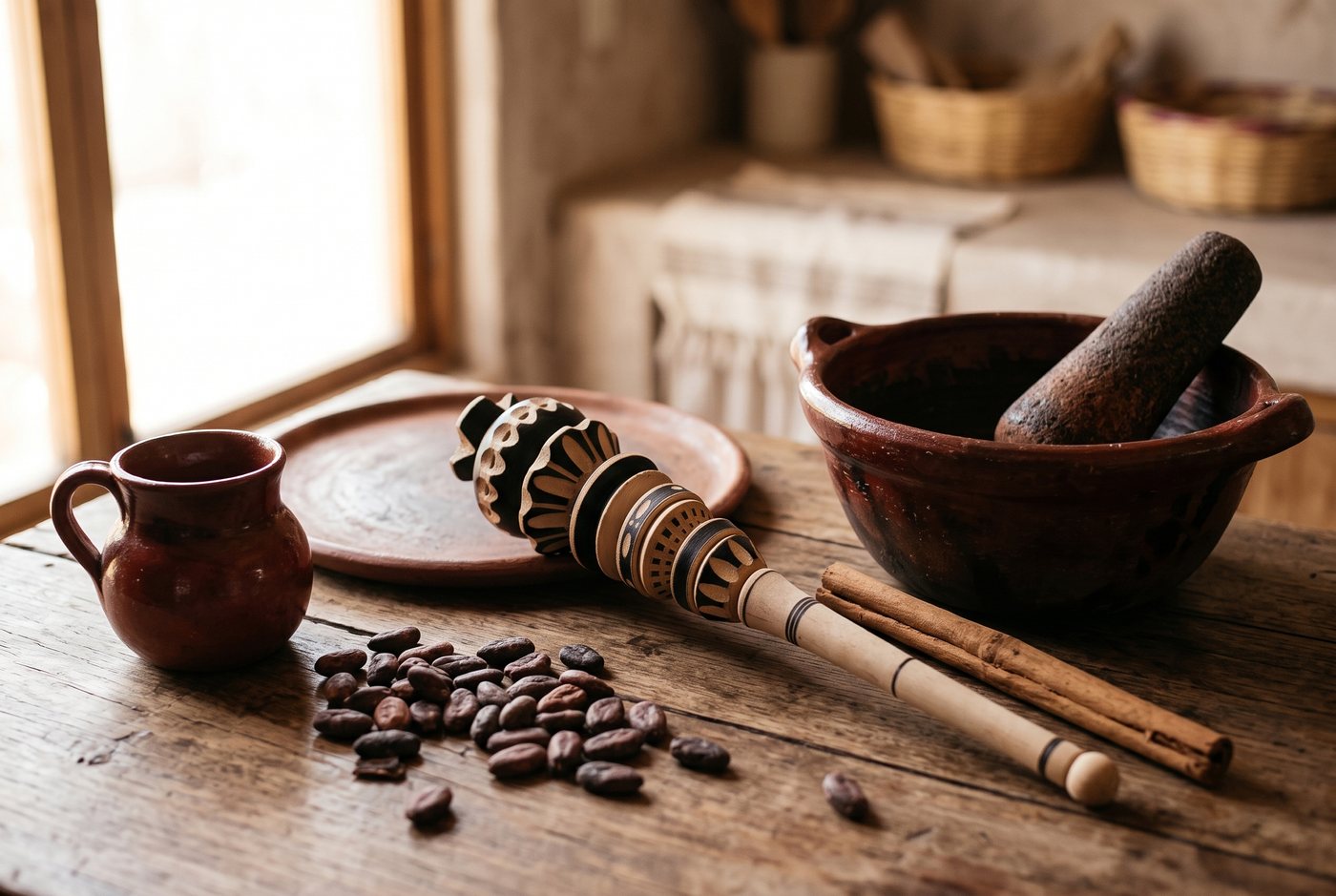
A molinillo is the carved wooden whisk used across Mexico to whip hot chocolate into a thick, even foam — and despite what many product listings claim, it isn't an ancient Aztec tool. The Aztecs and Maya originally frothed chocolate by pouring it between two vessels; the molinillo itself is a colonial-era invention, introduced sometime in the 16th to 18th century, that was quickly adopted into Mexican kitchens and has stayed there ever since. It's turned from a single piece of wood on a lathe, with one or more free-spinning rings carved from that same piece — a detail that's part of what makes a well-made molinillo a genuine piece of craftsmanship rather than just a stick with grooves in it. Rolled between the palms inside a pot or pitcher, it aerates hot chocolate, champurrado, and atole into foam no electric frother quite replicates. This hub covers what a molinillo actually is, how to use and care for one, and how to choose between our handmade Large and Small sizes.
Shop the Globe Rocket StoreSearch for a molinillo online and you'll see the same claim over and over: that it's an "ancient Aztec tool." It's a nice story, but it isn't accurate. Chocolate drinking itself really is ancient and Mesoamerican — the Maya and Aztecs were preparing cacao beverages roughly 2,600 years ago — but the Aztecs and Maya frothed that chocolate by pouring it back and forth between two vessels from a height, a technique depicted in the Codex Tudela, not by whisking it. The molinillo, as a tool, doesn't show up in the historical record until the Spanish colonial period, likely sometime in the 16th century, and by 1780 it had fully replaced the older pouring method in written accounts of how Mexican chocolate was prepared.
What makes the molinillo interesting isn't where it came from, but what happened after it arrived: Mexican and mestizo households adopted it almost immediately, and it became genuinely, thoroughly Mexican — carved with increasingly elaborate rings and patterns, worked into nursery rhymes still sung today, and kept as a treasured kitchen object by home cooks and noted authorities on Mexican cuisine alike. A tool doesn't have to be ancient to be authentic. This one earned its place in Mexican kitchens the honest way: centuries of daily use.
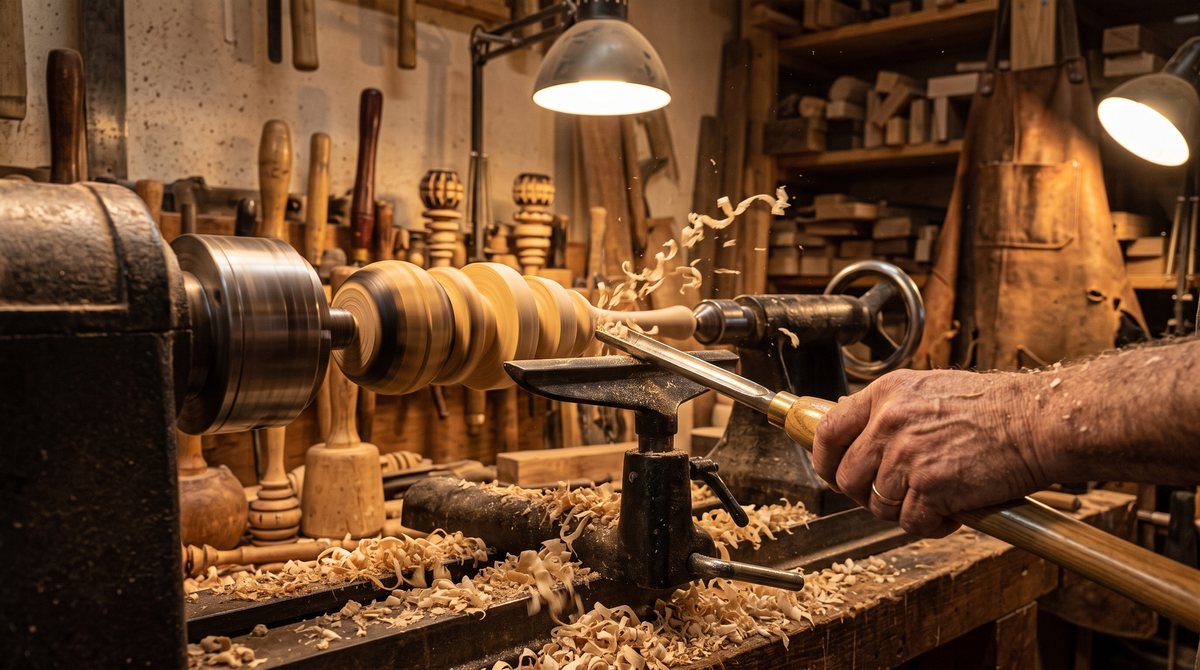
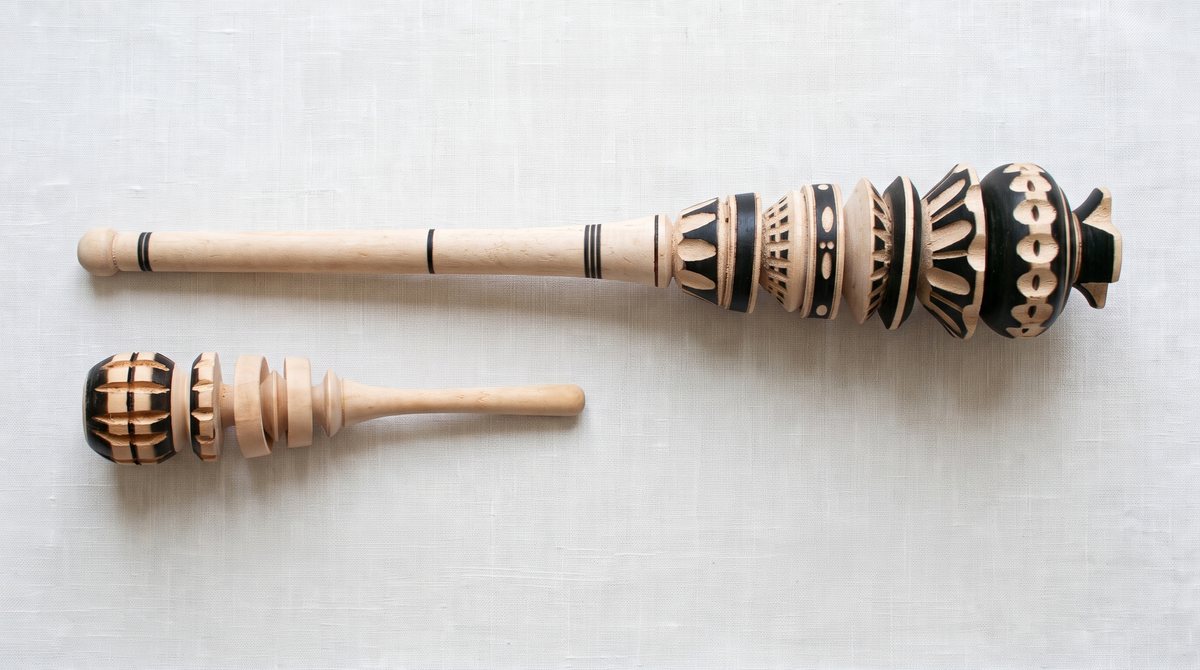
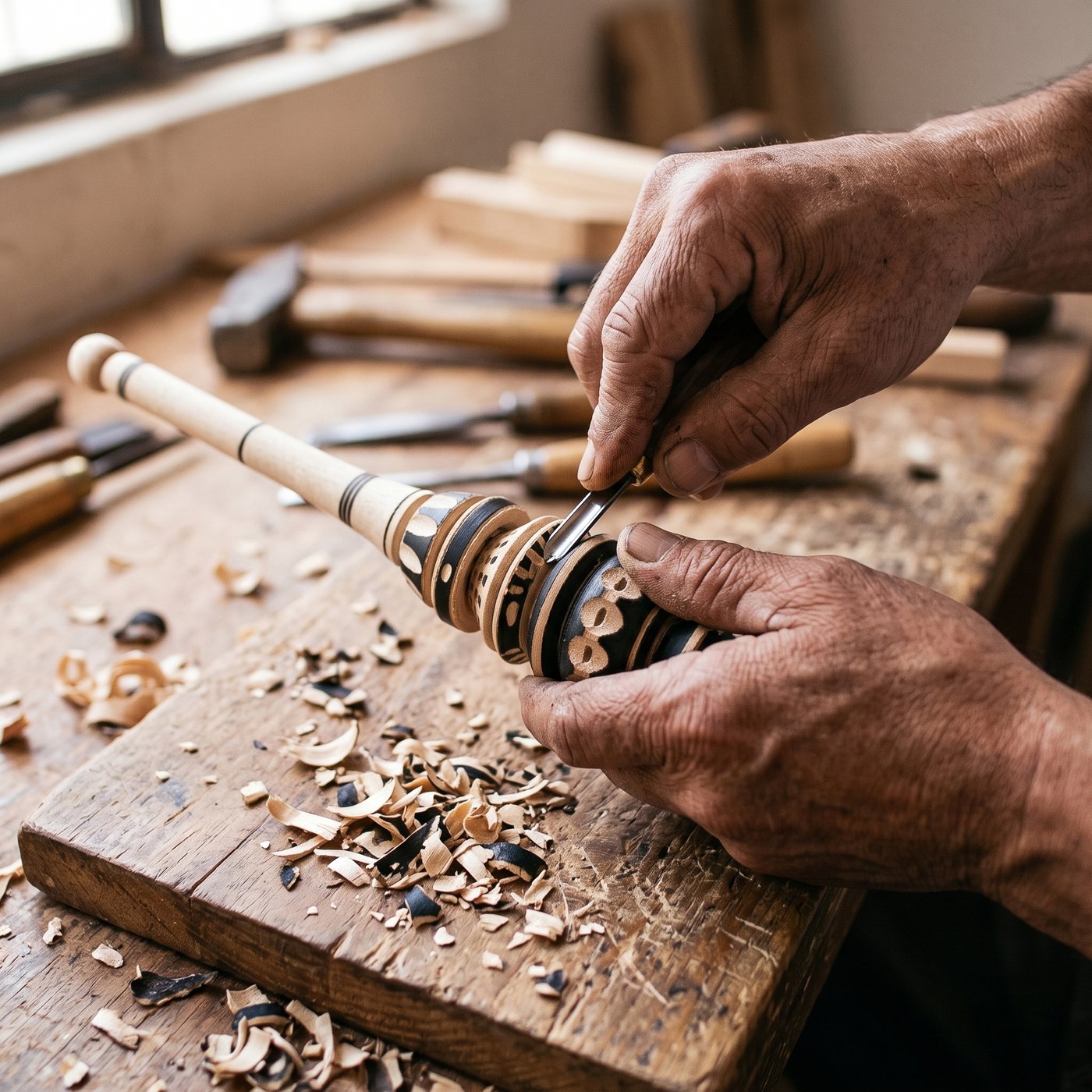
Structurally, a molinillo is turned from a single piece of wood on a lathe. The free-spinning rings partway down the shaft — the part that actually does the frothing — are carved from that same continuous piece of wood, not assembled separately. A ring that spins freely without ever coming loose, despite being cut from solid wood, is a real mark of skilled turning. The dark banding often visible on the rings is traditionally the result of friction burns from the lathe itself, later sanded smooth, rather than applied stain.
Globe Rocket's molinillos are hand-carved from a single piece of hardwood by artisans in Central Mexico, in two sizes so you can match the tool to how you actually serve hot chocolate — a large pot for the table, or a single mug for yourself.
Both Globe Rocket molinillos share the same hand-carved, single-piece hardwood construction. The difference is size — and that comes down to what you're whisking it in.
$24.99
Buy Now on Amazon
$14.99
Buy Now on AmazonNote: A few Small-molinillo buyers have mentioned it runs smaller than they pictured — it's genuinely sized for a mug or small pot, not a full pitcher. If you're usually making hot chocolate for more than one or two people, or you want the head fully submerged in a standard pot, size up to the Large.
Summarized from verified Amazon customer reviews, not copied word for word.
Buyers consistently describe the Large molinillo as beautifully carved and well made, with several specifically praising the length and how well it functions for frothing hot chocolate and cacao drinks. Durability feedback is mostly positive but not unanimous — a handful of reviewers reported minor splinters out of the box or a ring breaking on first use, alongside many others reporting no issues at all. Cleaning also gets mixed comments, which lines up with the wood construction: a small brush and prompt hand washing after each use goes a long way.
Ratings and review counts reflect each product's Amazon listing at time of publishing and are subject to change. See each listing for current details.
This hub connects to the full Globe Rocket molinillo library — the history, technique, and care guides, plus real hot chocolate recipes, that make up our complete molinillo knowledge base.
What a molinillo actually is, how it's built, and why "ancient Aztec tool" isn't quite the right story.
Read the guide →
The real, colonial-era origin of the molinillo — and how it became a genuinely Mexican tradition anyway.
Read the guide →
The lathe-turning and carving process behind every one-piece wooden molinillo.
Read the guide →
The palm-rolling technique that turns hot chocolate into foam, step by step.
Read the guide →
Simple hand-washing and drying steps that keep a molinillo working for years.
Read the guide →
What makes Mexican hot chocolate different from cocoa — ingredients, technique, and real regional variations.
Read the guide →
What actually separates champurrado from hot chocolate, and why the difference is mostly about corn.
Read the guide →
A closer look at Large vs. Small, with guidance for households, gifting, and everyday use.
Read the guide →
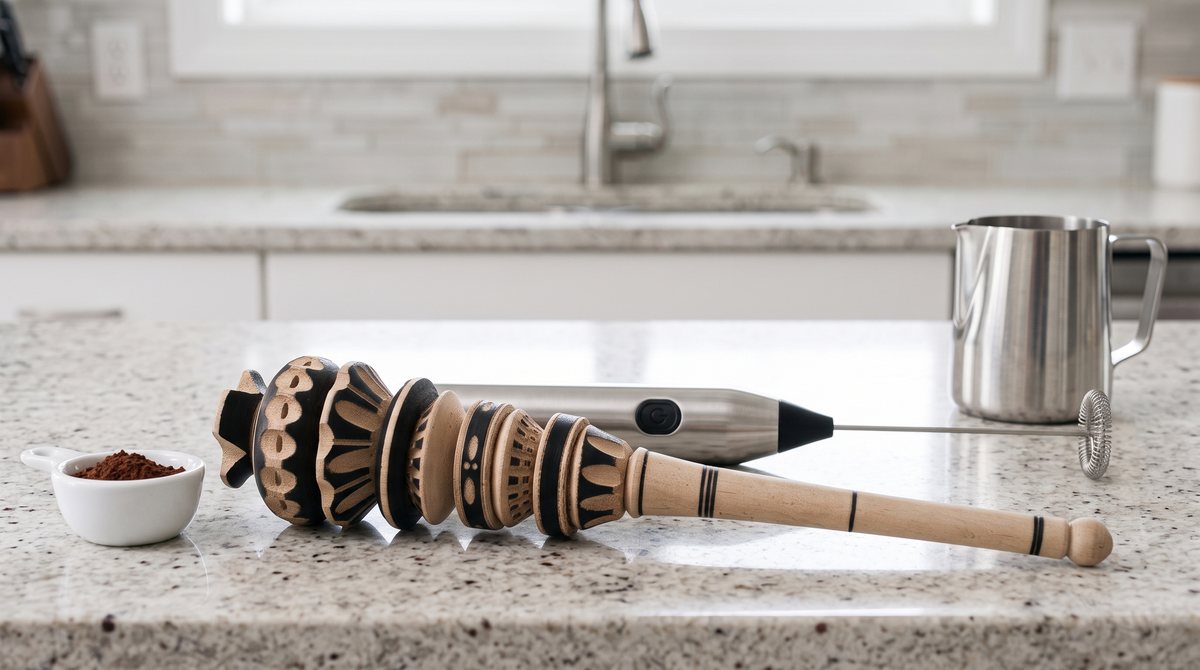
How a hand-carved molinillo actually compares to modern electric frothers, texture and tradition included.
Read the guide →A molinillo is a turned wooden whisk with one or more free-spinning carved rings, used to froth Mexican hot chocolate, champurrado, and atole. It's rolled between the palms inside a pot or pitcher to whip the drink into foam.
There isn't a single-word English equivalent. "Molinillo" is a diminutive of the Spanish word "molino" (mill), so it translates loosely to "little mill" or "little grinder." In English it's usually just described as a Mexican hot chocolate whisk or hot chocolate frother rather than translated outright.
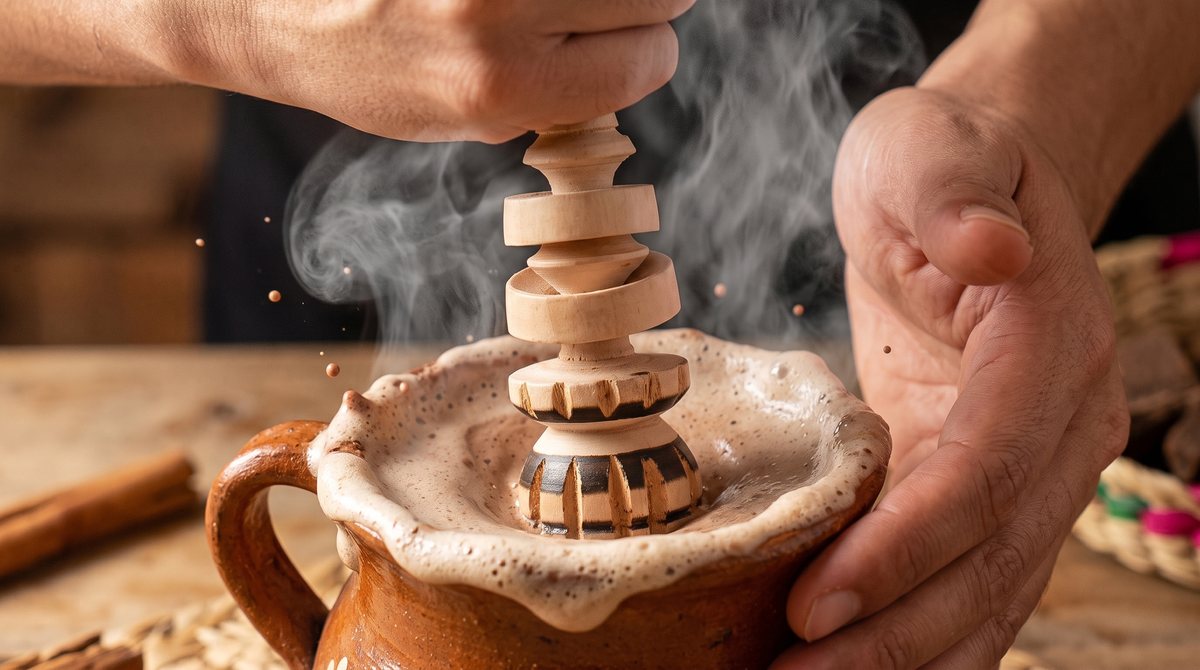
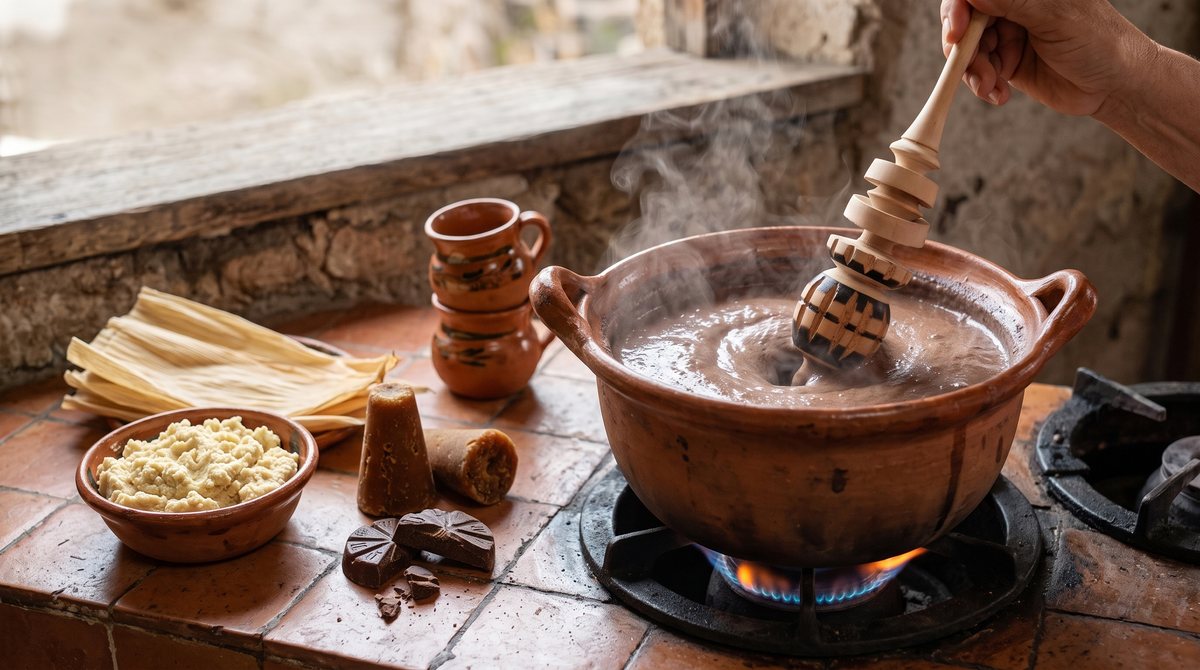
Place the molinillo's head into a pot or pitcher of warm milk and melted chocolate, then roll the handle back and forth between your palms. The free-spinning rings aerate the liquid as they turn, building a smooth, frothy foam in a minute or two.
A molinillo is the traditional Mexican hot chocolate frother — a hand-carved wooden whisk rather than an electric device. Submerge its carved head in the warm chocolate mixture and roll the handle briskly between your palms until a thick foam forms, usually 30 to 60 seconds.
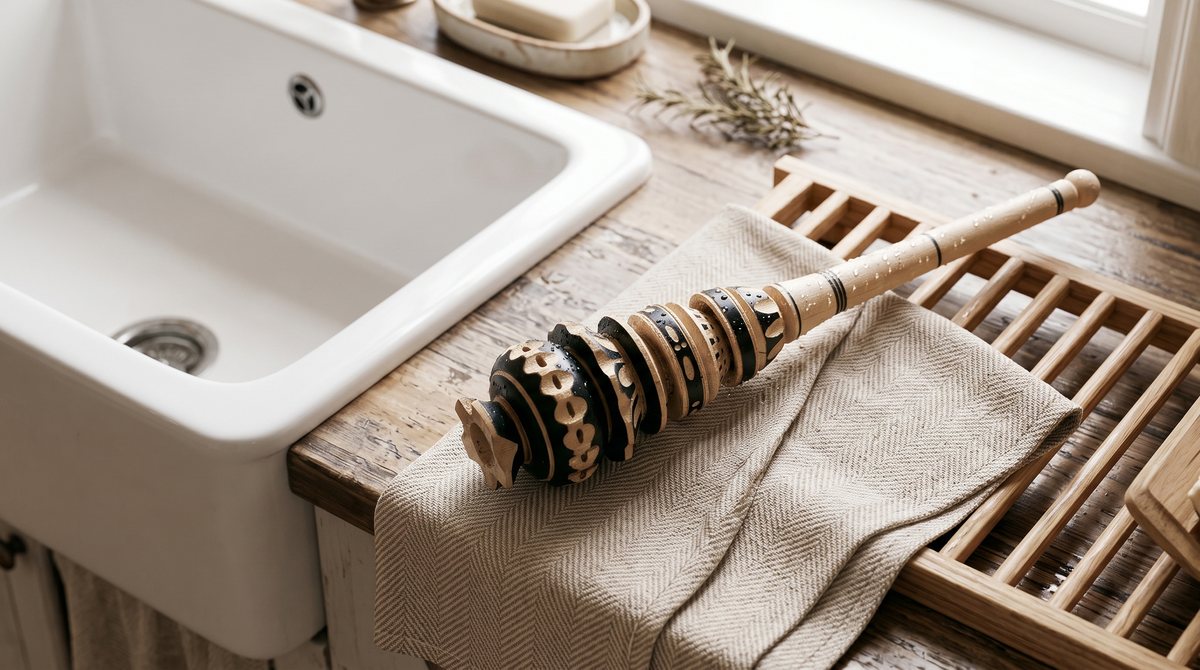
Rinse it with warm water after each use, using a small brush to clear any residue from the carved rings, then let it air dry completely. It's a hand-wash-only tool; soaking it or running it through a dishwasher can damage the wood.
No. A molinillo is a solid wood tool and should always be hand washed and air dried, not put in the dishwasher.
No, not the whisk itself. Chocolate drinking is genuinely ancient and Mesoamerican, going back roughly 2,600 years, but the Aztecs and Maya originally frothed chocolate by pouring it between two vessels, not by whisking. The molinillo is a colonial-era tool, introduced during the Spanish colonial period (roughly the 16th to 18th century), that gradually replaced the older pouring method.
Not quite. Champurrado is a variation of Mexican hot chocolate thickened with masa or corn flour, giving it a noticeably thicker, more porridge-like body. Standard Mexican hot chocolate has no starch component and relies entirely on frothing for its texture.
Atole is a warm, masa-thickened corn drink that can be made with or without chocolate. Champurrado is simply atole made with chocolate added — so champurrado is a chocolate-flavored variety of atole, not a separate category of drink.
Traditional Mexican hot chocolate is made by melting tablets of coarsely ground cacao, sugar, and cinnamon into hot milk or water, then whisking the mixture with a molinillo until a thick foam rises to the top. The froth is considered essential, not optional.
In Mexico, it's most commonly just called "chocolate" or "chocolate caliente" (hot chocolate). The English term "cocoa" isn't typically used there; it maps more closely to instant powdered mixes than to the traditional whisked drink.
The thick, corn-thickened version of Mexican hot chocolate is called champurrado. It's made by whisking masa or corn flour into hot chocolate with a molinillo, giving it a heartier, porridge-like consistency compared to standard hot chocolate.
Traditional Mexican Kitchen was built to help home cooks make real Mexican and Latin American food the way it has traditionally been made — not shortcuts or modern substitutions, but the techniques, tools, and traditions generations of home cooks have relied on. The molinillo is a good example of why that matters: get the history wrong (as most product listings do) and you lose the far more interesting real story of how a colonial-era tool became inseparable from Mexican culinary identity.
Our goal is to document these details clearly and accurately, so anyone can follow them at home — whether that's flan, hot chocolate, or whatever we cover next. That means researching techniques and history carefully rather than repeating whatever a product listing claims, explaining the reasoning behind traditional methods, and helping home cooks understand not just what to do, but why it works. If a question comes up along the way, our FAQ above is a good place to start.
Every guide and recipe on this site is researched before publication, cross-checking traditional methods and history rather than relying on a single source or repeating uncorroborated product marketing — the "ancient Aztec tool" claim you'll see elsewhere is a good example of a widespread but inaccurate shortcut we specifically checked and corrected. Guides are revisited periodically to correct inaccuracies, refine sizing and measurement details, and improve clarity based on reader questions.
The goal throughout is practical accuracy: information a home cook can rely on and put to use right away, rather than content written mainly to rank well in search.
Pick the molinillo that fits how you actually serve hot chocolate, then roll it between your palms the traditional way. One tool, centuries of Mexican kitchen tradition — now it's your turn.