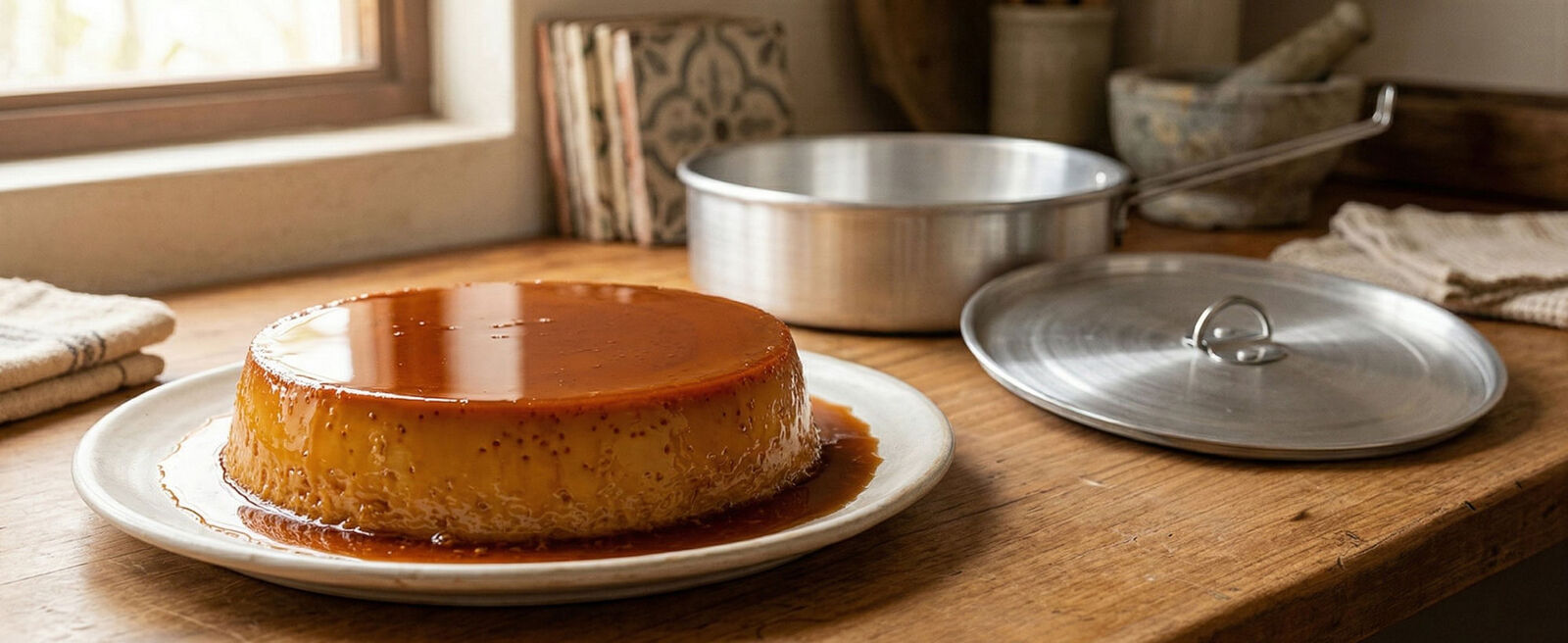
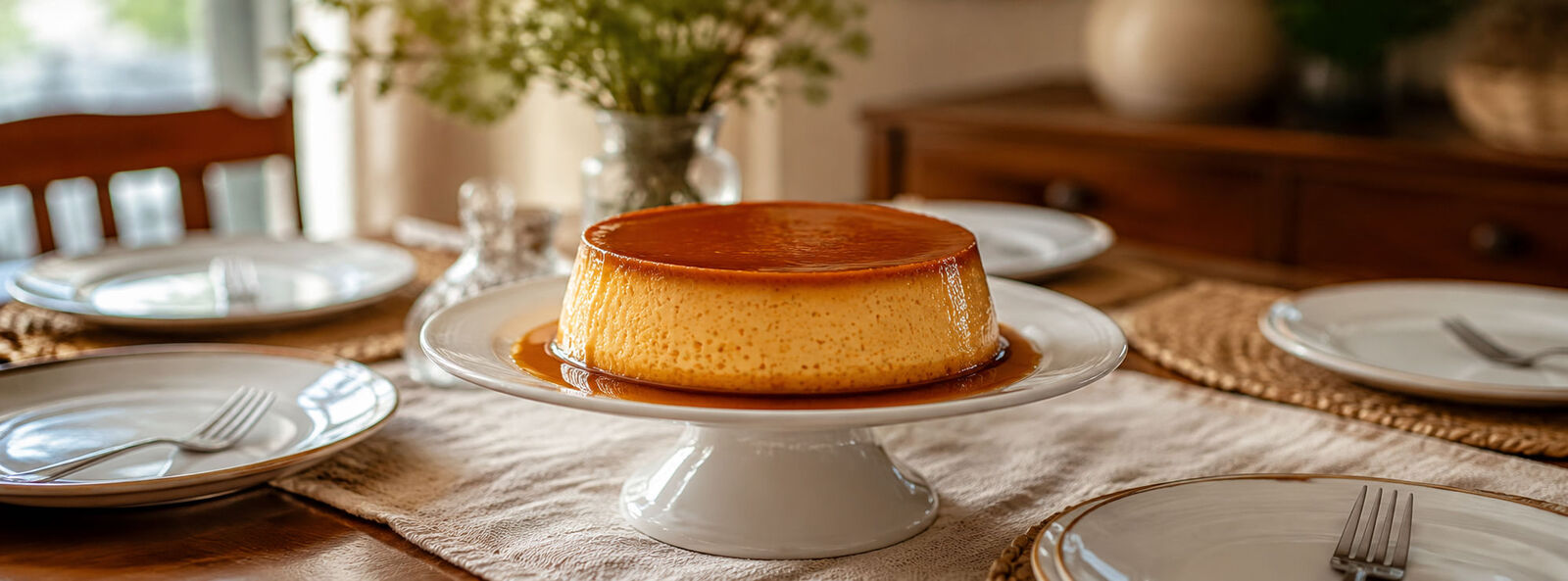
Six ingredients. One traditional technique. The same recipe that's been showing up at birthdays, Sunday dinners, and holiday tables for generations — made with the mold built to help it turn out right.
Almost every family that makes flan can tell you whose recipe it actually is. Not a cookbook's, not a restaurant's — a specific person's. A great-aunt's. A grandmother's. Someone who made it so many times that the recipe stopped being written down anywhere except in her hands.
It gets taught the way most real family recipes get taught: standing next to someone at the stove, watching how long they let the caramel go, noticing they never actually measure the vanilla. Eventually it gets passed to whoever's ready to carry it forward — a daughter, a nephew, a neighbor practically considered family.
That's most of why flan means so much more than its ingredient list suggests. It's rarely just dessert. It's the thing that shows up at the birthday, the thing everyone expects at Christmas Eve, the dish that means a specific person is thinking of the family even when they can't be there to make it themselves.
Plenty of custard desserts exist. What makes flan specifically Mexican, and specifically authentic, comes down to five things working together.
Ingredients. Sweetened condensed milk and evaporated milk, not fresh cream, are what give traditional flan its dense, rich body — a shortcut Mexican home cooks turned into a signature.
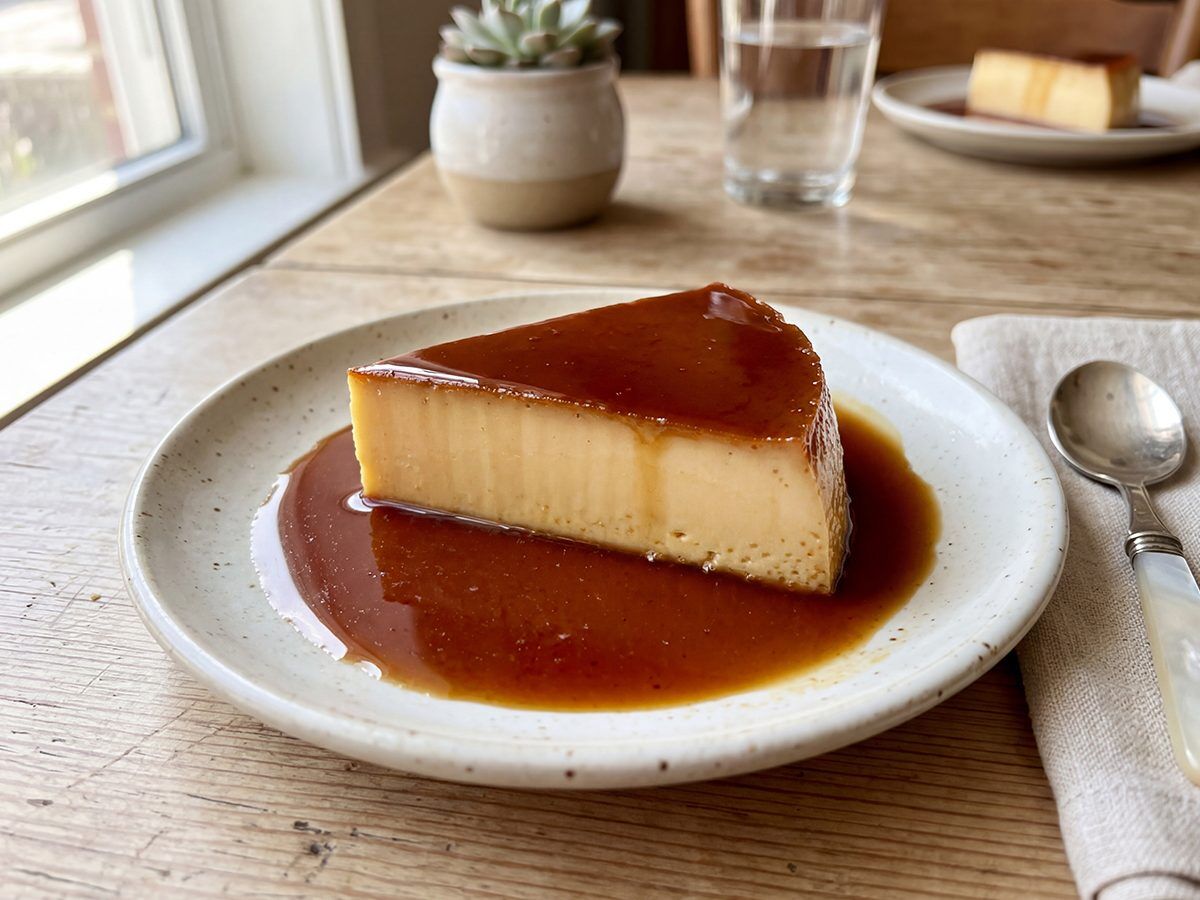
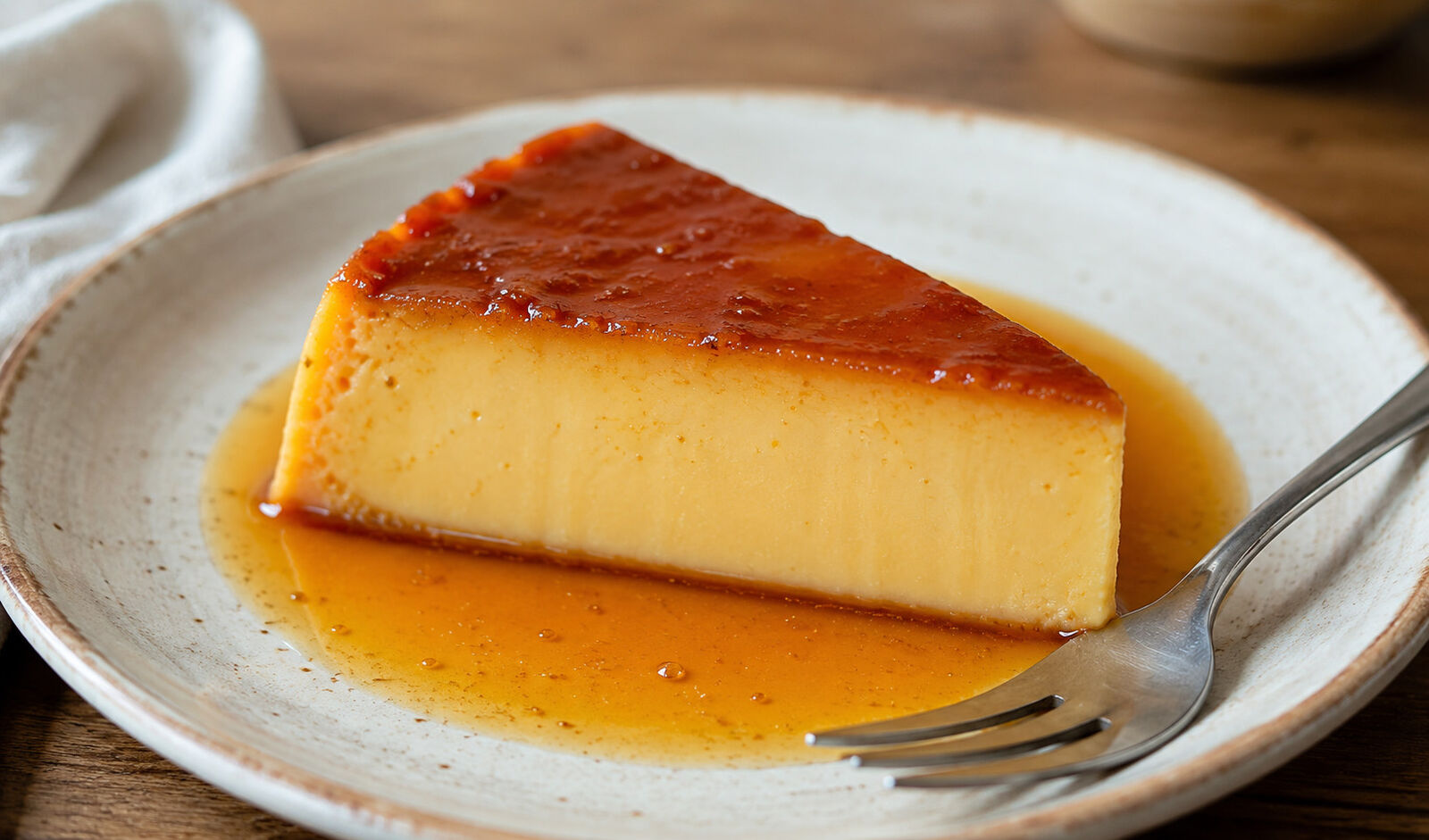
Texture. Authentic flan is dense and silky, not light and airy like a soufflé. It should hold its shape on the plate, not wobble apart.
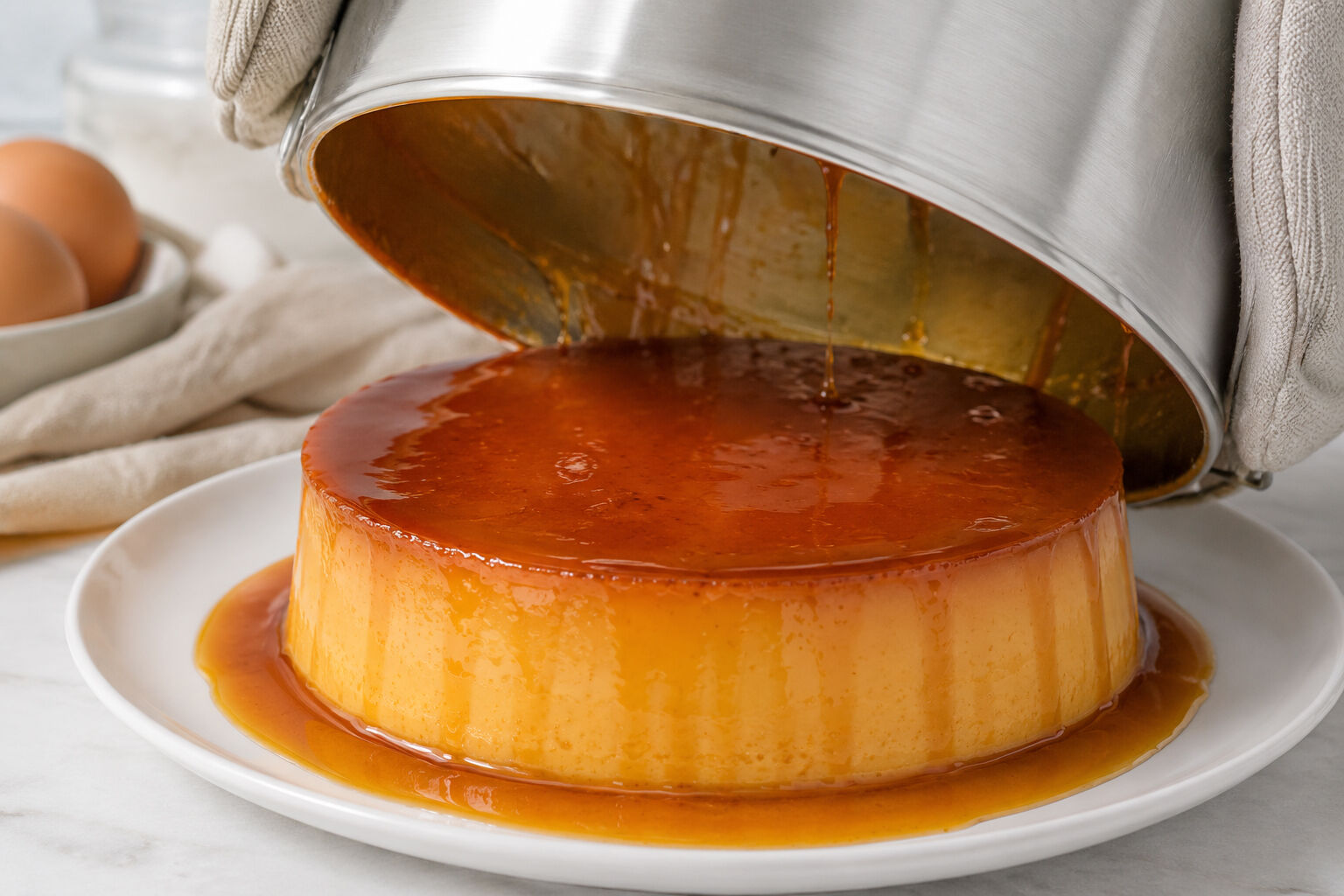
Caramel. It isn't a topping added after baking — it's made first, caramelized directly in the mold, then baked underneath the custard so it becomes a sauce once unmolded.
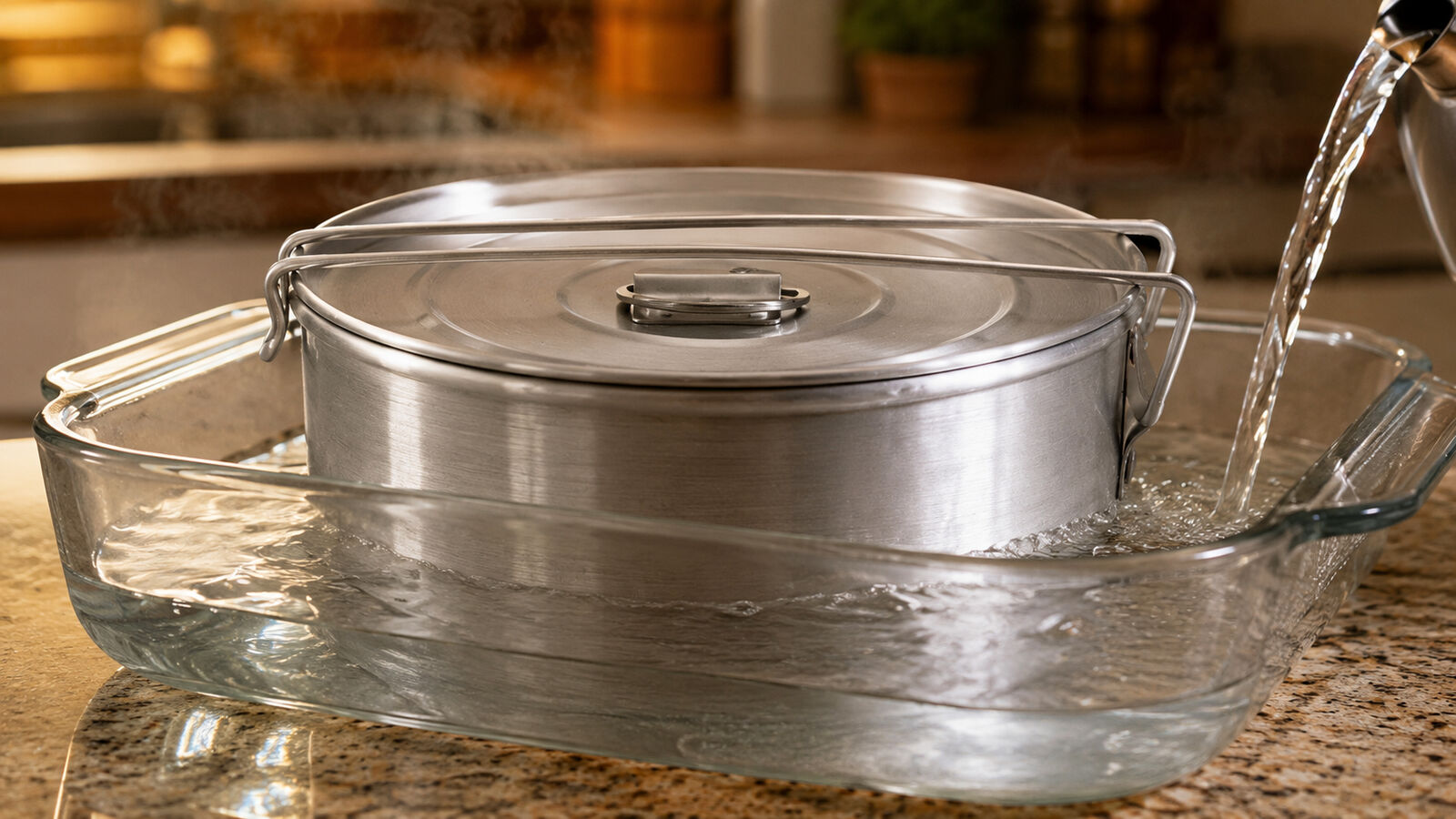
Baño María. The custard bakes inside a water bath, never directly in the oven's dry heat. This one step is responsible for most of what separates a smooth flan from a cracked one.
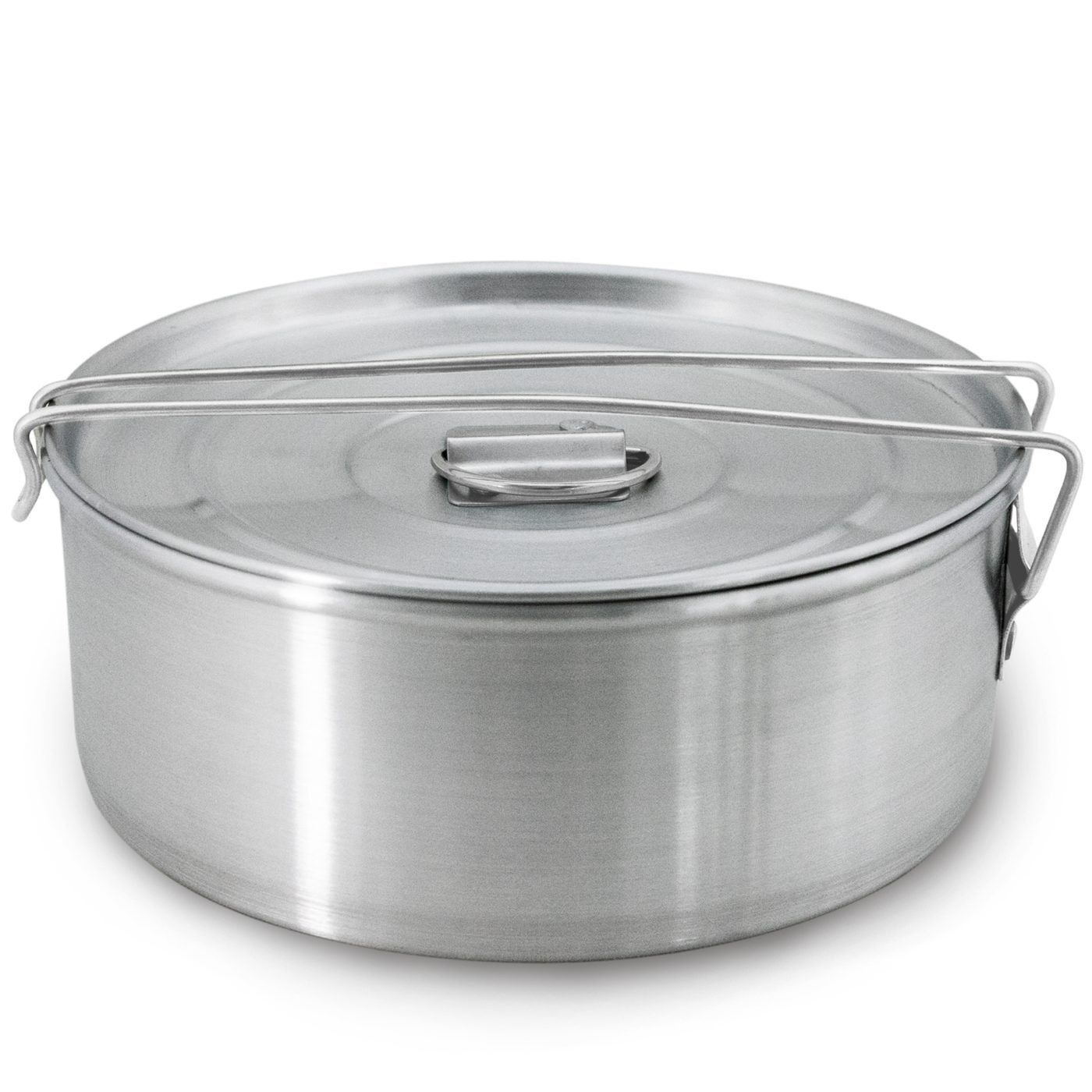
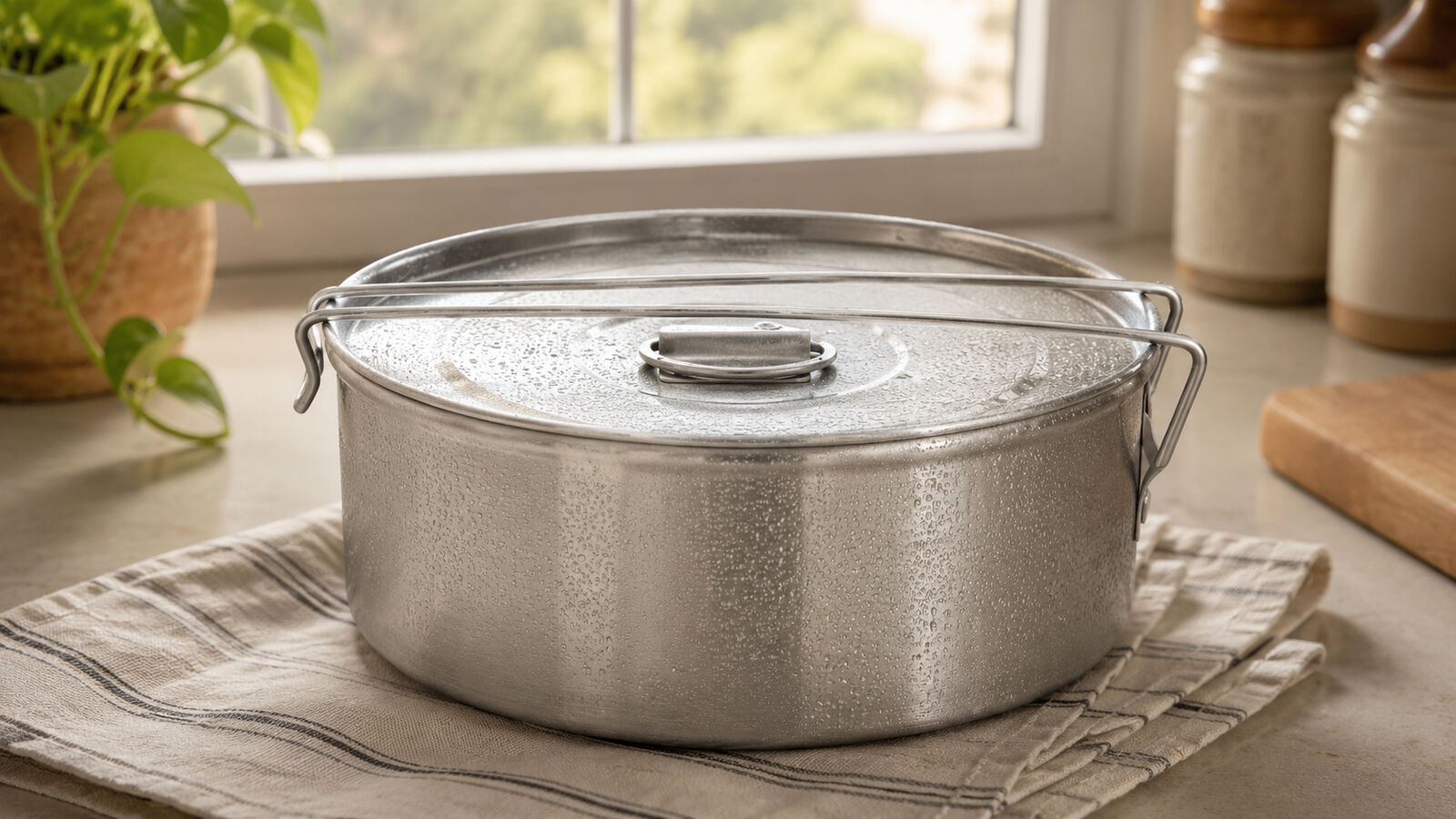
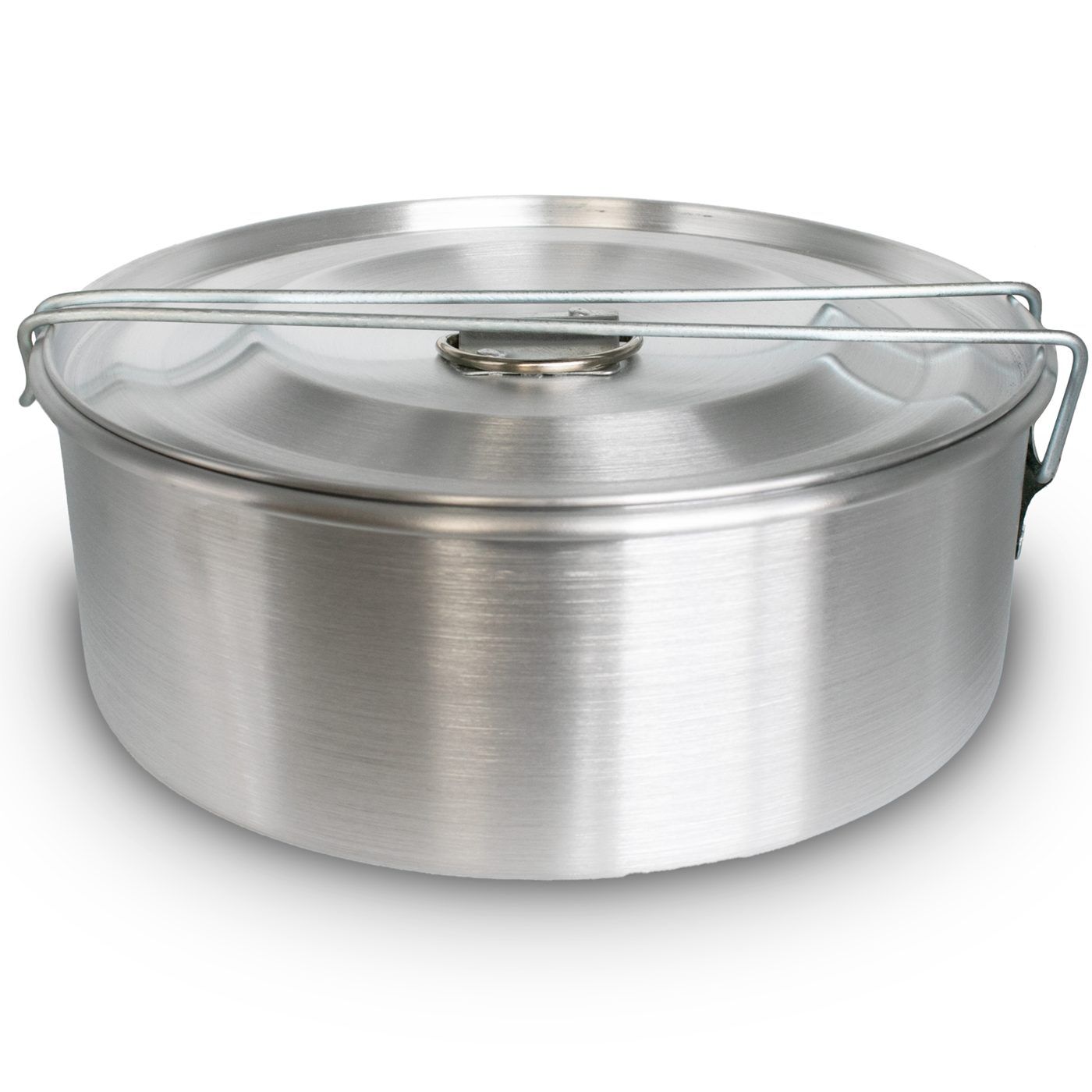
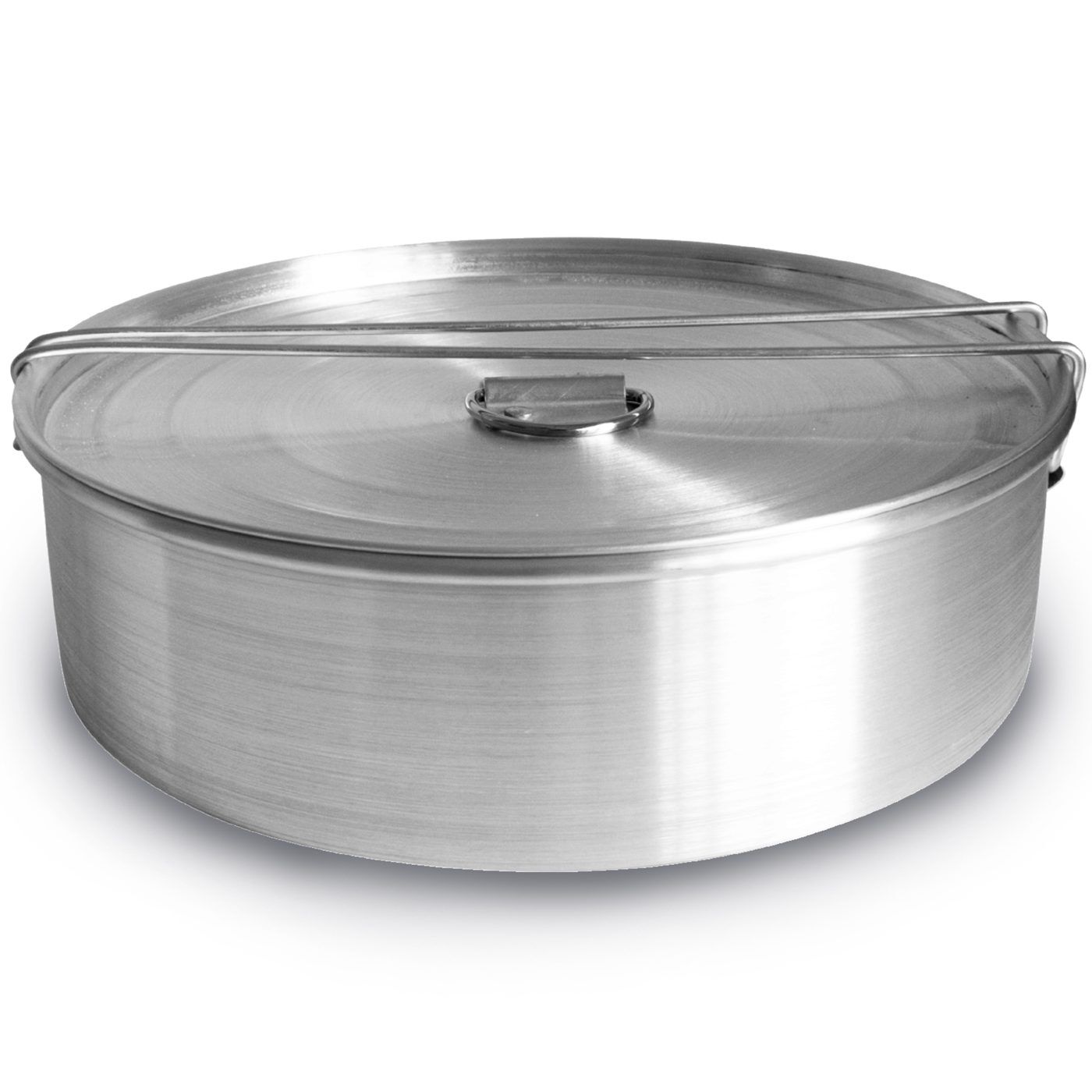
The traditional flan mold. A flanera's lid, shape, and material aren't decorative — they're what let one pan caramelize, bake, and release the flan cleanly, the way it's been done for generations.
This is the full recipe, start to finish — not a summary. Every step is written for the Medium Flan Mold.
The cream cheese is optional but adds noticeable richness and a slightly denser texture — leave it out for a lighter, more traditional flan. Every oven runs a little differently, so start checking for doneness a few minutes before the recipe says it should be done.
This exact recipe scales cleanly — simply use the same ratio of caramel and custard, adjusted for volume, in a Large or X-Large Globe Rocket mold when you're feeding more people.
Get the Medium Flan Mold — $28.99Five stages stand between raw ingredients and a finished flan. Here's what to expect at each one, including the mistakes that trip people up most.

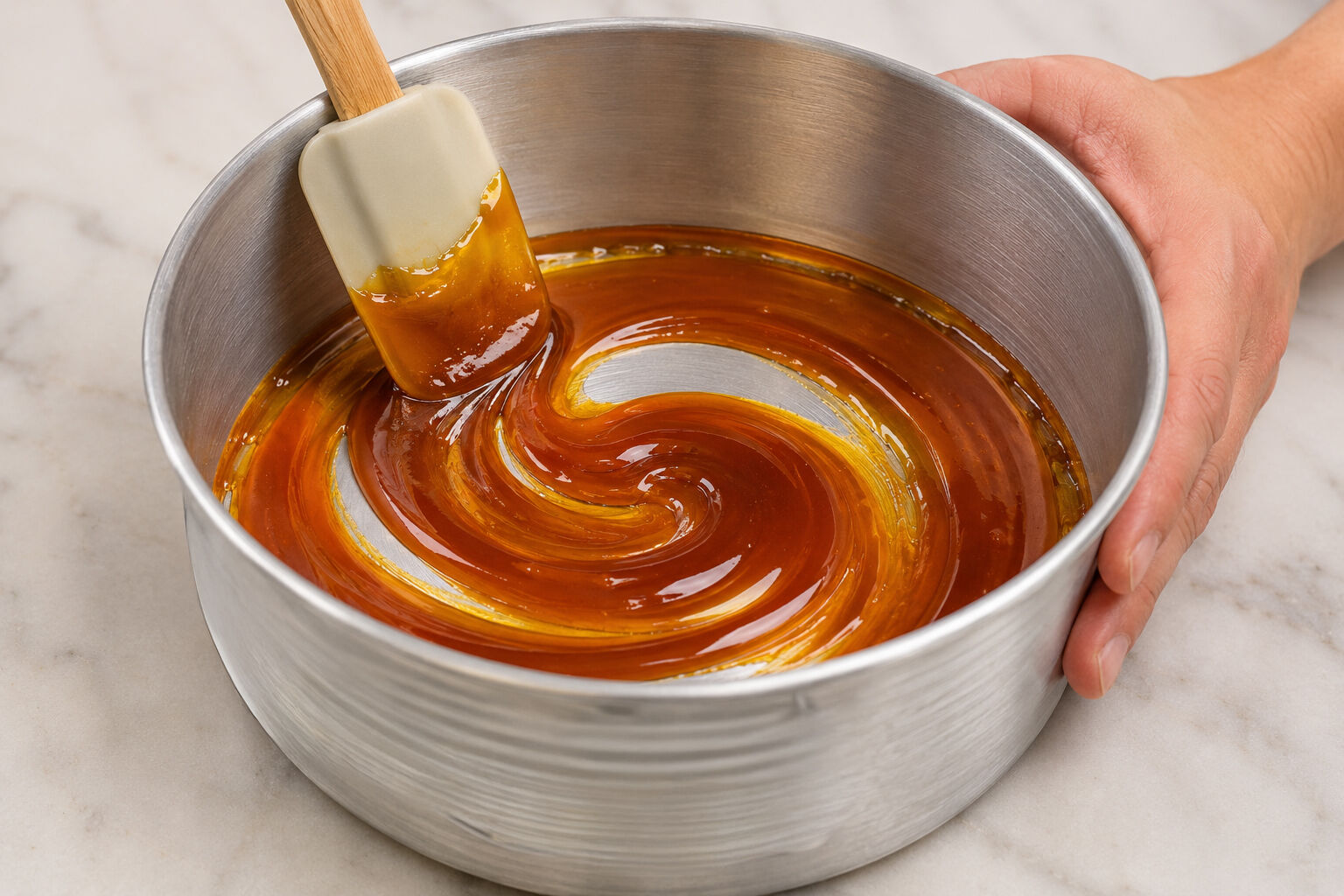
Sugar and water go into the mold itself, over medium-high heat, until it turns a light amber color — about 10 minutes.

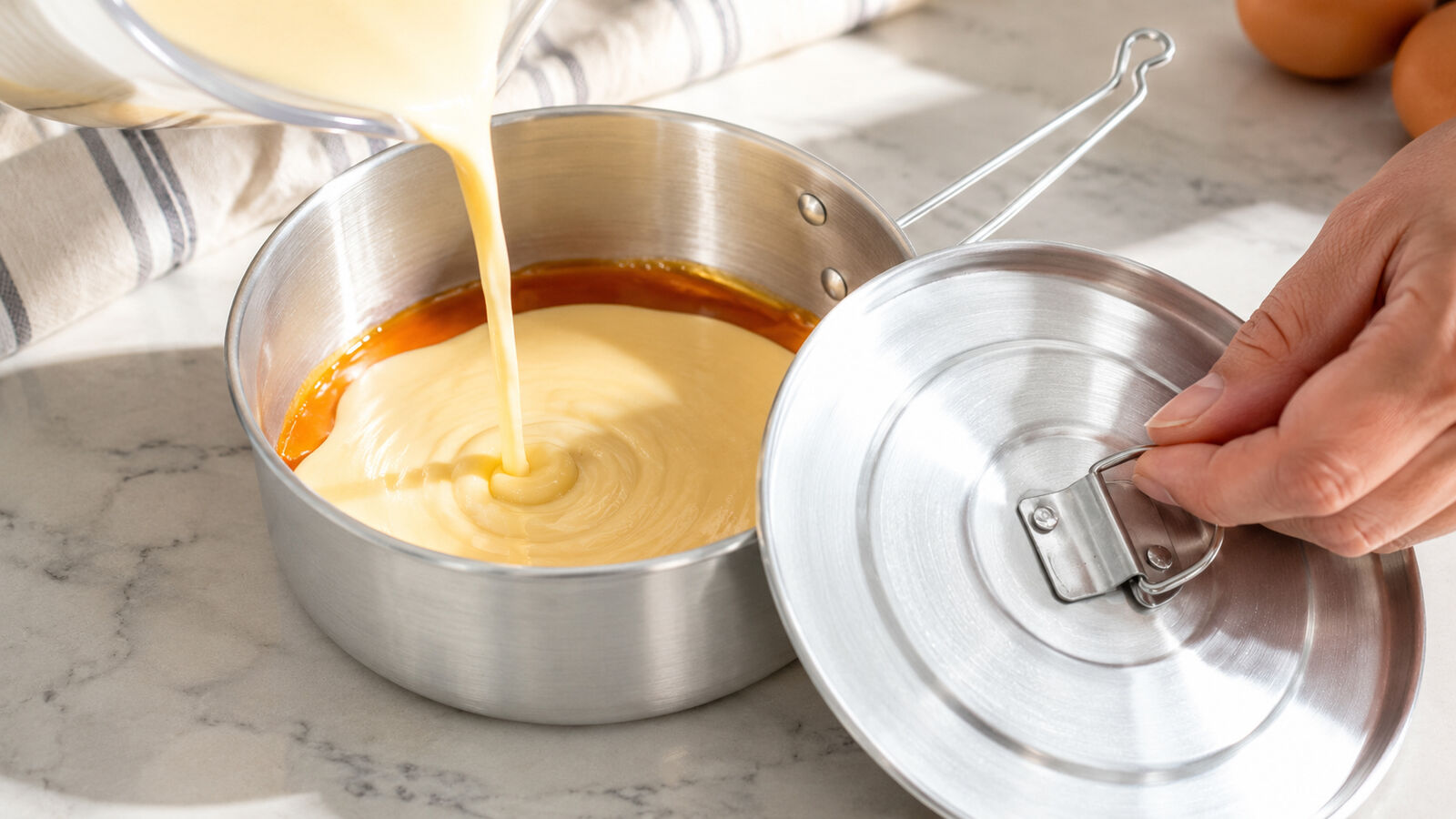
Eggs, condensed milk, evaporated milk, vanilla, and optional cream cheese blend together, then pour slowly over the cooled caramel.

The covered mold goes into a larger pan filled with warm water about 3/4 inch deep, then bakes for around 50 minutes.

Let the flan cool to room temperature, then refrigerate for at least four hours, ideally overnight.

Run a knife around the edge, place a serving plate on top, and invert in one confident motion.
None of these are complicated. They're just easy to skip if nobody's told you they matter.
Never skip the water bath. It's the difference between silky and cracked, every time.
Let it cool at room temperature before refrigerating — going straight from oven to fridge can cause condensation on the surface.
Medium-high heat, swirl instead of stir, and pull it right when it turns light amber — it keeps darkening even off the heat.
A flanera does three jobs at once — caramelizing, sealing, releasing — that most other pans can only do one of.
Every oven runs a little differently. Start checking a few minutes before the recipe says it should be done.
The most common reason flan doesn't turn out is rushing the chill time. Give it the full four hours, minimum.
Every one of these is easy to avoid once you know what causes it.
Almost always caused by baking without a water bath, or an oven that runs hotter than the dial says.
Usually from overblending the custard, which whips extra air into the mixture. Blend just until smooth, not longer.
Pull the flan when the center still jiggles slightly. It firms up more as it cools and chills.
Caramel can go from perfect to bitter in under a minute. Watch it closely once it starts to color, and pull it early rather than late.
Almost always a chilling problem. Give the flan the full four hours in the refrigerator before attempting to unmold.
Evaporated milk is what gives this recipe its dense, rich texture, so it's worth using if you can. In a pinch, whole milk simmered and reduced by about half can work, but the texture and richness won't be quite the same as the original.
The cream cheese is genuinely optional and can be left out for a lighter, more traditional texture. The other five ingredients — sugar, eggs, condensed milk, evaporated milk, and vanilla — each do specific work in the custard, so substituting them changes the results more noticeably.
Flan can be frozen, though the texture is best fresh. If freezing, do it after unmolding, wrap it tightly, and thaw slowly in the refrigerator. Expect a slightly softer texture than a freshly made flan.
This is almost always a chilling issue — the flan needs at least four hours in the refrigerator, ideally overnight, before it will release cleanly. Running a thin knife around the edge before inverting also helps.
Let it cool to room temperature after baking, then refrigerate for at least four hours, and ideally overnight, before unmolding and serving. The chilling time is what finishes setting the custard.
Yes. The ingredient list is short and the steps are straightforward — the main things to get right are using a water bath and giving the flan enough time to chill. Neither requires prior baking experience.
You can bake the custard in another oven-safe dish, but a traditional flanera makes the process easier and the results more reliable, since it's built to caramelize sugar, seal the custard with a lid, and release the finished flan cleanly.
Yes. Keep the same ratio of ingredients and use a Large or X-Large flan mold to accommodate the extra volume. The oven time may need a few extra minutes, so check for the same doneness cues: set edges, a slightly jiggly center.
Same recipe, same method, three sizes. All three share the same aluminum construction and fitted lid.
The size this recipe is written for — and where we'd start if this is your first flan.
$28.99
Same recipe, same steps, scaled up for a bigger table.
$32.99
For potlucks, holidays, and tables that keep growing.
$37.99
Picture it: the knife around the edge, the plate on top, the mold lifting away in one clean motion. Amber caramel sliding down the sides of a flan that looks — and tastes — exactly like the one you grew up with. That's what happens when a recipe this old meets the tool it was always meant to be made in.
The core techniques and full recipe behind a flan that turns out silky every time.
Learn more →Why the water-bath method is what actually keeps flan smooth, crack-free, and evenly set.
Learn more →What a traditional flanera does differently than a cake pan or glass dish — and why it matters.
Learn more →A practical guide to matching Medium, Large, or X-Large to your household and how often you host.
Learn more →