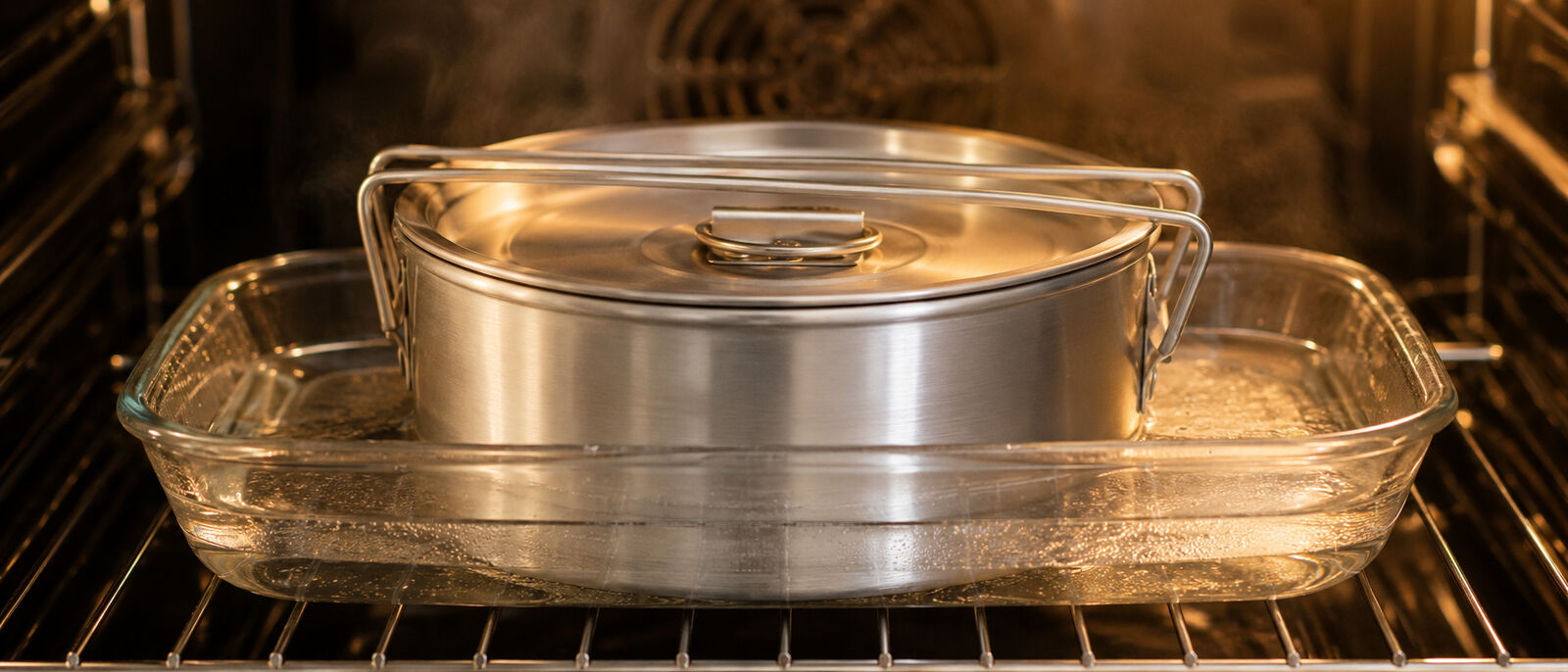
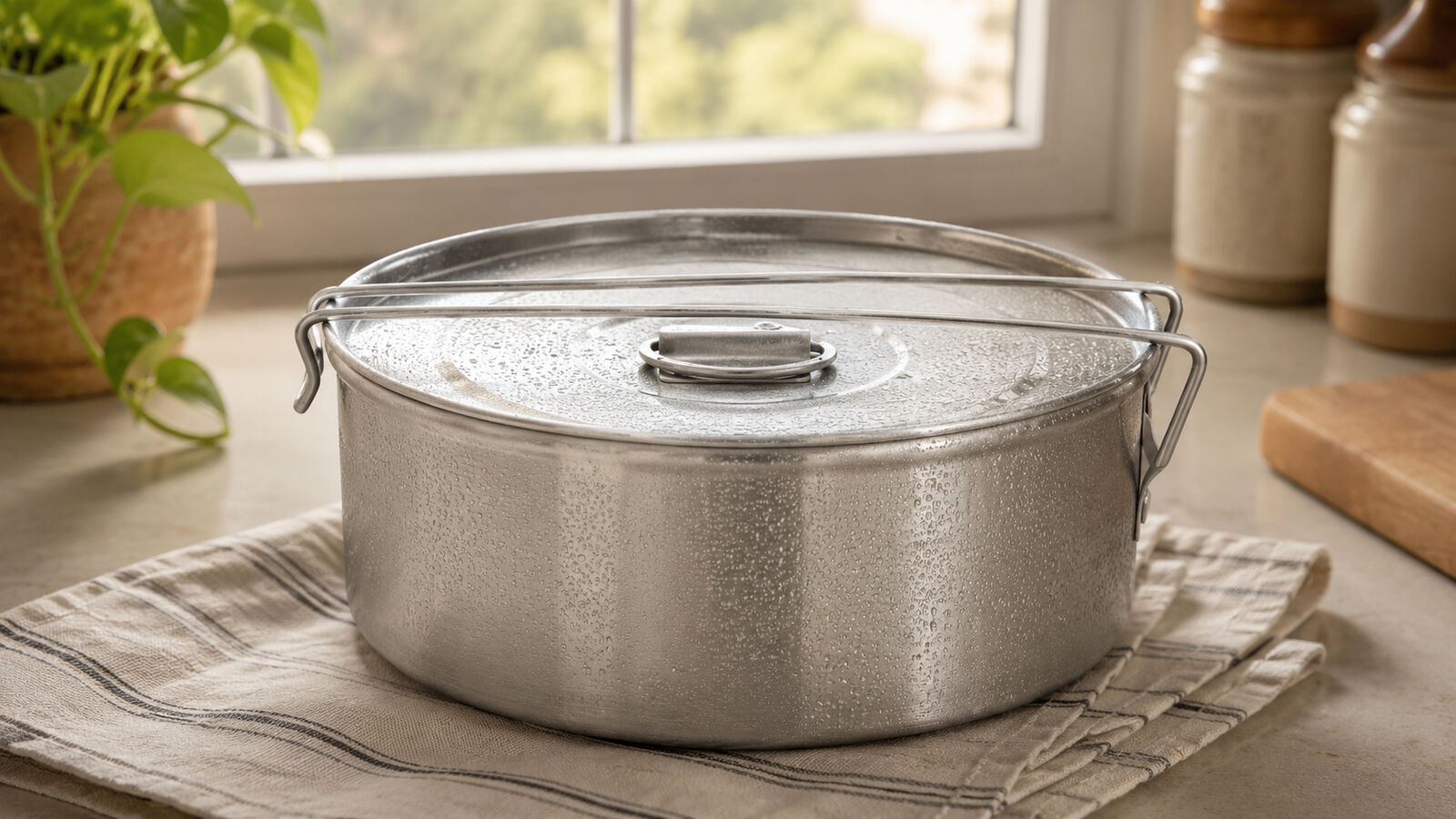
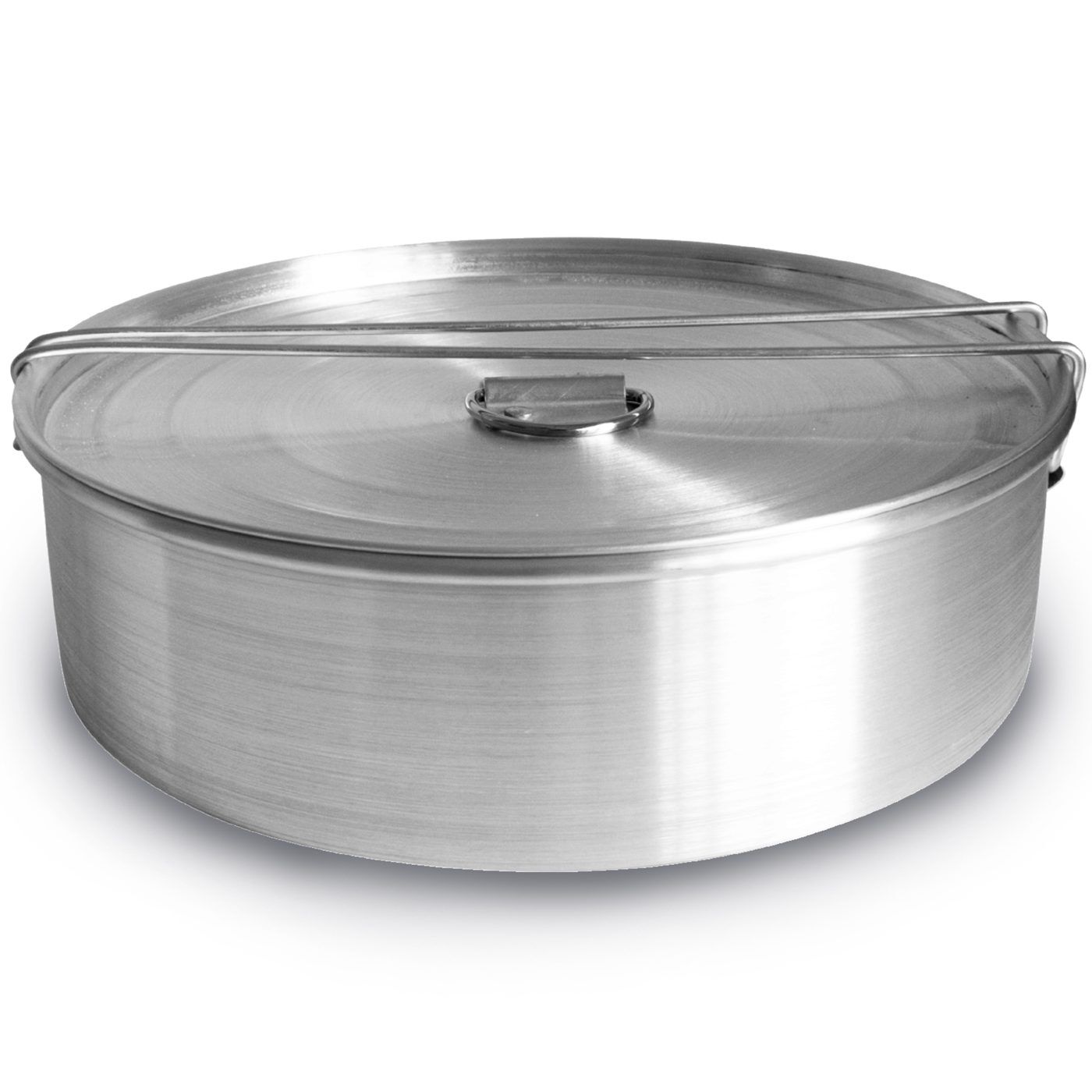
A Baño María, also called a water bath or bain-marie, surrounds the flan mold with hot water so the custard cooks slowly and evenly. This gentle method protects the flan from direct oven heat and helps prevent cracks, bubbles, curdling, rubbery texture, and overcooked edges.
Shop Flan MoldsFive simple steps stand between raw custard and a smooth, crack-free flan. Each one protects the mold from direct heat and keeps water out of the custard.
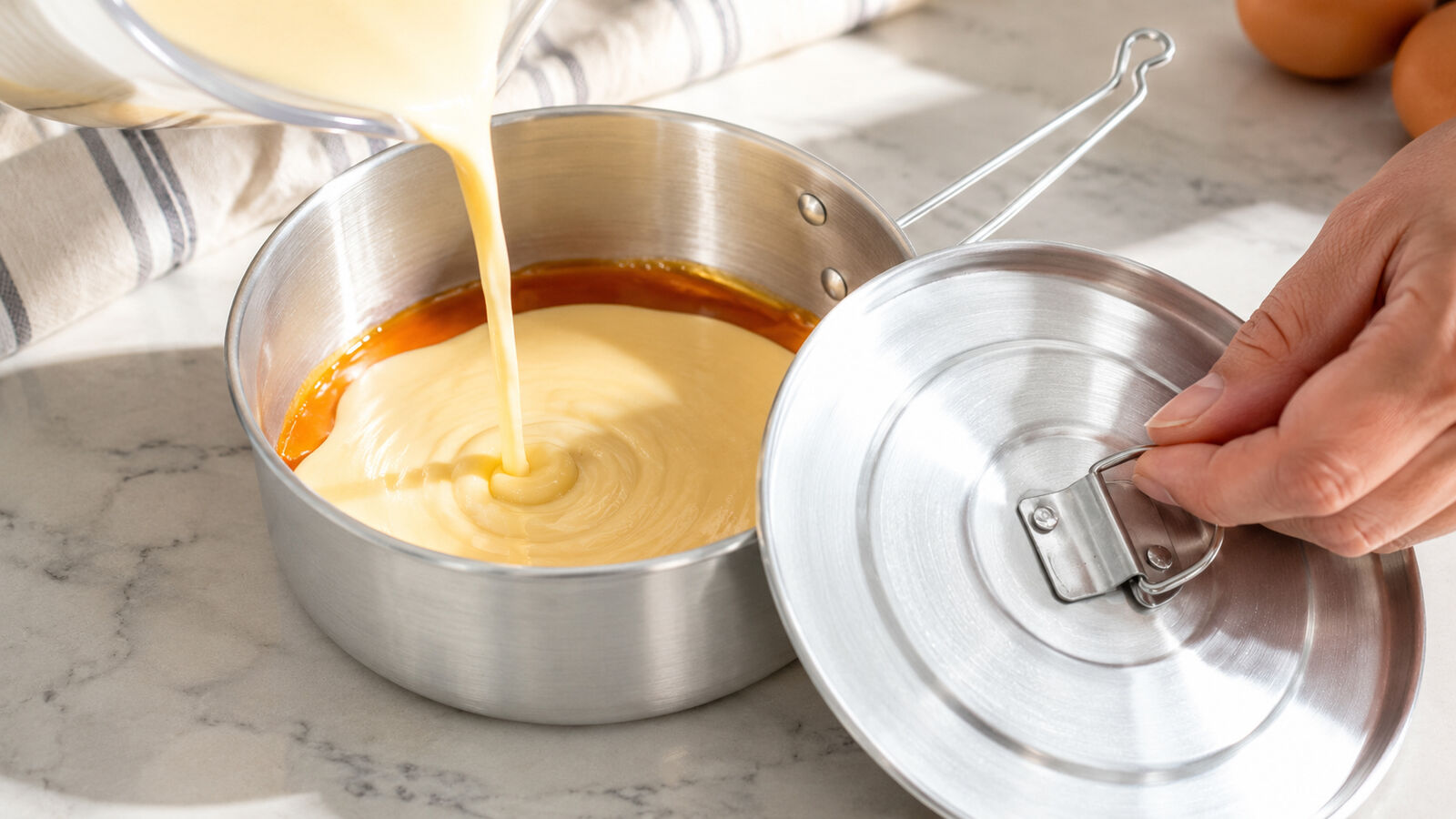
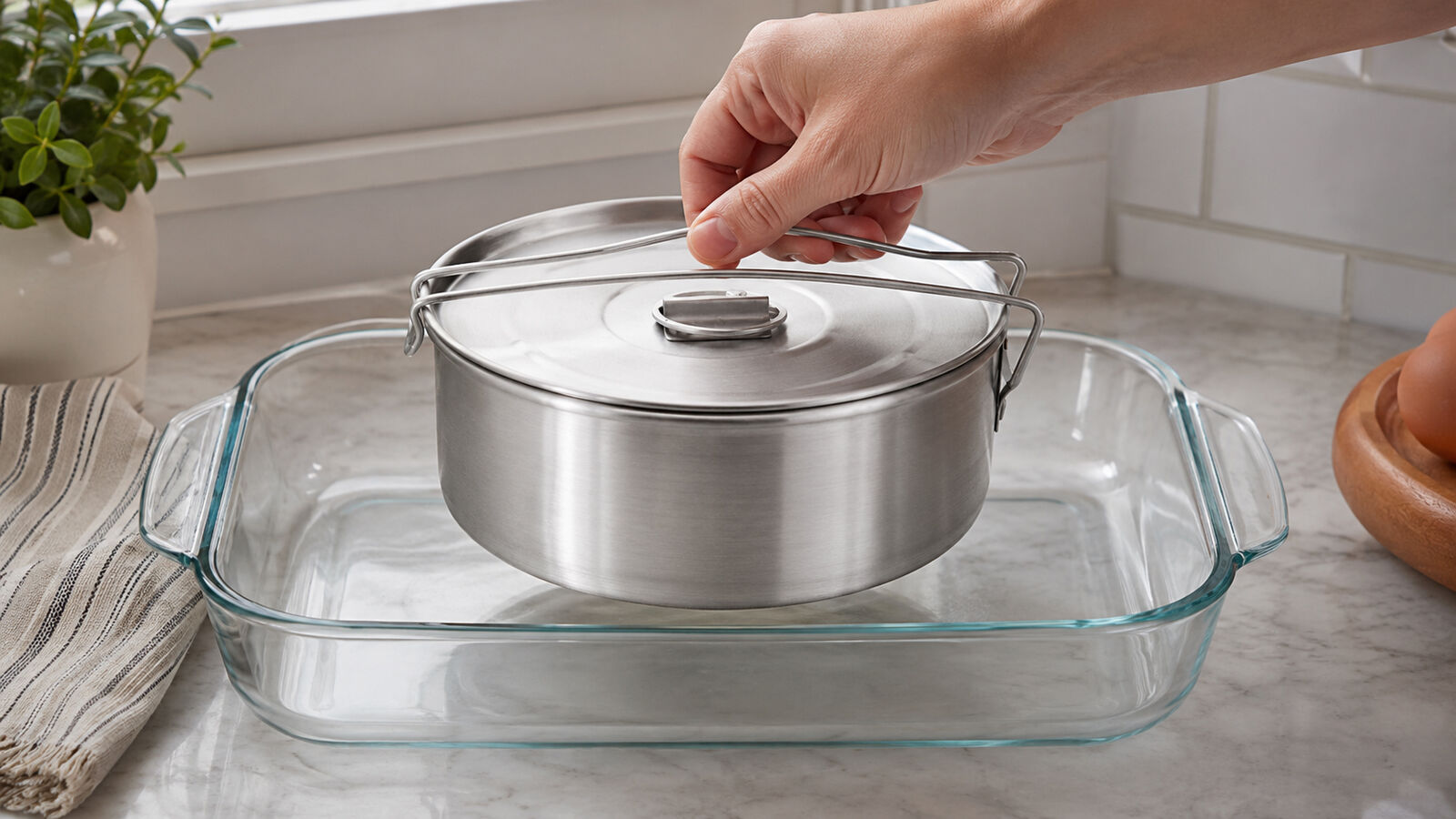
Add the caramel to the bottom of the flanera. Pour in the custard mixture, then place and secure the fitted lid.
The lid helps protect the custard from water droplets, condensation, and direct oven heat.
Set the covered flanera inside a deep glass or aluminum baking pan.
For best results, use a glass or aluminum outer pan. Contact with certain other metals during prolonged exposure to hot water may cause the aluminum flanera to stain or become discolored.
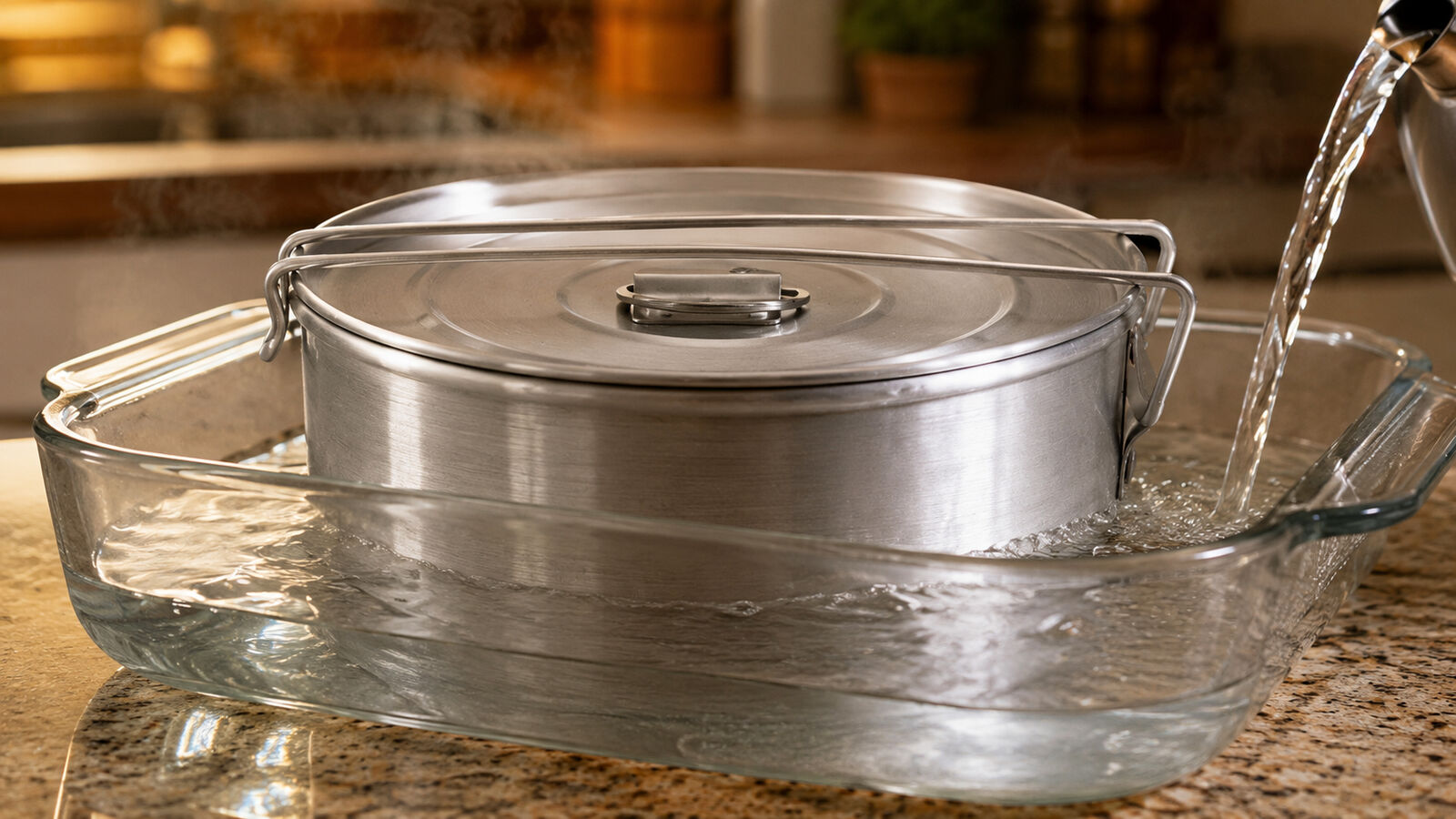
Carefully pour hot water into the outer pan until it reaches approximately halfway up the sides of the covered flanera.
Do not fill the pan so high that water can splash or enter the mold. Make sure the lid is properly secured before adding the water.
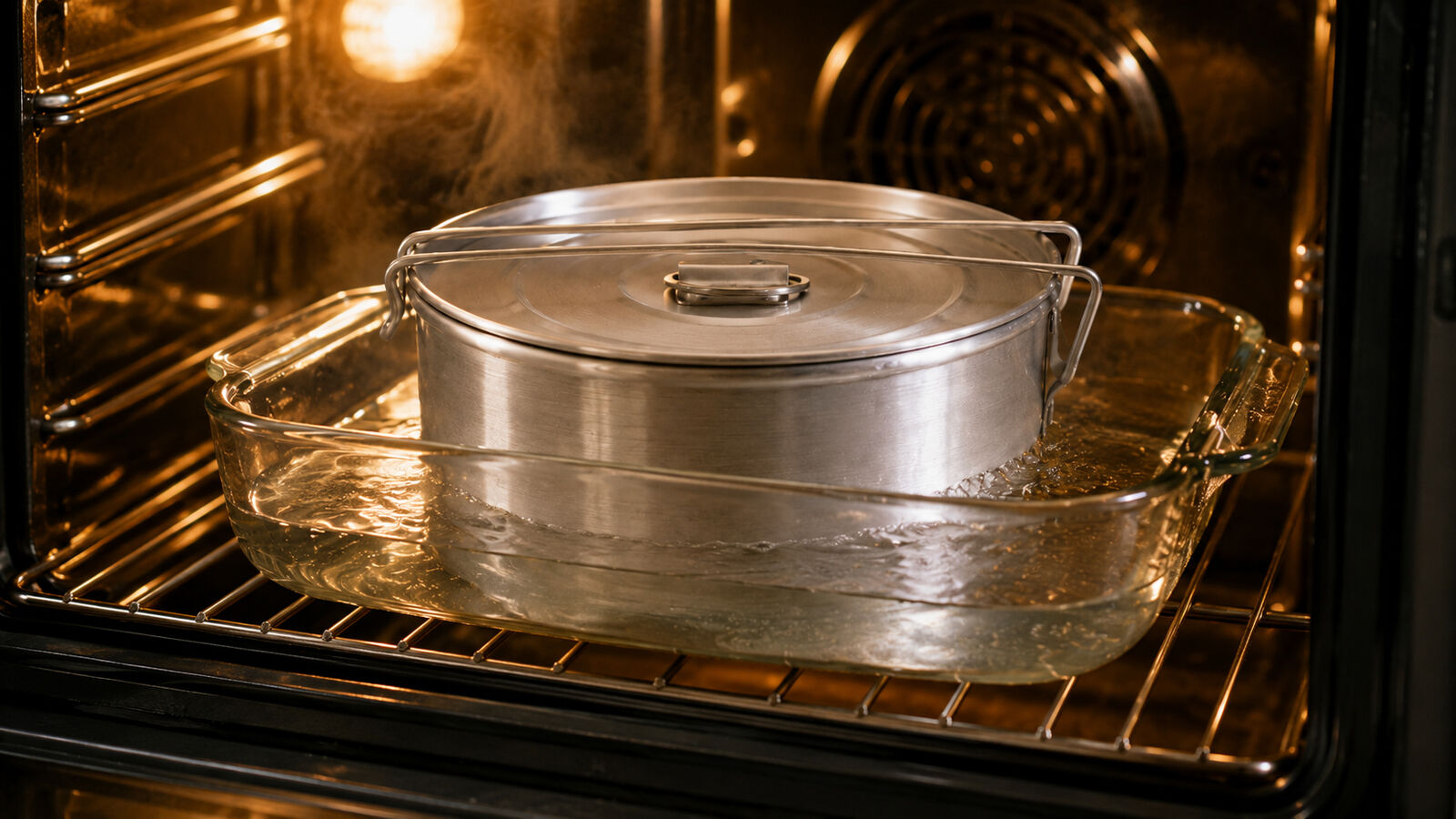
Place the complete water bath in the oven and bake according to your recipe, usually between 325°F and 350°F.
The edges of the flan should be set, while the center should still jiggle slightly when the mold is gently moved. The center should not appear completely liquid.
Carefully remove the flanera from the water bath and allow it to cool.
Refrigerate the flan for at least four hours, preferably overnight, before unmolding. Chilling helps the custard finish setting and makes it easier to release from the mold.
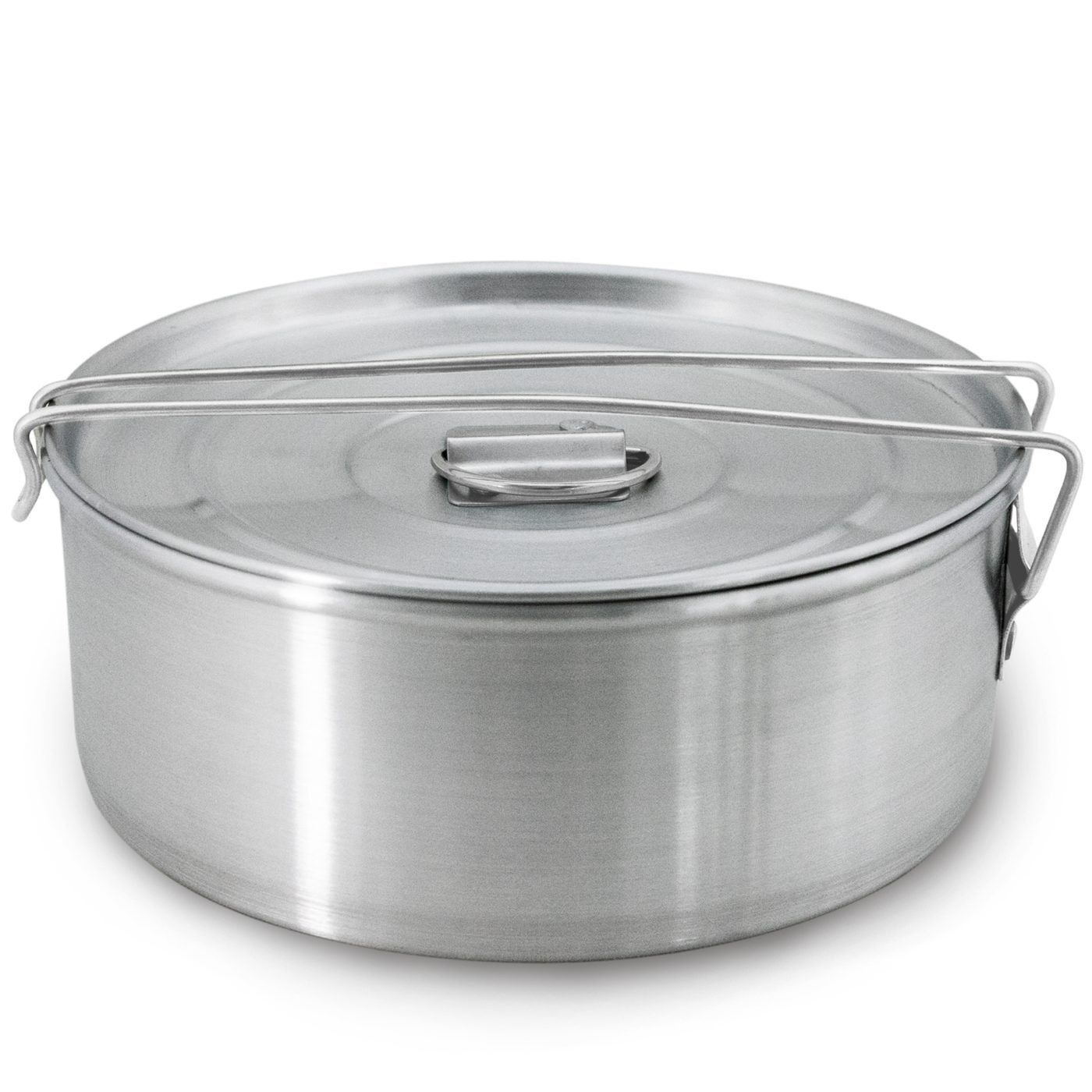
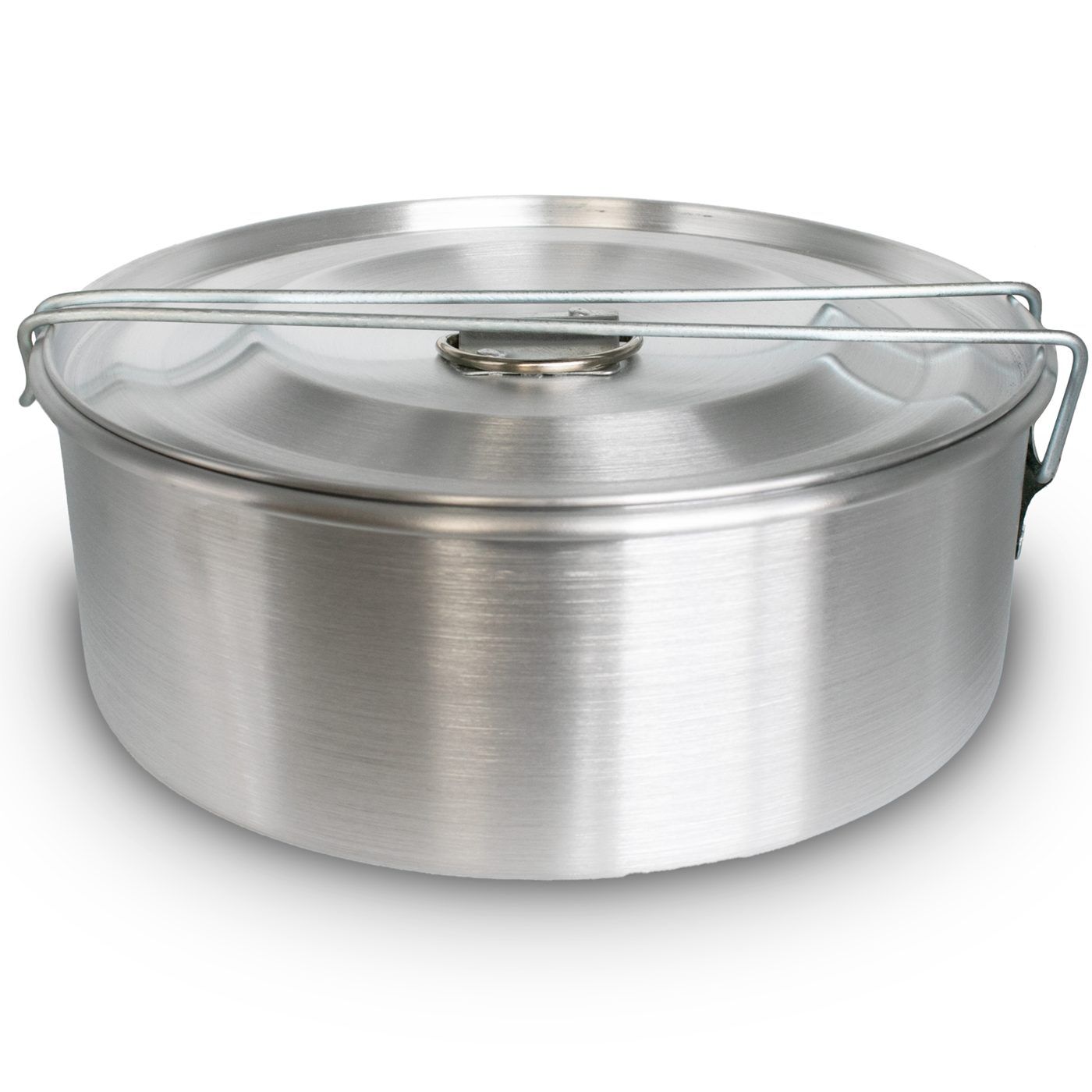
A traditional flanera is made primarily of aluminum because aluminum heats quickly and distributes heat evenly. This makes it ideal for caramelizing sugar and cooking delicate custards in a Baño María.
To help reduce staining or discoloration, use a glass or aluminum baking pan as the outer water-bath pan. Avoid leaving the aluminum flanera in prolonged contact with other types of metal while submerged in hot water.
Aluminum may naturally darken, stain, or change color after repeated exposure to heat, water, caramelized sugar, and minerals found in tap water. This cosmetic change is normal and does not affect the flanera’s functionality, cooking performance, or ability to prepare flan properly.
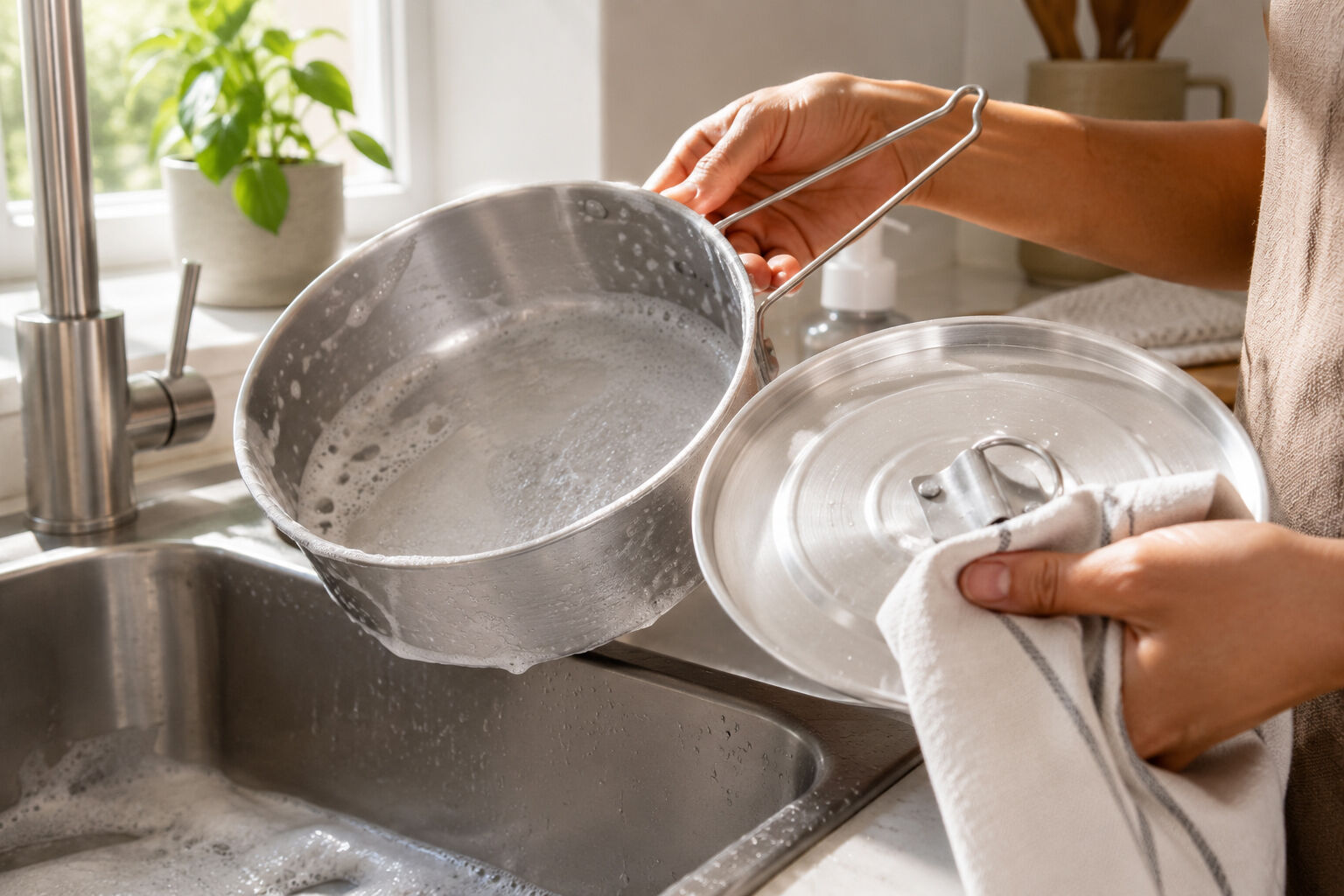
After each use, allow the flanera to cool before washing it by hand with mild dish soap and a soft sponge. Rinse and dry it completely before storing.
Do not use steel wool, abrasive scrubbers, harsh cleaners, or a dishwasher. These may scratch, darken, stain, or damage the aluminum surface.
All three sizes share the same 75% aluminum / 25% galvanized steel construction and fitted lid for Baño María baking.
$28.99
Buy Now on Amazon
$32.99
Buy Now on Amazon
$37.99
Buy Now on AmazonA Baño María is a cooking method in which a container of food is placed inside a larger pan filled with hot water. For flan, the covered flanera sits inside the outer pan while the surrounding water provides gentle and even heat.
Baño María translates to “water bath” in English. It may also be called a bain-marie, especially in professional kitchens and European recipes.
A water bath protects the custard from direct oven heat and helps it cook gradually. This reduces the risk of cracks, bubbles, curdling, rubbery texture, and overcooked edges.
A water bath is strongly recommended for traditional flan. It is possible to bake flan without one, but the custard is more likely to cook unevenly and develop an undesirable texture.
Without a water bath, the edges may cook too quickly while the center remains undercooked. The finished flan may become cracked, bubbly, grainy, dry, or rubbery.
The hot water should generally reach approximately halfway up the sides of the covered flanera. Do not add so much water that it may splash into the mold when the pan is moved.
Flan should generally be covered while baking in a water bath. A fitted lid protects the surface from condensation, water droplets, and direct oven heat.
A fitted lid is highly recommended. It helps prevent water from entering the custard and promotes a smooth surface. If the mold does not include a lid, tightly secured aluminum foil may be used.
An uncovered flan may develop a dry or uneven surface. Condensation may drip into the custard, and direct oven heat may cause the top or edges to cook too quickly.
Add the caramel to the bottom of the mold, pour in the custard mixture, and secure the lid. Place the covered mold inside a deep glass or aluminum pan. Add hot water until it reaches halfway up the mold, then bake according to the recipe.
Use a deep glass or aluminum baking pan that can safely hold the flanera and enough hot water to reach halfway up its sides.
Using a glass or aluminum outer pan also helps reduce staining or discoloration that may occur when an aluminum flanera contacts certain other metals in hot water.
Yes. An overcooked flan may become firm, rubbery, grainy, cracked, or filled with small bubbles. Remove it from the oven when the edges are set but the center still jiggles slightly.
The edges should appear firm and set, while the center should still move slightly when the mold is gently shaken. The center should not look completely liquid. The flan will continue to set as it cools and refrigerates.
Common mistakes include skipping the water bath, using excessive heat, overbaking, allowing water to enter the mold, leaving the custard uncovered, overmixing the ingredients, using too much water in the outer pan, and unmolding the flan before it has chilled completely.
Aluminum may naturally darken, stain, or become discolored after repeated exposure to heat, water, caramelized sugar, or minerals in tap water. Contact with certain metals during the water-bath process may also cause discoloration.
This cosmetic change is normal and does not affect the flanera’s functionality or cooking performance.
To reduce discoloration, use a glass or aluminum outer pan, wash the flanera by hand with mild soap and a soft sponge, and dry it completely before storing. Avoid dishwashers, steel wool, abrasive scrubbers, and harsh cleaning products.
Whether you're searching for your next recipe or learning the techniques behind perfect homemade flan, our Flan Hub brings together recipes, baking guides, mold comparisons, and expert tips to help you master one of Latin America's most beloved desserts.
Explore the Complete Flan Hub →