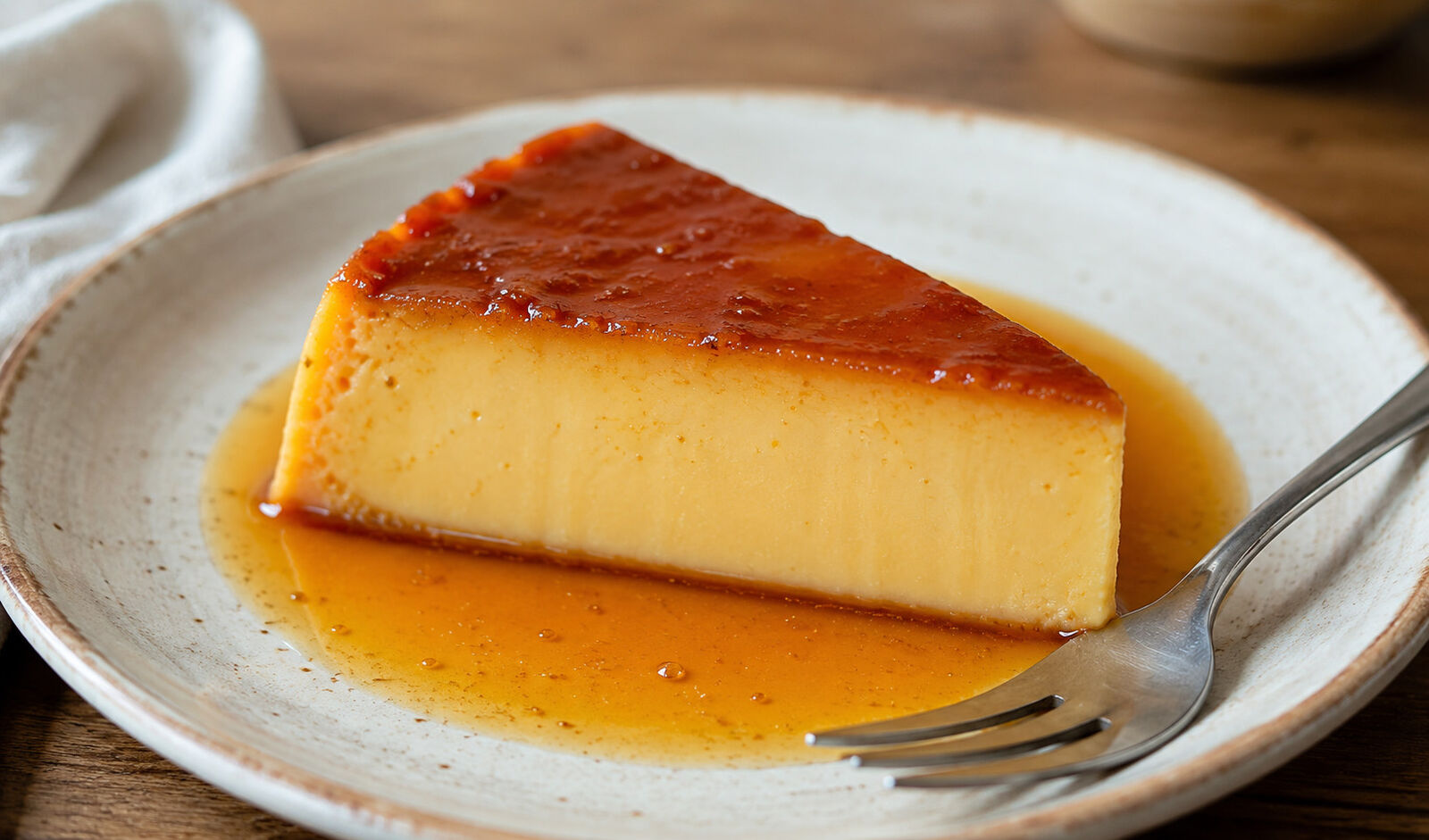
It isn't a secret ingredient, and it isn't luck. The silky, crack-free flan you remember starts with one traditional technique — and a mold that's actually built to do it right.
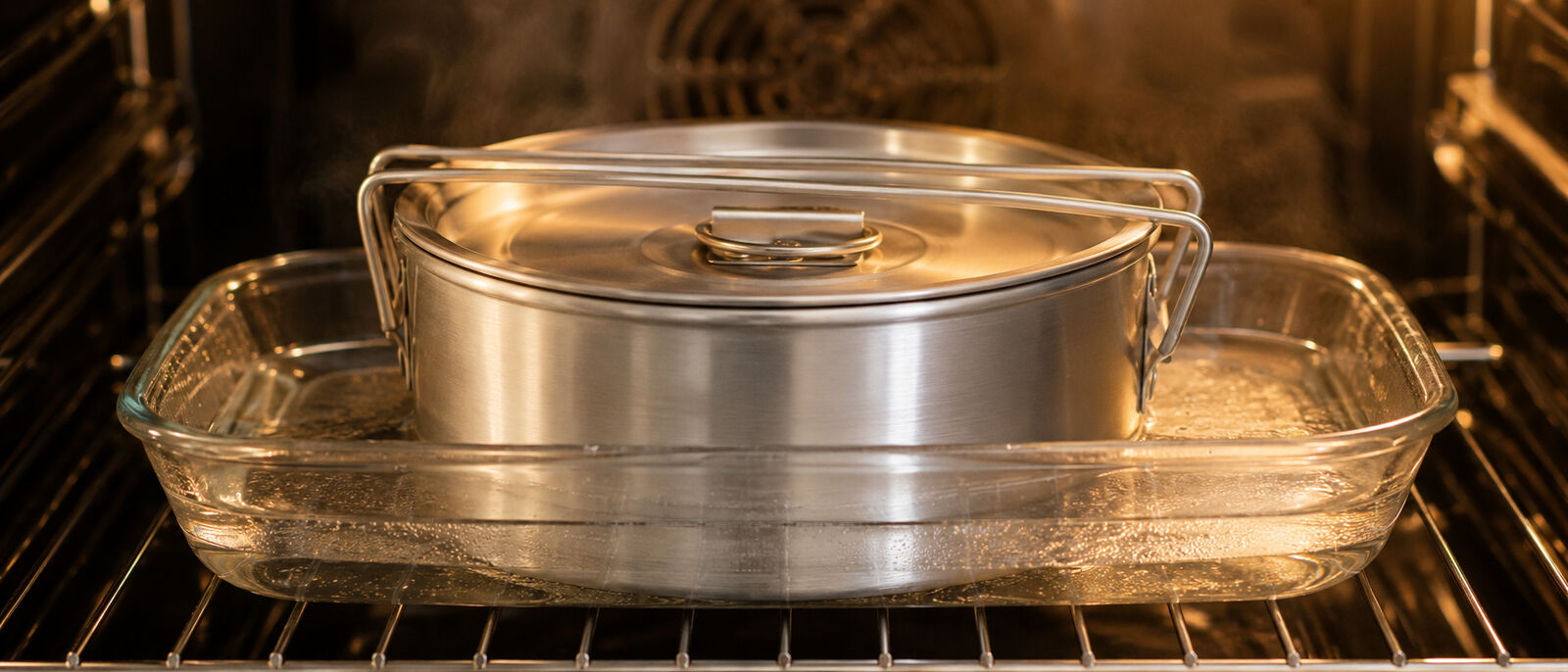
A Baño María — also called a water bath or bain-marie — means baking the flan mold inside a larger pan filled partway with hot water. The water surrounds the mold and carries the oven's heat to the custard gently and evenly, instead of blasting it directly.
Baño María translates simply to “water bath.” In professional kitchens and European recipes, the same technique often goes by bain-marie. Different name, same idea: put distance and moisture between direct heat and something delicate.
The custard never touches the oven's direct heat — the water does the work.
None of this is complicated. A Baño María changes exactly one thing — how heat reaches the custard — and that one change fixes almost everything that goes wrong with homemade flan.
Water can only get so hot before it boils, so the custard is never exposed to the oven's full, direct blast.
Heat travels through the water uniformly, so the edges and center set together instead of the outside overcooking first.
The bath keeps the air around the mold humid, protecting the custard's surface from drying out or forming a skin.
Slow, gentle heat lets the egg proteins set softly instead of seizing — the difference between silky and grainy.
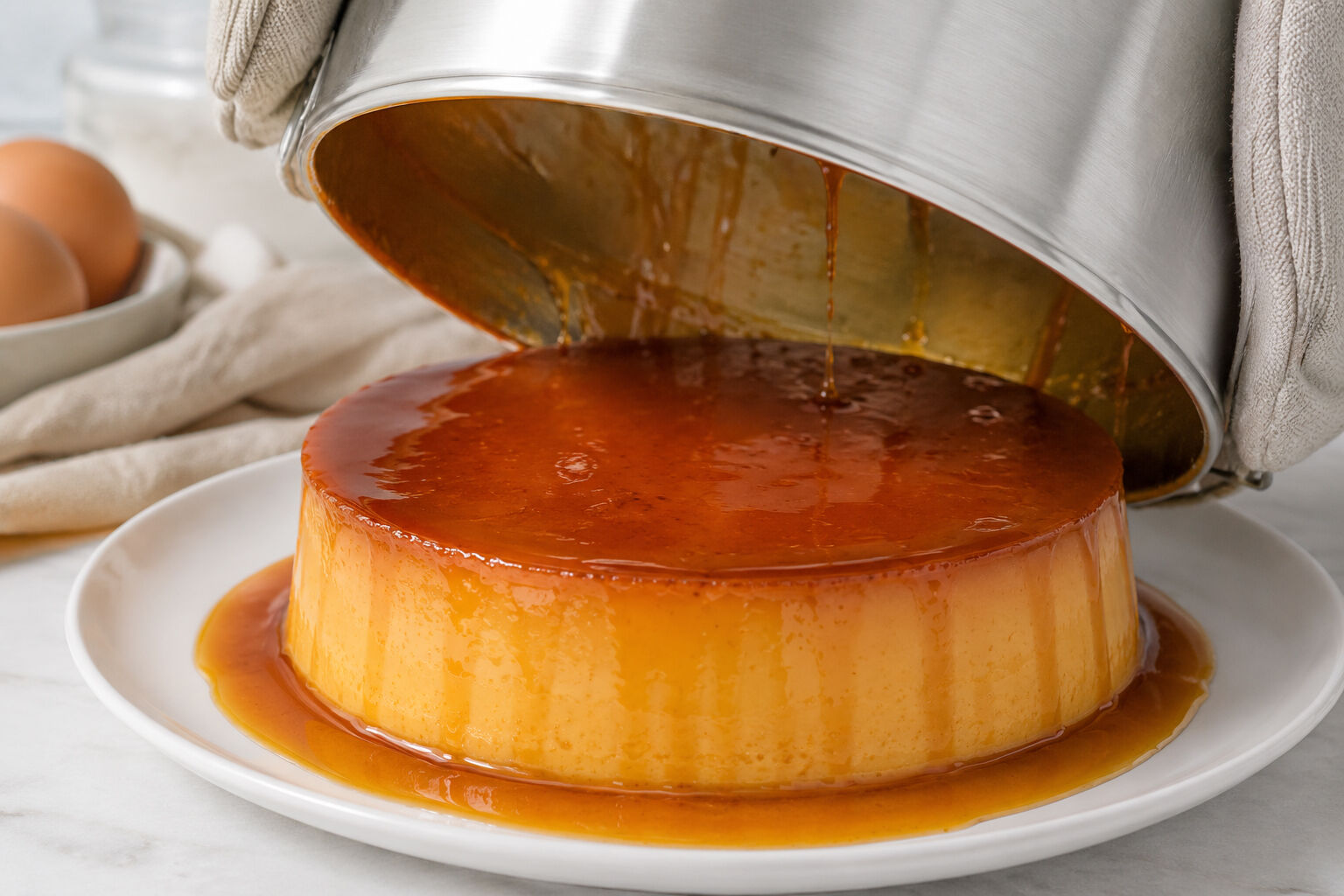
Because the custard bakes evenly, the caramel underneath stays intact and flows smoothly once the flan is unmolded.
Ask anyone whose grandmother made flan how she knew when the water bath was ready, and you'll probably get a shrug. She didn't measure it with anything. She filled the pan until the water came up around the mold the way it always had, slid it into the oven, and went back to the rest of the meal. It wasn't a technique she'd read about — it was just how flan was made, the same way it had always been made in her kitchen.
That knowledge moved the way most kitchen knowledge moves in Mexican and Latin American families: hand to hand, not page to page. A daughter watching her mother pour hot water into the outer pan. A niece handed the mold for the first time and told, simply, “make sure the water comes up about halfway.” Nobody necessarily called it a Baño María out loud. They just did it, because skipping it meant a flan that cracked, or didn't set right, or wasn't good enough to serve to the family.
That's the part that gets lost when a recipe gets typed up and shared online — the water bath usually shows up as one quiet line, easy to skip if you don't understand why it's there. But it was never a footnote in the kitchens this dessert comes from. It was the whole reason the flan turned out the way everyone still remembers it.
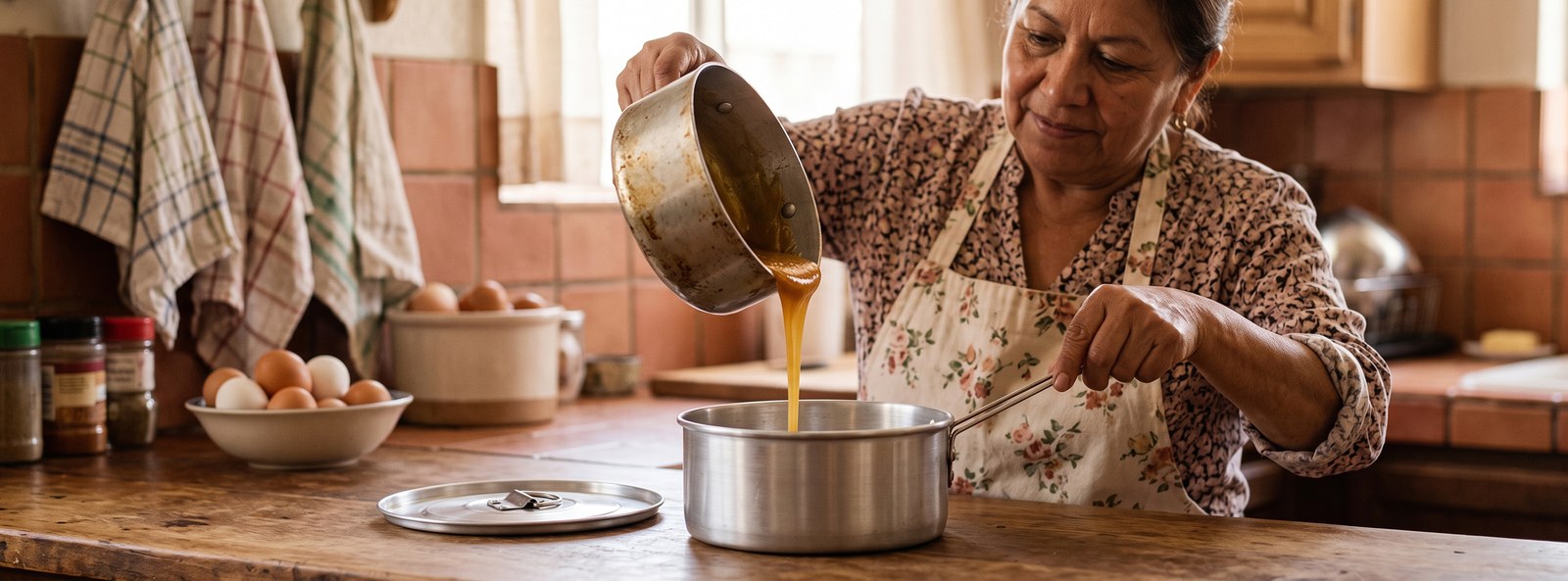
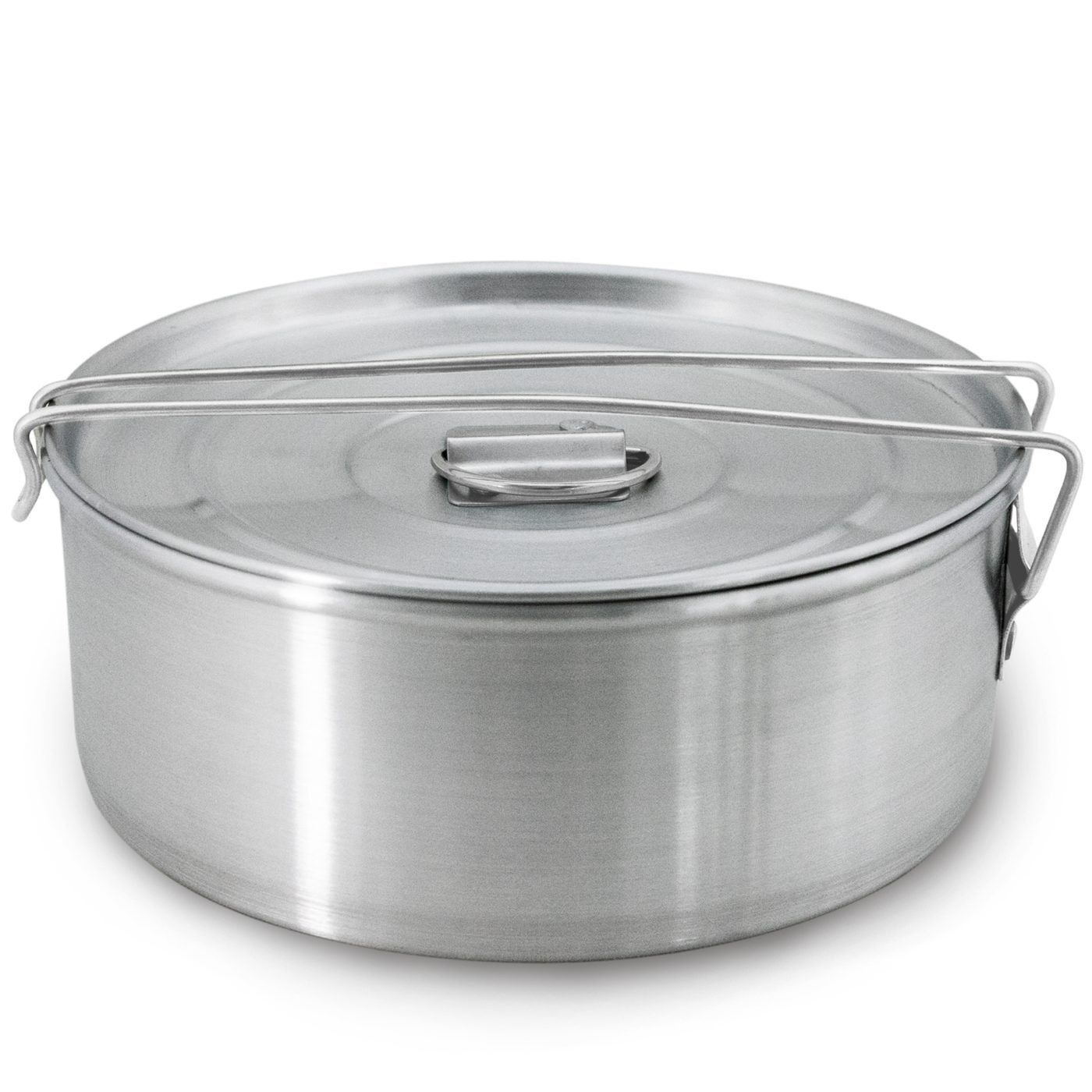
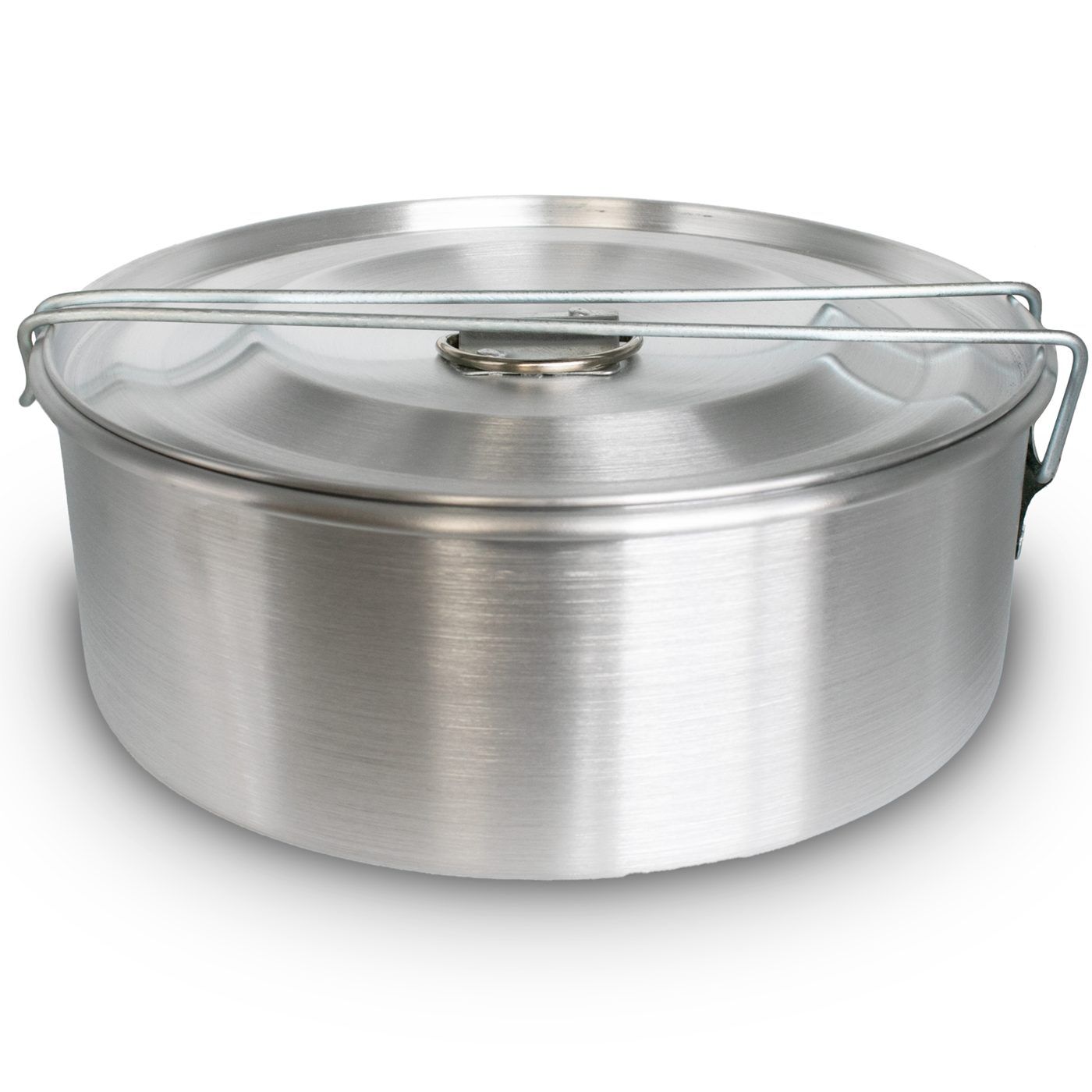
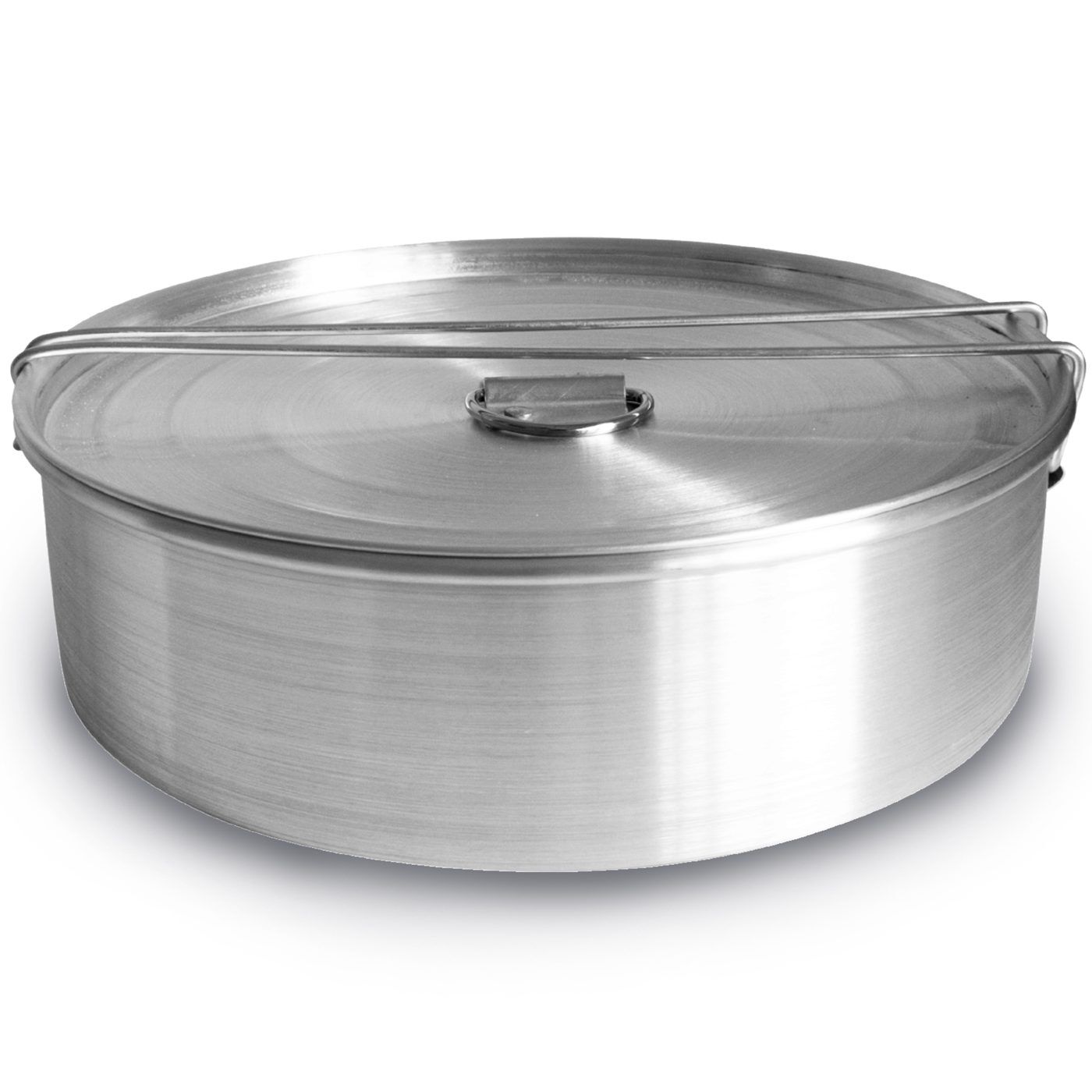
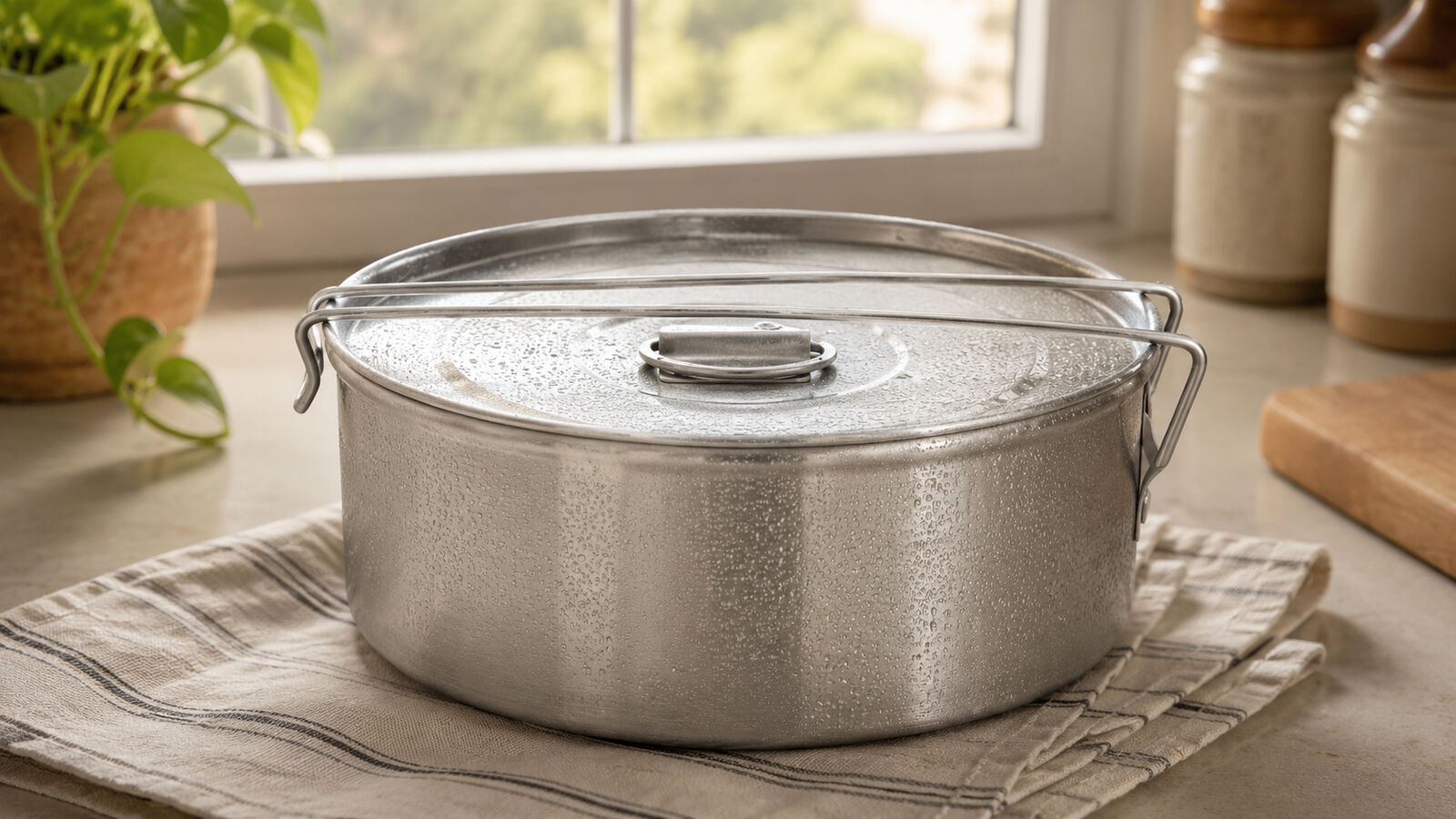
Once you understand what a Baño María actually needs — a mold that can take direct stovetop heat, sit safely inside a water bath, and keep water out while it bakes — it's easier to see why the traditional flanera looks the way it does. Globe Rocket builds its flan molds around exactly that job: 75% aluminum for fast, even heat, reinforced with galvanized steel, and a fitted lid designed specifically to keep the custard sealed during the water bath.
The traditional everyday size, with the lid that makes the water bath simple.
$28.99
Same lid, same water-bath fit, sized for a bigger table.
$32.99
Built for potlucks, holidays, and big tables.
$37.99
Five simple steps stand between raw custard and a smooth, crack-free flan. Each one protects the mold from direct heat and keeps water out of the custard.

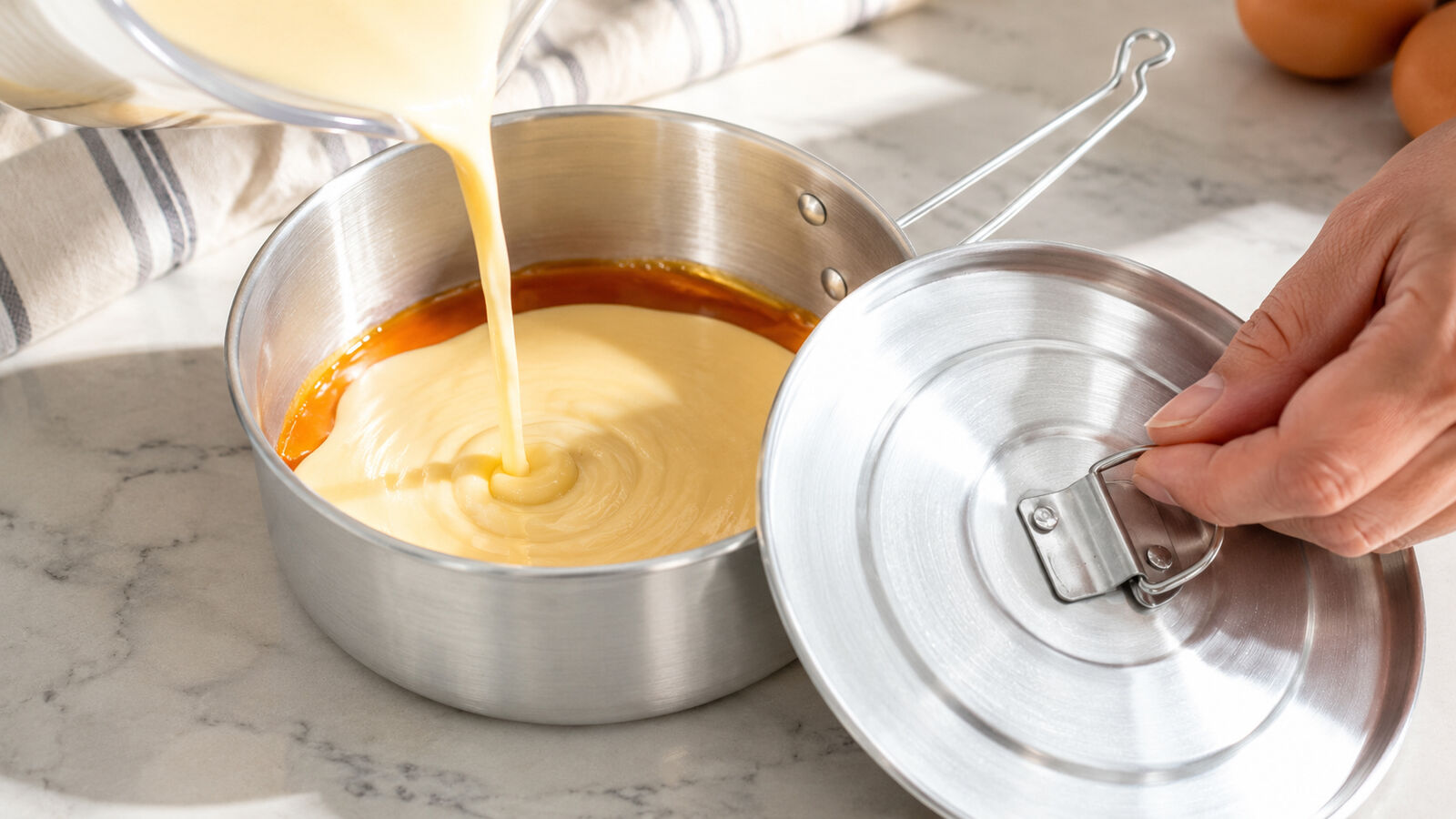
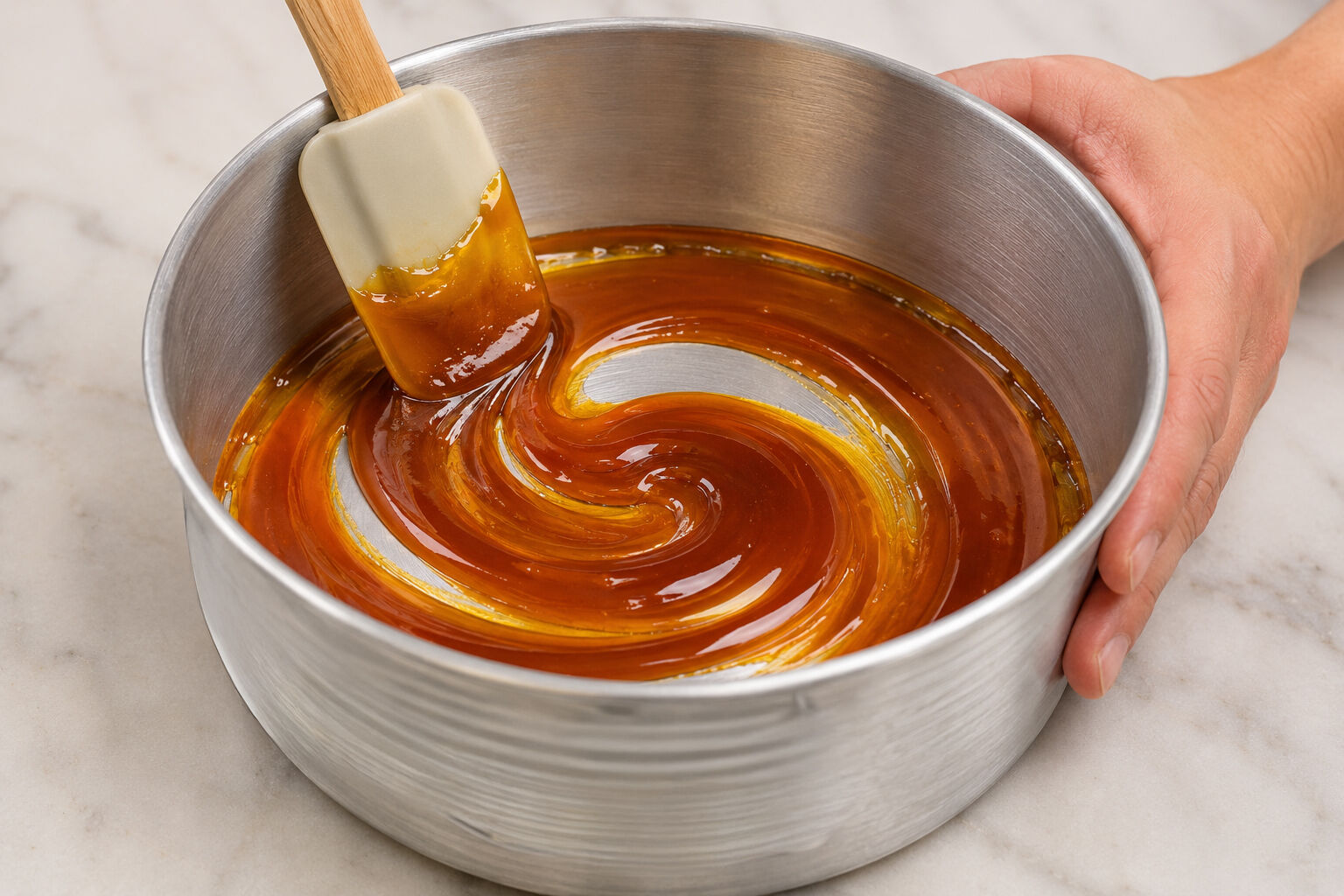
Add the caramel to the bottom of the flanera. Pour in the custard mixture, then place and secure the fitted lid. The lid protects the custard from water droplets, condensation, and direct oven heat.

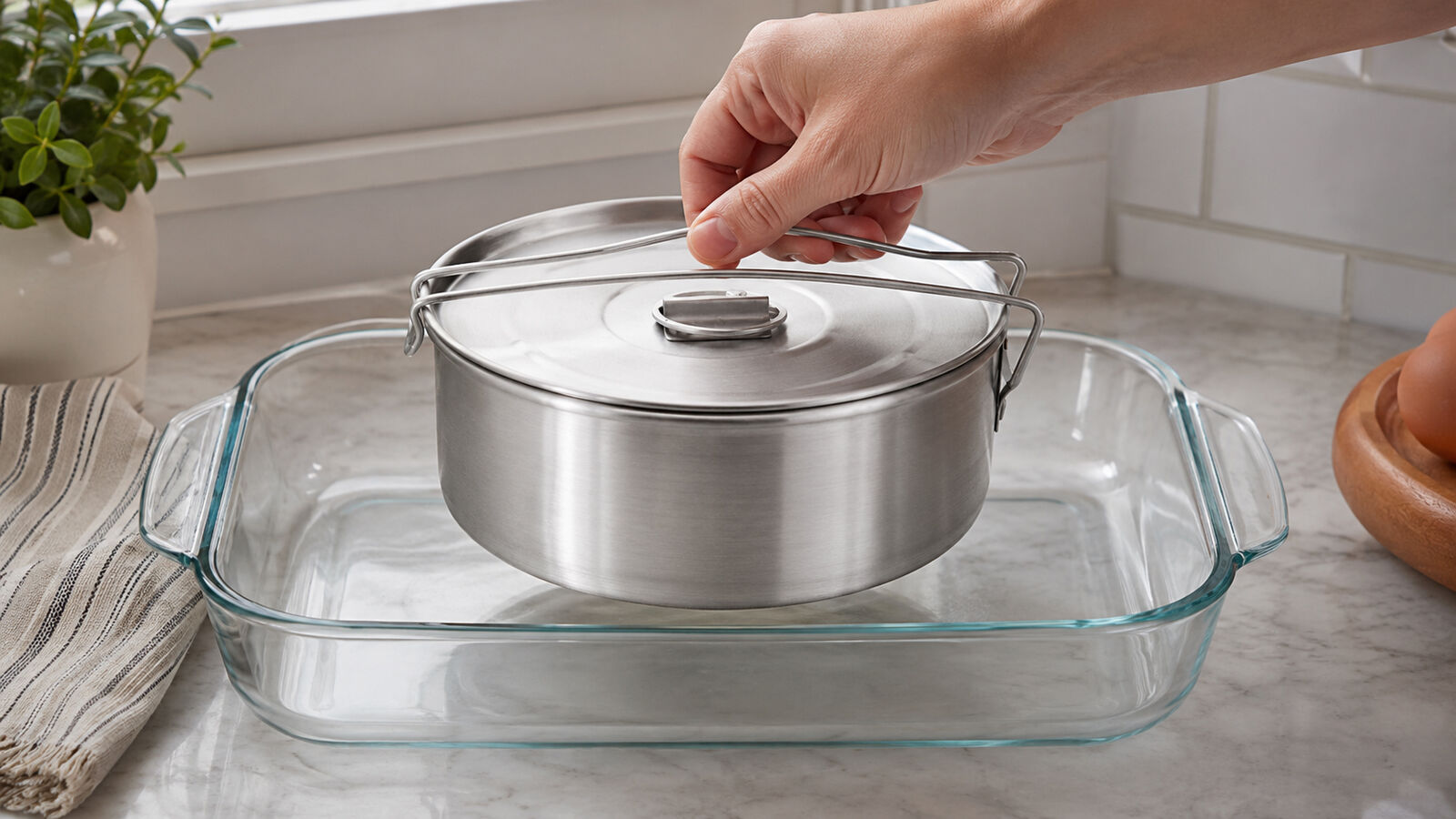
Set the covered flanera inside a deep glass or aluminum baking pan. Contact with certain other metals during prolonged exposure to hot water may cause the aluminum flanera to stain or discolor.

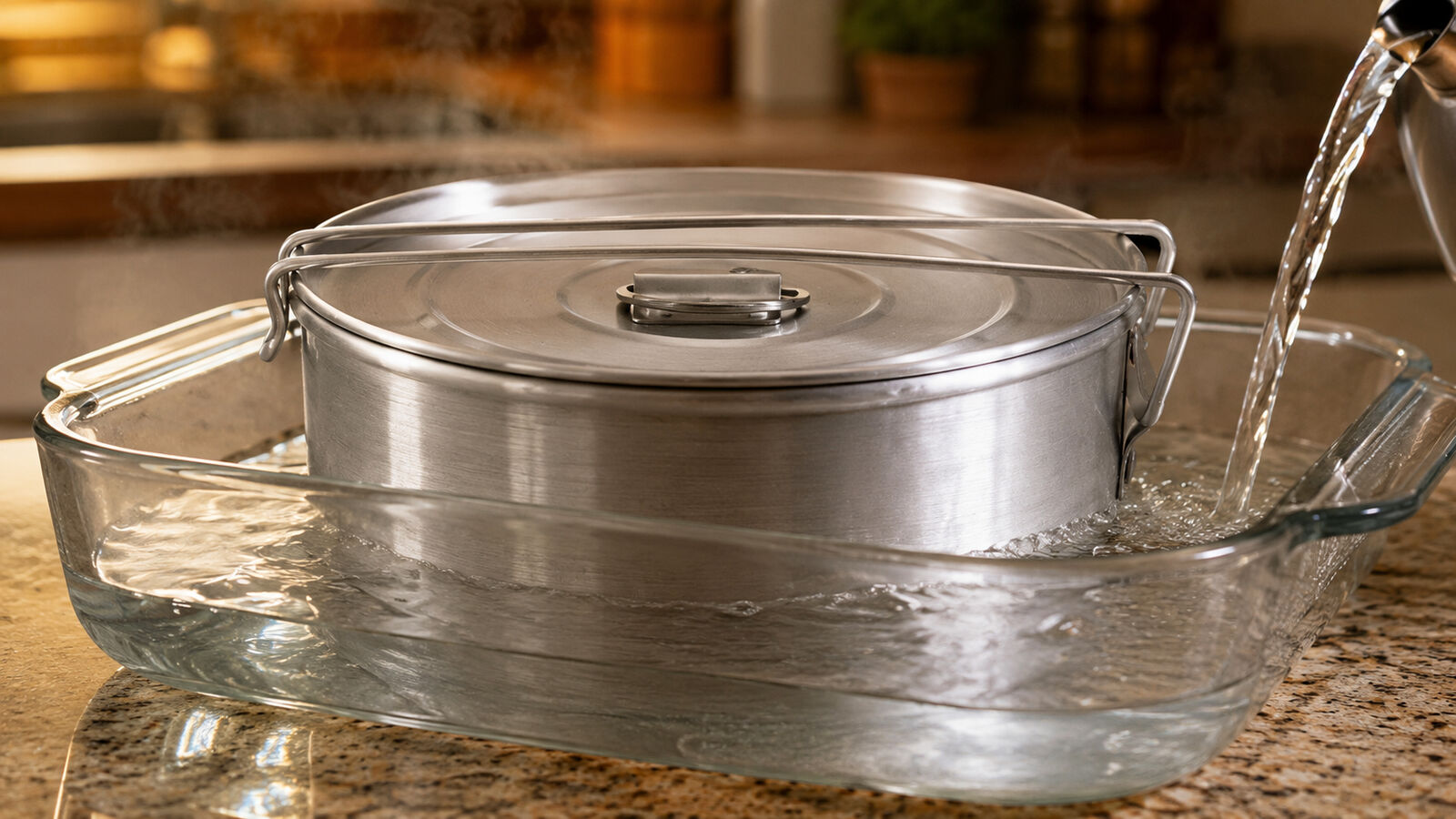
Carefully pour hot water into the outer pan until it reaches approximately halfway up the sides of the covered flanera. Don't fill it so high that water can splash or enter the mold.

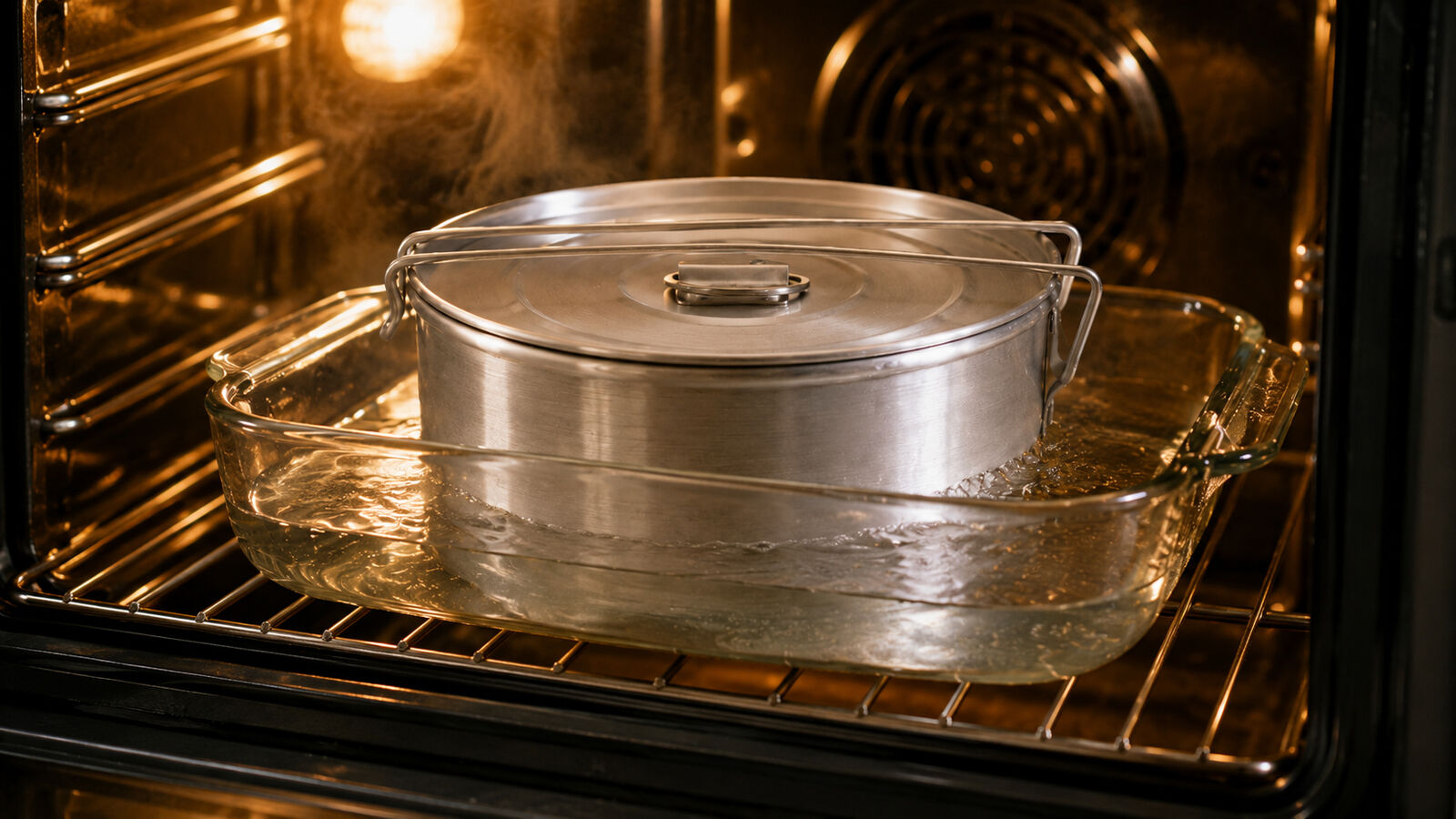
Place the complete water bath in the oven and bake according to your recipe, usually between 325°F and 350°F. The edges should be set while the center still jiggles slightly — not liquid.

Carefully remove the flanera from the water bath and let it cool. Refrigerate for at least four hours, preferably overnight, before unmolding — chilling is what finishes setting the custard.
This is the same recipe that comes with every Globe Rocket flan mold — written here with notes on exactly where the Baño María comes in and why it matters at each stage.


Pouring the custard: this is the point of no return — everything after this step is about protecting that custard from direct heat.
Covering the mold: the lid is what keeps condensation and water droplets off the custard's surface once it's sitting in the bath.
Placing it in the water: this is the actual Baño María — the water absorbs the oven's heat before it ever reaches the mold.
Baking: the water keeps the temperature around the mold gentle and steady for the full 50 minutes, which is what produces the silky, even texture.
The water bath is the one step in this recipe that can't be skipped without changing the result. Everything else — the caramel, the custard ratio, the chill time — is fairly forgiving. The water bath is not.
This exact recipe scales cleanly — simply use the same ratio of caramel and custard, adjusted for volume, and the same Baño María method, in a Large or X-Large Globe Rocket mold when you're feeding more people.
Get the Medium Flan Mold — $28.99Every one of these is easy to fix once you know what's happening. Here's what to watch for.
Skipping the water bath entirely is the single most common cause of cracked, rubbery flan — the custard takes the oven's full direct heat with nothing to soften it.
Filling the outer pan too high can let water splash or seep past the lid. Keep the level at about halfway up the sides of the covered flanera.
The water only needs to be hot, not boiling. A vigorously boiling bath pushes more heat into the custard than it needs and can encourage bubbles.
This is exactly what the fitted lid is for. Make sure it's properly secured before adding the water, and lower the mold in carefully.
Use a deep glass or aluminum pan for the water bath. Contact with certain other metals during prolonged exposure to hot water can stain or discolor the aluminum flanera.
Bake gently, usually between 325°F and 350°F. The edges should be set while the center still jiggles slightly — that's doneness, not undercooked.
None of these mean you did something wrong on purpose. They're just what happens when a delicate custard meets more heat, water, or time than it was built for. Fix the setup, and the same recipe you've always used will turn out completely differently.
Same custard, same oven, same amount of time — the only difference is what's touching the mold. Here's what changes.
| With a Baño María | Without a Water Bath | |
|---|---|---|
| Surface texture | Smooth and glassy | Often dry or bubbled |
| Doneness pattern | Sets evenly from edge to center | Edges overcook before the center sets |
| Cracking risk | Low — heat never spikes | High — direct heat causes rapid expansion |
| Caramel result | Stays intact, flows smoothly when unmolded | Can scorch or separate from overcooked custard |
| Overall texture | Silky, dense, sliceable | Rubbery, grainy, or curdled |
All three share the same 75% aluminum construction and fitted lid, built for the water bath. The only real question is how many people you're feeding.
The traditional everyday size — and where we'd start if this is your first flan mold.
$28.99
For the household that's regularly feeding 10 or more.
$32.99
For potlucks, holidays, and tables that keep growing.
$37.99
Still not sure? The Medium is the traditional size used in most Mexican households for an everyday family dessert. If you're regularly serving more than 8, size up to the Large.
A Baño María is a cooking method in which a container of food is placed inside a larger pan filled with hot water. For flan, the covered flanera sits inside the outer pan while the surrounding water provides gentle, even heat instead of the oven's direct blast.
A water bath protects the custard from direct oven heat and helps it cook gradually. This reduces the risk of cracks, bubbles, curdling, rubbery texture, and overcooked edges — the exact problems most home bakers run into.
You can bake flan without one, but the custard is far more likely to cook unevenly and develop cracks, bubbles, or a rubbery texture. If your flan hasn't been coming out right, this is almost always the missing step.
Boiling water isn't necessary. Very hot tap water or water heated on the stove works well — the goal is gentle, steady heat around the mold, not an actively boiling bath, and handling boiling water that close to a delicate custard adds risk without any real benefit.
Fill the outer pan until the hot water reaches approximately halfway up the sides of the covered flanera. Avoid filling it so high that water could splash or seep into the mold when you move the pan.
Yes. A fitted lid protects the custard's surface from condensation, water droplets, and direct oven heat, which promotes a smooth, even surface. If your mold doesn't include a lid, tightly secured aluminum foil can work instead.
Once it has cooled, the water itself is just hot tap or stove water and can be reused for general kitchen tasks like washing dishes or watering plants. There's no need to save it for another flan batch.
Just the custard. The caramel is made separately on the stovetop before it ever goes into the water bath. The Baño María's job starts once the custard is poured in and the mold goes into the oven.
Picture it: you lift the lid, and the custard underneath is smooth all the way to the edges — no cracks, no bubbles, nothing to apologize for. That's not a lucky batch. That's what happens every time once the water bath is doing its job instead of being skipped. The same technique that shaped every plate of flan on your grandmother's table, ready to shape the next one on yours.
Get the Medium Flan Mold — $28.99The core techniques and full recipe behind a flan that turns out silky every time.
Learn more →What a traditional flanera does differently than a cake pan or glass dish — and why it matters.
Learn more →The complete family recipe, plus a full step-by-step visual guide for every stage.
Learn more →A practical guide to matching Medium, Large, or X-Large to your household and how often you host.
Learn more →