Globe Rocket · Comparison
Ring Cake Mold vs. Bundt Pan: What's the Difference?
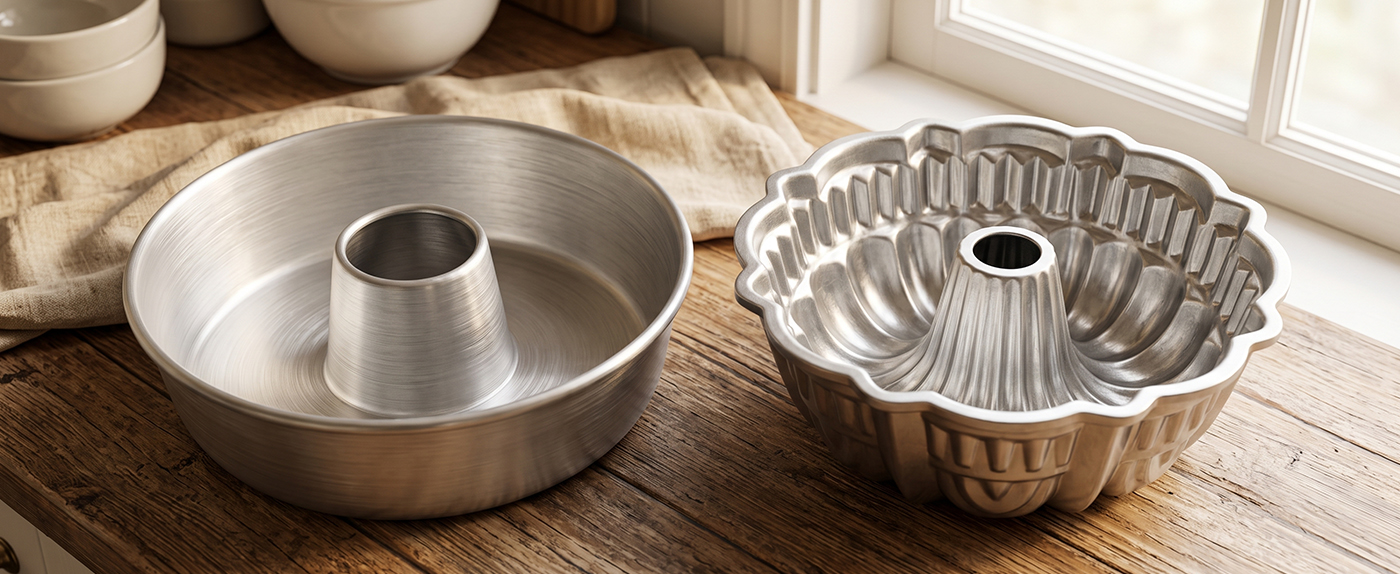
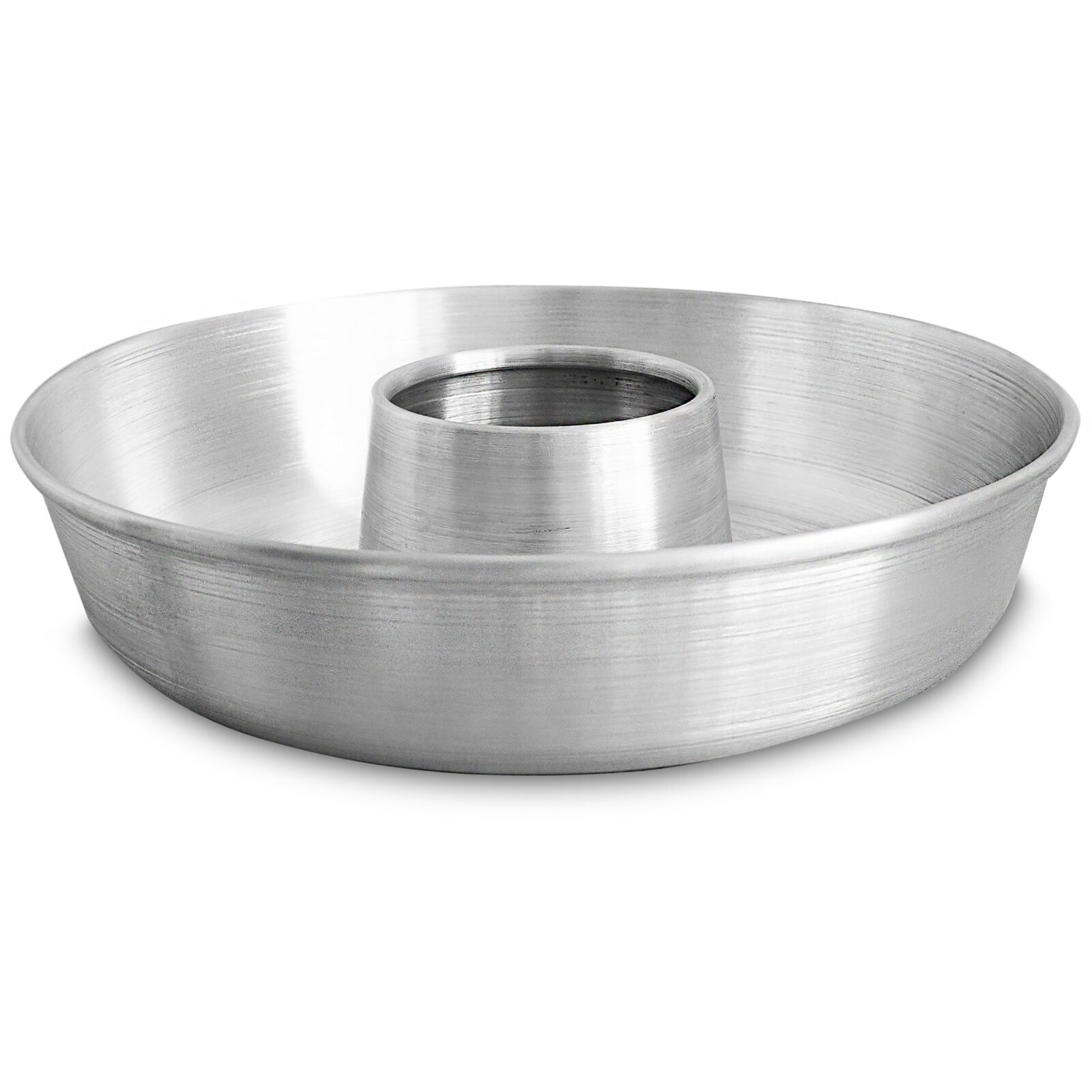
A ring cake mold and a Bundt pan both use a hollow center tube and produce a similar ring-shaped cake, but they're not the same pan. The main difference is the surface: a Bundt pan is typically fluted, with decorative ridges molded into the sides, while a ring cake mold like Globe Rocket's aluminum pan is smooth-sided. That distinction can matter when choosing a pan for flan or chocoflan, where a smooth-sided form is suited to the way these desserts are released from the pan.
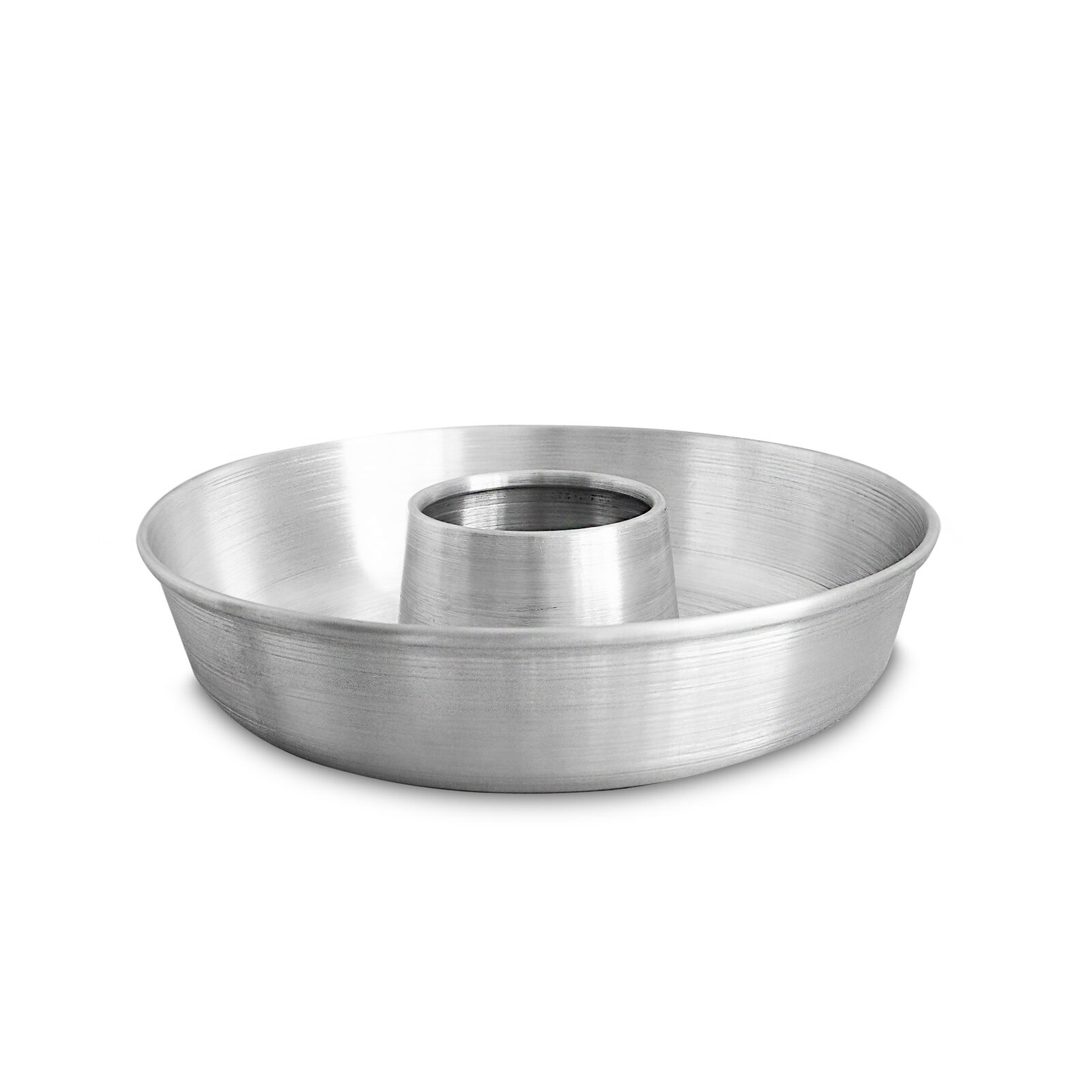
A ring cake mold is a round baking pan built around a hollow center tube, producing a ring-shaped cake with an open center rather than a solid one. Globe Rocket's version is made from smooth-sided food-grade aluminum, without fluted ridges, and is designed for ring cakes, pound cake, chiffon cake, flan, and chocoflan.
A Bundt pan is a specific style of tube pan characterized by its fluted, decorative sides, which imprint ornate ridges into the finished cake. This site does not sell or endorse a specific Bundt pan; the comparison here is about the two shapes in general.
Both pans use a hollow center tube, which places the center of the batter closer to the surrounding pan surface. This tube-style construction is one reason ring-shaped and Bundt-style pans are useful for cakes that benefit from a central opening. In that basic structural respect, the two pan types work similarly.
Where they diverge is the surface finish. A Bundt pan's fluted sides shape ridges and grooves into the cake as it bakes. A ring cake mold's smooth sides leave a plain, unadorned ring shape. Neither surface is inherently better; the choice depends on whether you want a decorative pattern or a simpler, smooth-sided form.
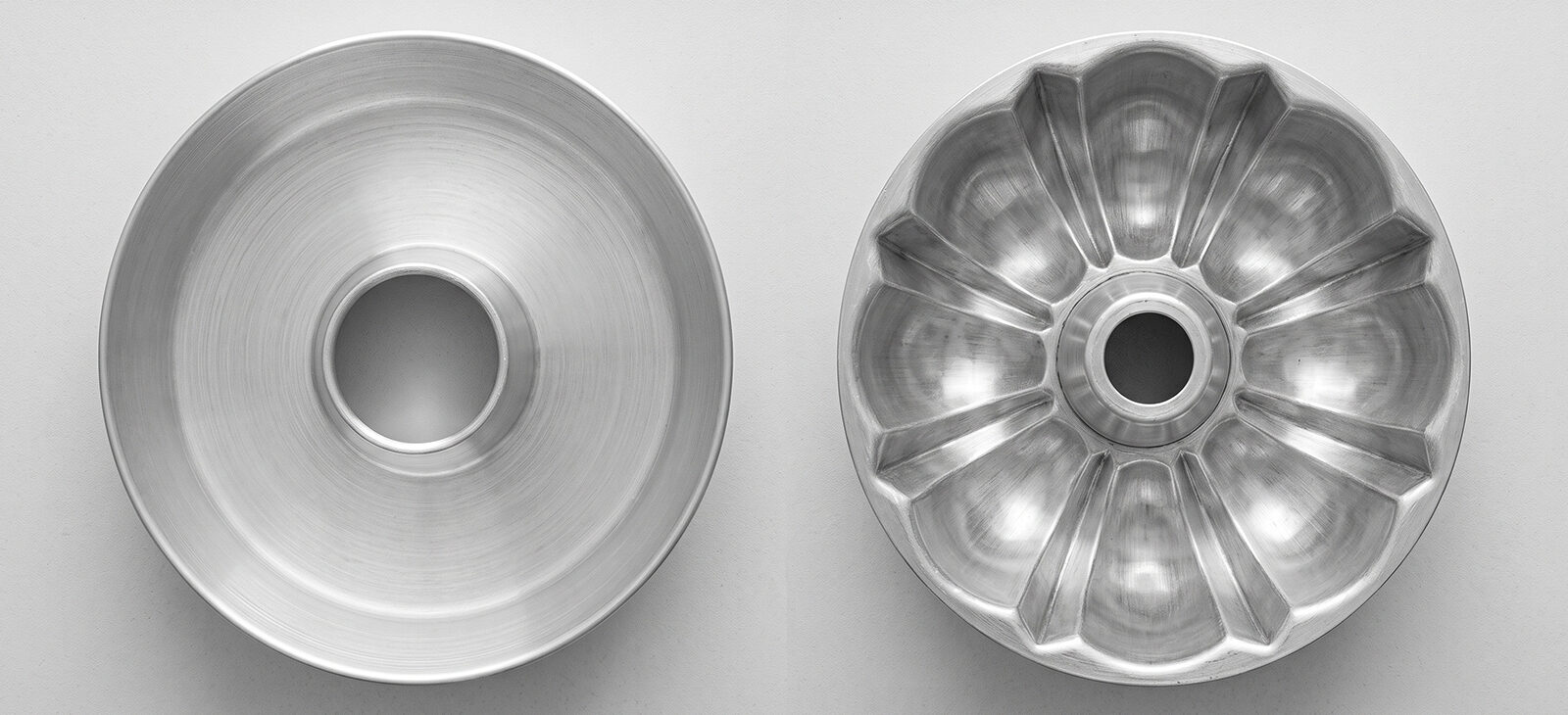
Bundt pans are strongly associated with decorative Bundt cakes, where the fluted pattern is the visual centerpiece. Ring cake molds are associated with a wider range of bakes, including pound cake and chiffon cake, but also custard-based desserts like flan and chocoflan, where the smooth surface and open center tube both matter.
Flan and chocoflan are baked custards that are commonly released from the pan by inverting them so the caramel can flow over the dessert. A smooth-sided ring cake mold provides a simpler surface for this type of release, while the decorative ridges of a fluted Bundt pan introduce additional contours. See our Flan Molds hub and Chocoflan Guide for the full technique.
A ring cake mold makes sense when you're baking flan, chocoflan, or another dessert where you prefer a smooth-sided form rather than a decorative pattern. It is also a straightforward choice when you simply want a plain, classic ring shape.
A Bundt pan may make more sense when the decorative ridges are part of the presentation — especially for a cake meant to be served with its molded pattern visible.
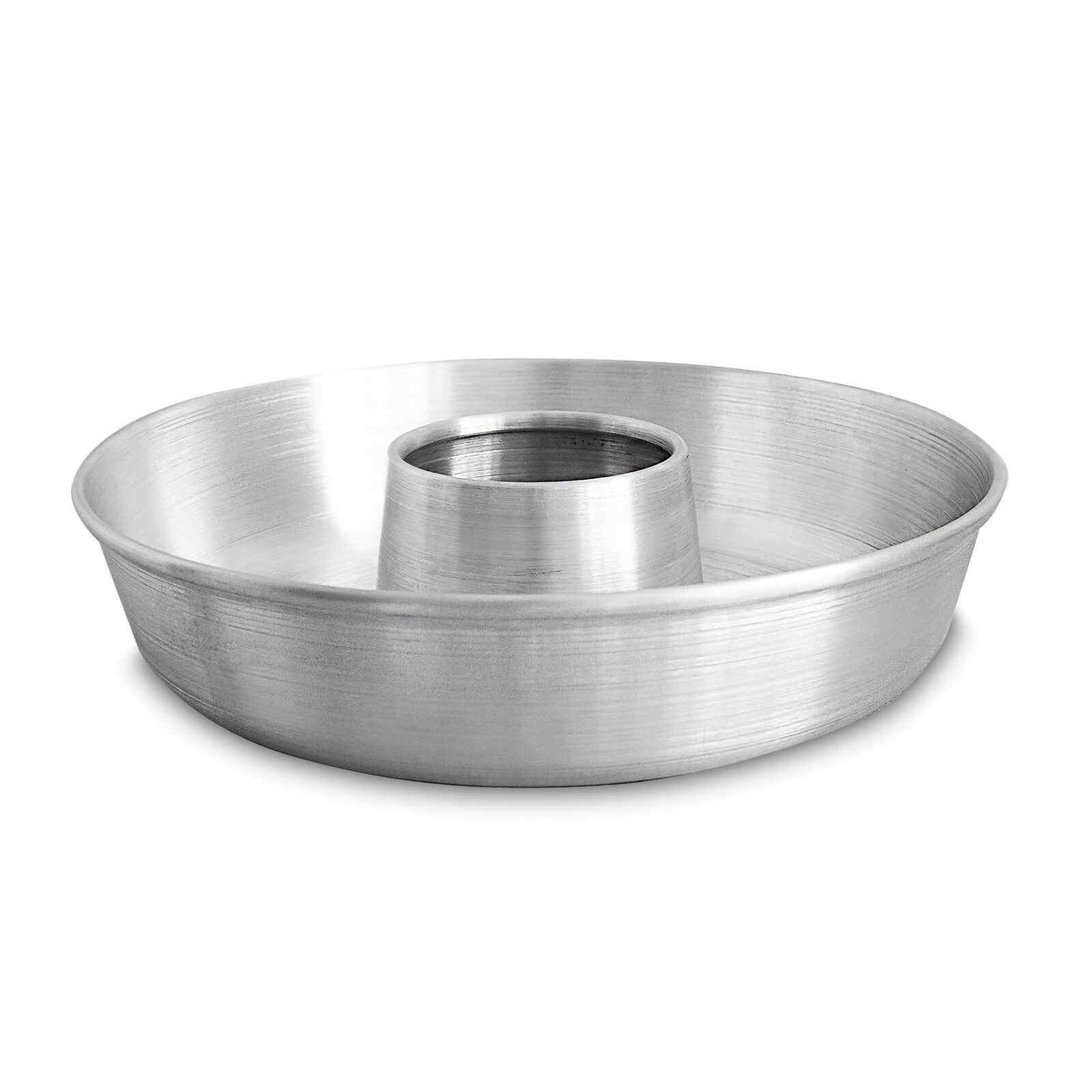
If you've read the above and specifically want a smooth-sided, tube-style form rather than a fluted Bundt, Globe Rocket's aluminum ring cake pan offers that format in food-grade aluminum. It is oven safe, hand wash is recommended, and it is available in three sizes. See it on Amazon →
What to look for before buying any ring cake mold.
Read the guide →Measurements and batter capacity for all three sizes.
Compare sizes →Why a smooth-sided pan suits chocoflan specifically.
Read the guide →The dedicated hub for the lidded flanera and flan technique.
Explore Flan Molds →Globe Rocket's smooth-sided aluminum ring cake pan is available in three sizes for ring cakes, flan, chocoflan, and other tube-style bakes.
Shop the 11.2-Inch Back to Ring Cake Molds Hub Explore Traditional Mexican Cooking Tools