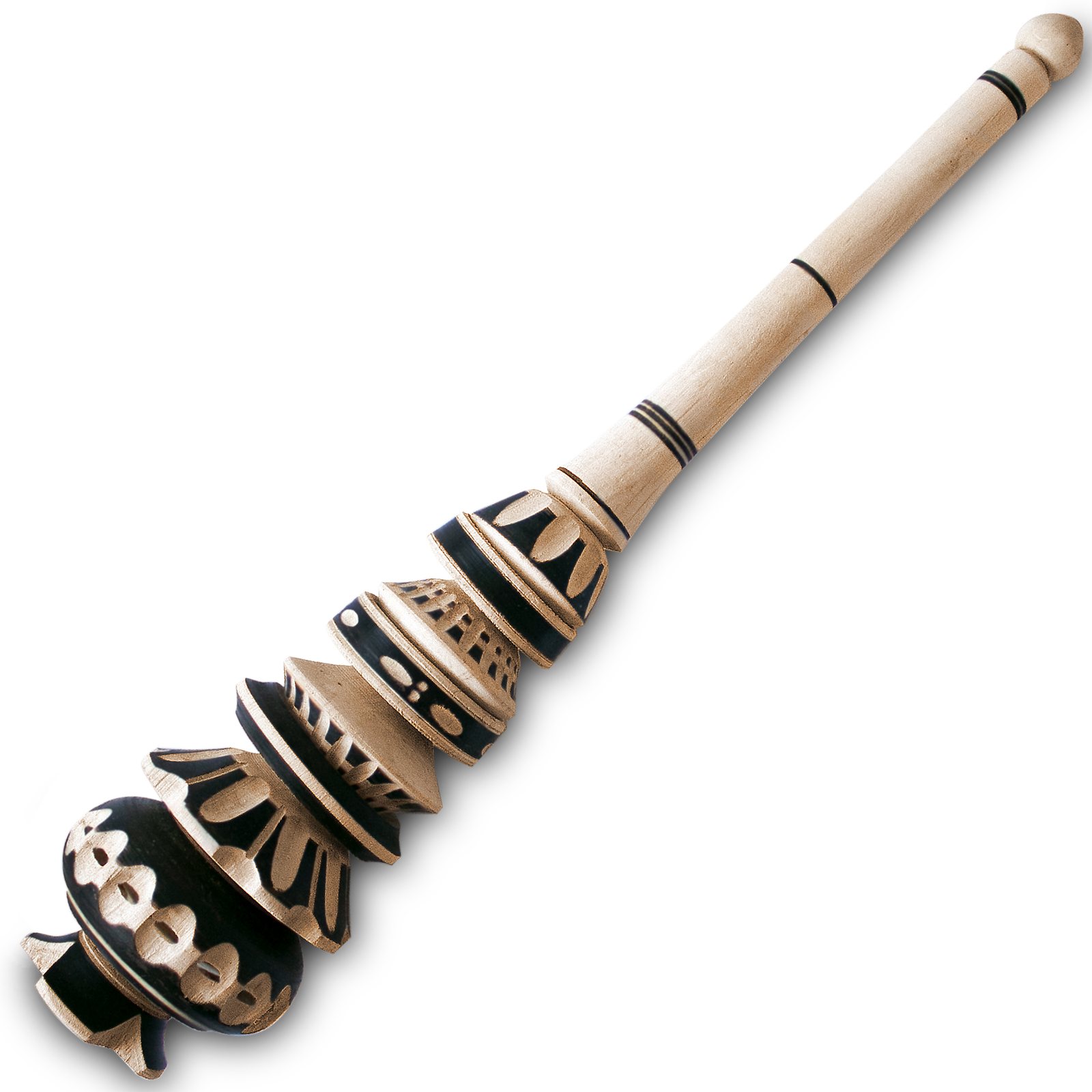
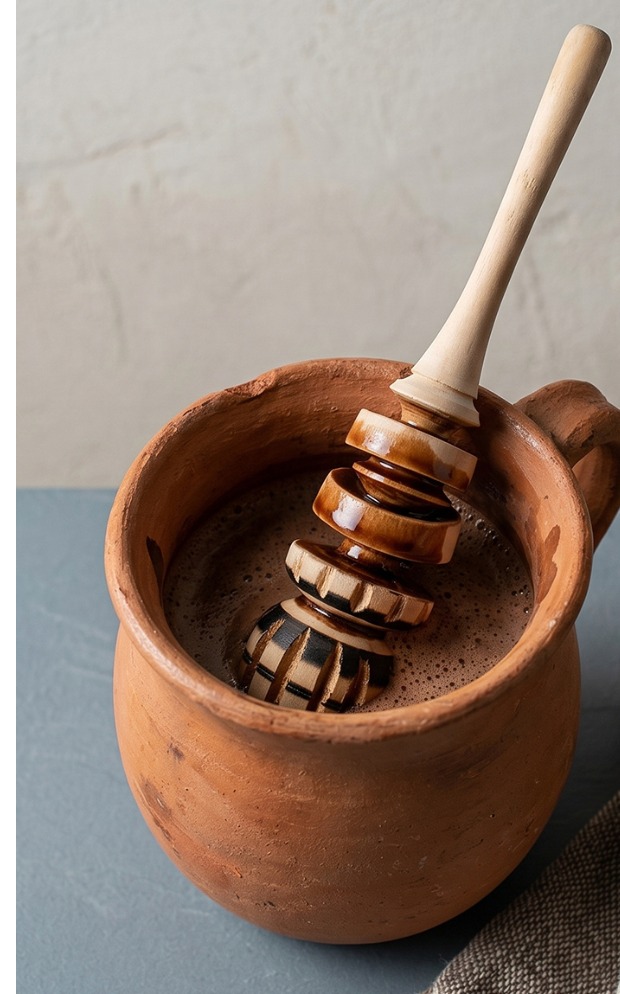
A 13.5–14.5″ molinillo hand-carved from a single piece of hardwood in Central Mexico, sized for whisking a full pot, pitcher, or clay jarro of hot chocolate, champurrado, or atole. Priced at $24.99.
Buy the Large Molinillo – $24.99The Large Handmade Molinillo is Globe Rocket’s full-size molinillo — a traditional Mexican whisk turned from one continuous piece of hardwood, with free-spinning carved rings built into the shaft itself. At 13.5 to 14.5 inches long with a 2.5-inch head, it’s sized to reach the bottom of a standard saucepan, pitcher, or clay jarro, which is what separates it from the Small size: this one is built to whisk enough Mexican hot chocolate, champurrado, or atole for more than one person at a time.
What arrives is the molinillo itself — a single, uncoated hardwood whisk, natural in color, with no batteries, base, or accessories to set up. There’s nothing to charge and nothing to assemble; it works the moment you rinse it and dip it into a warm pot. That simplicity is part of the appeal for anyone who’d rather store one solid kitchen tool in a drawer than find a spot for another countertop appliance.
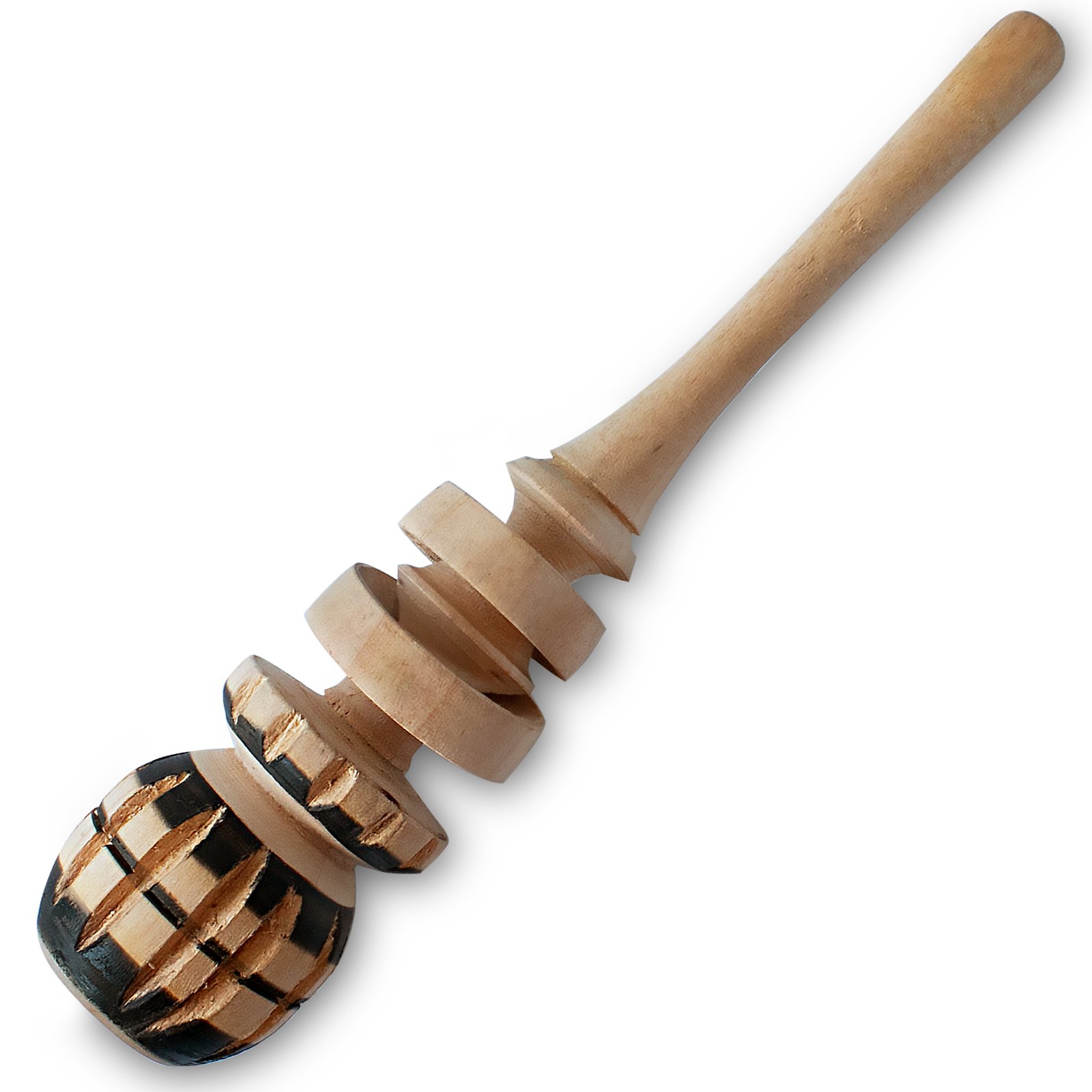
Because the wood is left unfinished rather than lacquered or sealed, the surface has a slightly matte, tactile grain you can feel under your palms as you roll it — which matters, since your hands are the motor. A sealed or varnished handle would actually be harder to spin quickly for extended periods, so the plain wood finish is functional as much as it is traditional.
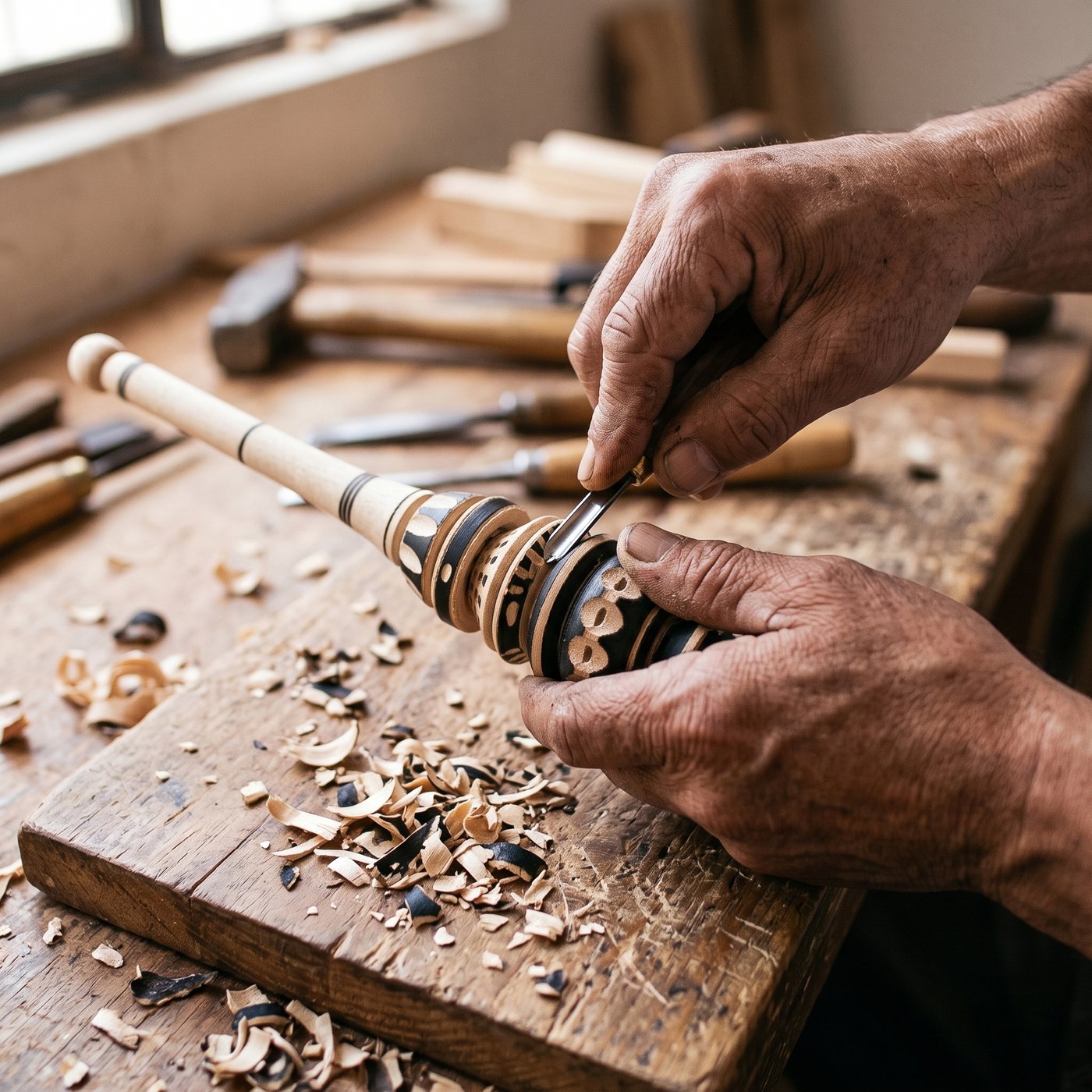
Every Large Handmade Molinillo starts as a single length of hardwood and is turned on a lathe by an artisan in Central Mexico. The shaft, the collar, and the free-spinning rings partway down the head are all cut from that same continuous piece — nothing is glued together or assembled from separate parts.
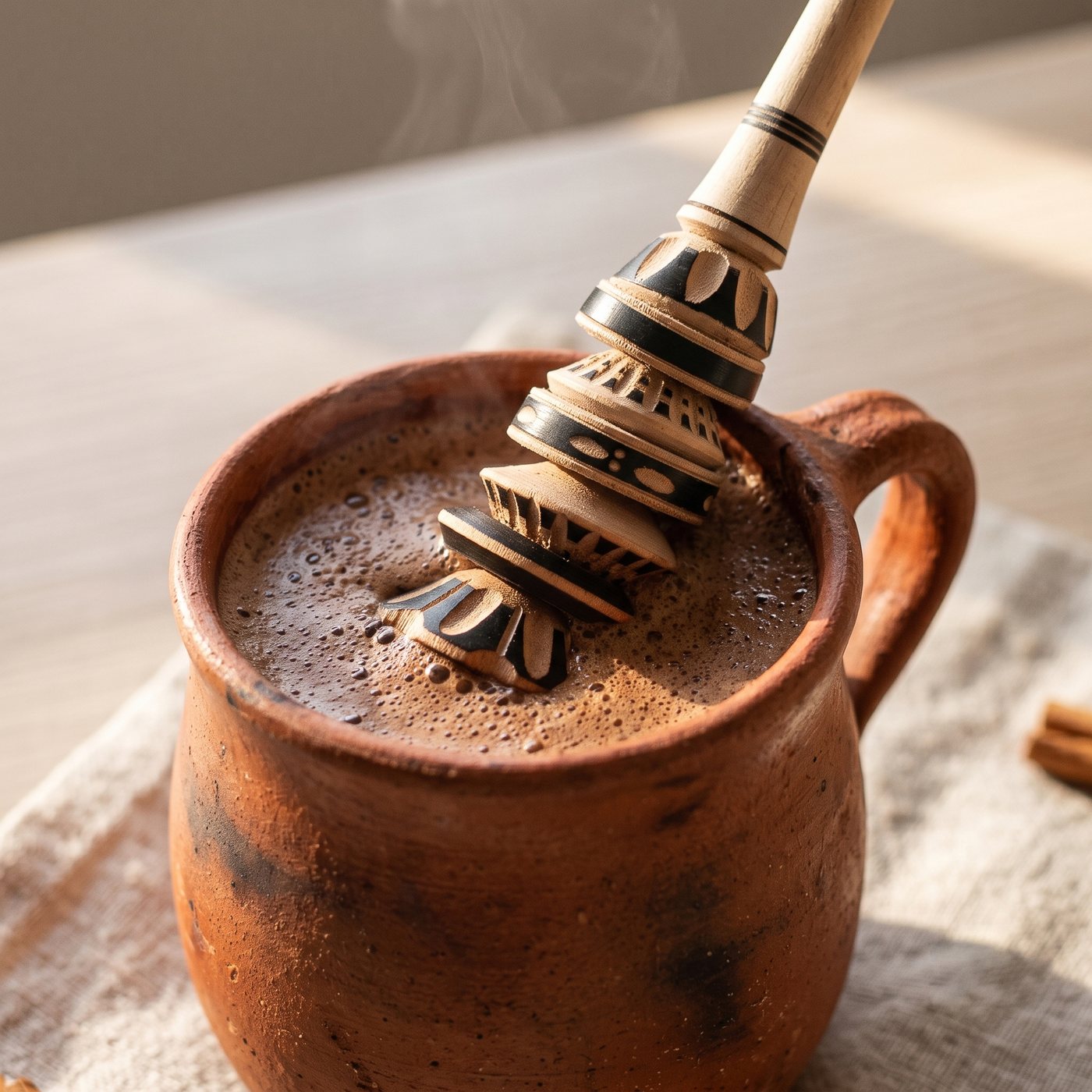
The rings are the part that actually does the work. Because each one is carved directly out of solid wood while it’s still attached, then undercut so it spins freely, a well-made ring rotates smoothly around the shaft without ever coming loose. That’s a real test of the carver’s skill, and it’s the main thing to look for in a well-made molinillo, handmade or otherwise.
You’ll often see dark banding on the rings and collar. Traditionally, that’s the result of friction burn from the lathe during turning, later sanded smooth rather than a stain or paint applied afterward — so on a genuinely hand-turned piece, the coloring is part of the making process, not a decorative finish sitting on top of it.
You’ll frequently see the molinillo described online as an “ancient Aztec tool.” That claim doesn’t hold up. Cacao drinking is genuinely ancient and Mesoamerican, but the Aztecs and Maya frothed their chocolate by pouring it between two vessels from a height, not by whisking it with a carved tool. The molinillo itself doesn’t appear in the historical record until the Spanish colonial period, and it had fully replaced the older pouring method by the time written accounts from the late 1700s describe how Mexican chocolate was made.
What matters more than the exact date is what happened next: Mexican households adopted the molinillo almost immediately and made it their own, carving it with increasingly elaborate rings, working it into nursery rhymes children still learn today, and passing the tool down as a genuine kitchen heirloom. For the full history, including why the myth persists, see our History of the Mexican Molinillo guide.
Both Globe Rocket molinillos share the same hand-carved, single-piece hardwood construction. The only real difference is size, and that comes down to what you’re whisking it in.
$24.99
Buy Now on Amazon
$14.99
See the Small MolinilloNote: If the head of a molinillo doesn’t fully submerge in your pot, it can’t aerate the liquid at the bottom, which is where most of the froth actually forms. When in doubt between sizes, measure your pot or pitcher before ordering rather than guessing from the size name alone.
The technique is simple once you’ve done it a few times, though it takes a little practice to get a thick, lasting foam. For a longer walkthrough with troubleshooting tips, see our full How to Use a Molinillo guide.
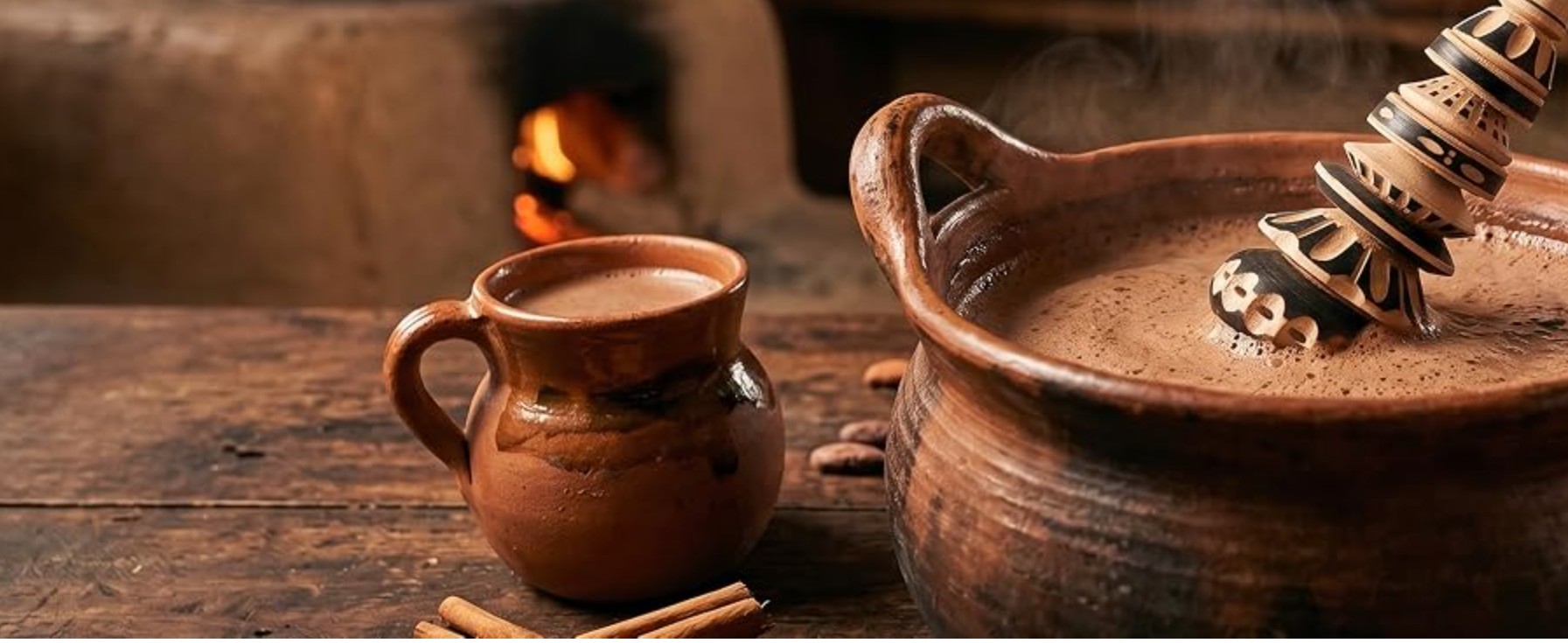
Warm your milk or water with Mexican chocolate tablets, or your prepared masa-based atole, in a saucepan, pitcher, or traditional clay olla. The Large molinillo is sized for these bigger vessels — it’s not meant for a single mug.
Lower the molinillo into the liquid so the carved rings are fully submerged near the bottom of the pot. This is where the froth actually forms, so if the head can’t reach the bottom of your vessel, you’ll get less foam no matter how long you whisk.
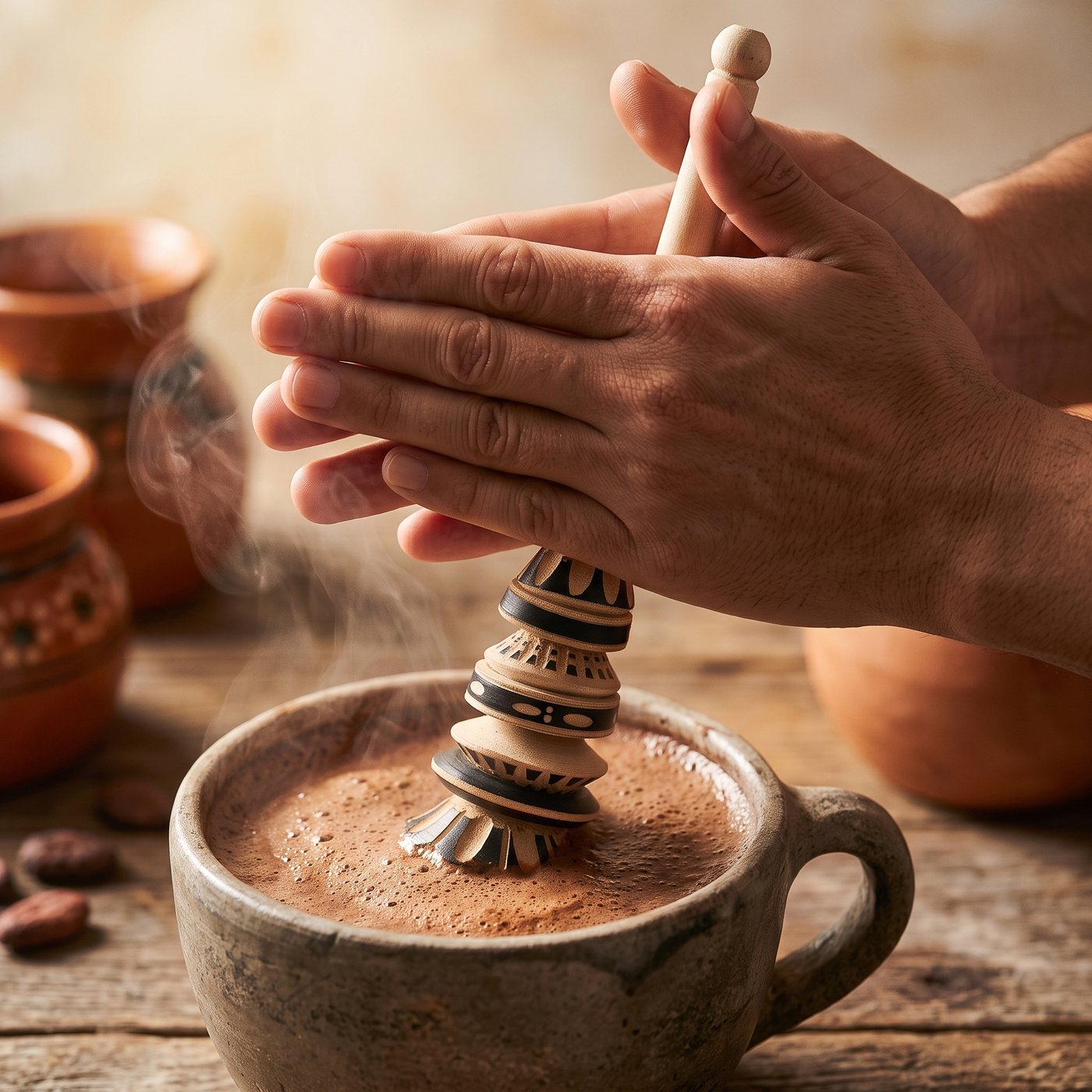
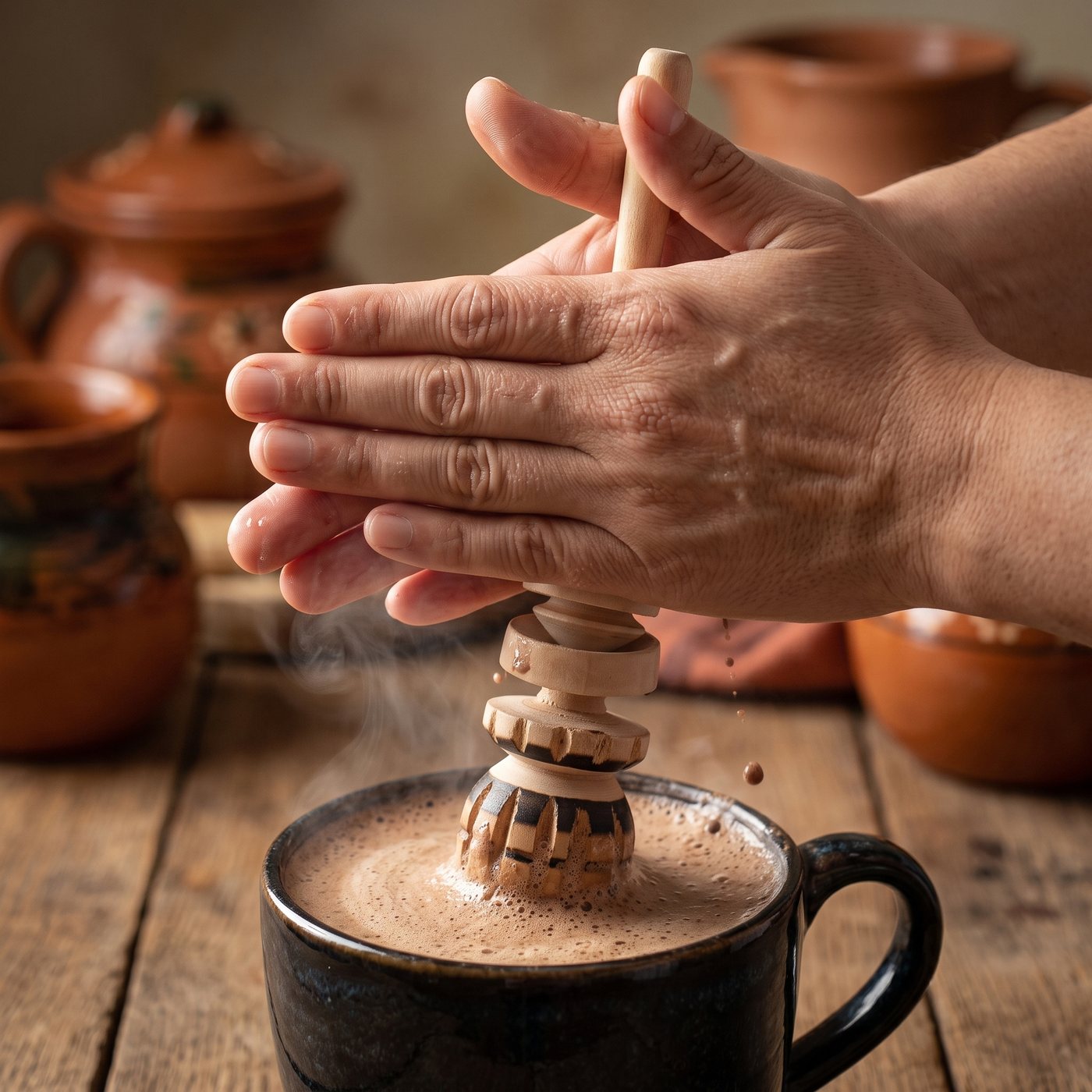
Place the shaft between your palms and roll it back and forth in quick, steady motions, the same way you’d rub your hands together to warm them. This spins the free rings rapidly, which is what actually whips air into the liquid.
Continue for roughly thirty seconds to a minute, moving the molinillo slightly up and down as you roll it, until a thick foam rises to the surface. Pour or ladle immediately while the foam is at its best.
Mexican hot chocolate is the molinillo’s best-known use, but it’s a general-purpose frothing tool for any warm, pourable drink you want aerated. Two traditional beverages come up constantly alongside it:
Some cooks also use it to froth warm milk on its own, or to blend loose cacao into hot water for a simpler, less sweetened drink. Whatever the base, the same rolling technique applies. See our molinillo recipe collection for tested versions of each.
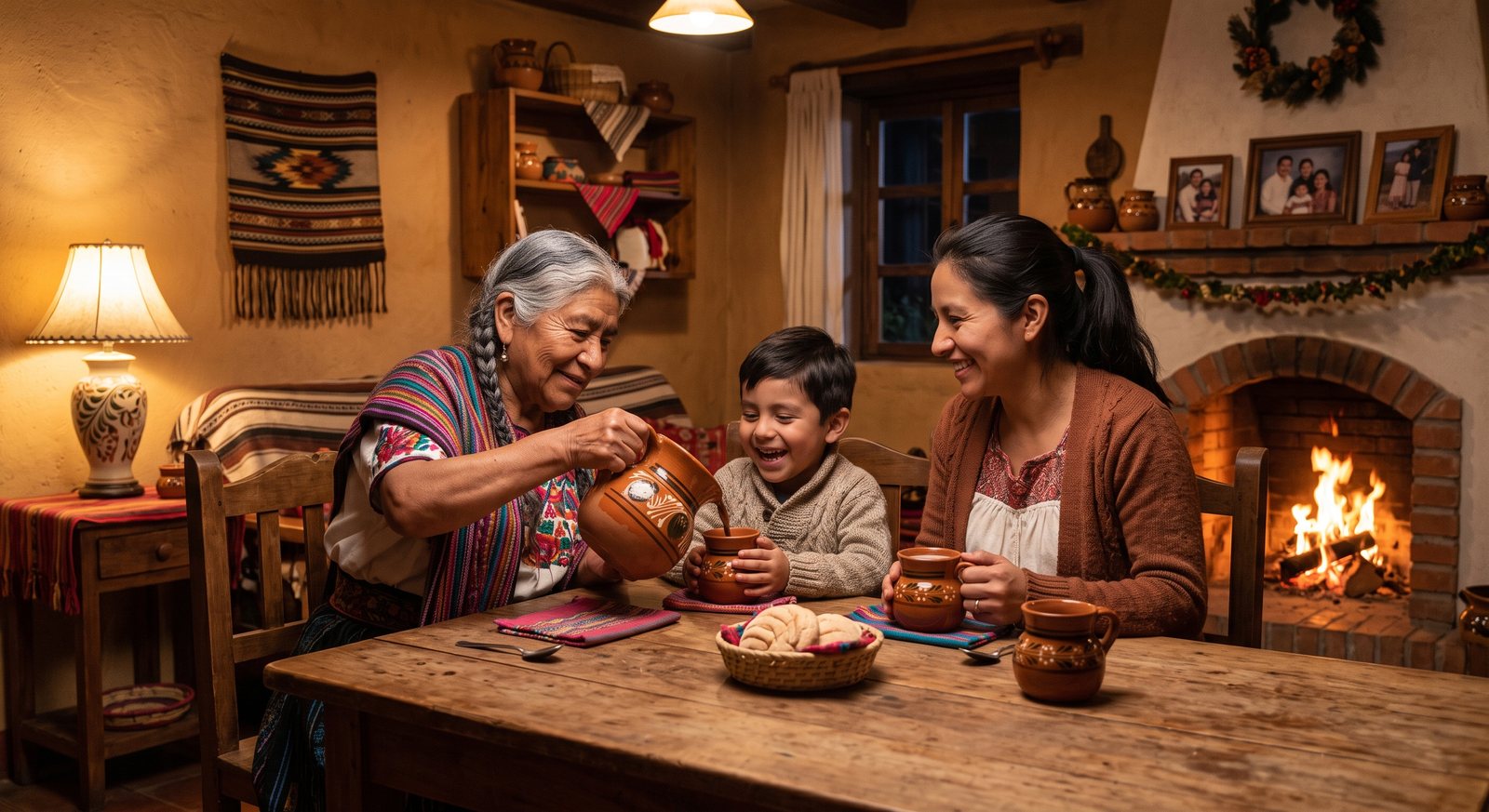
Champurrado in particular shows up around specific occasions in Mexican households — it’s especially associated with Día de los Muertos and the nightly posadas leading up to Christmas, often served alongside tamales or pan dulce. None of that requires special equipment beyond the molinillo itself and a pot large enough for however many cups you’re pouring, which is exactly the gap the Large size is built to fill.
If you’ve only ever frothed milk with a battery-powered wand, it’s worth understanding what the molinillo trades away and what it offers in return.
An electric milk frother is faster and requires no technique — press a button and the whisk head spins on its own. What it usually can’t do is reach the bottom of a full-size pot or pitcher; most are built for a single mug or small pitcher of milk, and their small wire whisks aren’t designed to work through the thicker, masa-based texture of champurrado or atole the way a molinillo’s wide carved head can.
The molinillo, in exchange for a small amount of hand technique, offers something an electric frother doesn’t: it’s the tool actually associated with the tradition it’s serving. For a deeper side-by-side comparison of foam texture, speed, and durability, see our dedicated Molinillo vs. Electric Frother guide.
There’s also a maintenance trade-off. An electric frother has a motor and battery or charging cable that can eventually fail; a solid wood molinillo has no moving mechanical parts beyond the carved rings themselves, so with reasonable care — prompt hand washing and no dishwasher — there’s simply less to break.
Neither tool is strictly better in every situation. If you want hands-free speed for a single cup of coffee foam, an electric frother is the more practical choice. If you’re making a full pot of Mexican hot chocolate or champurrado the way it’s traditionally served, the Large Handmade Molinillo is built specifically for that job.
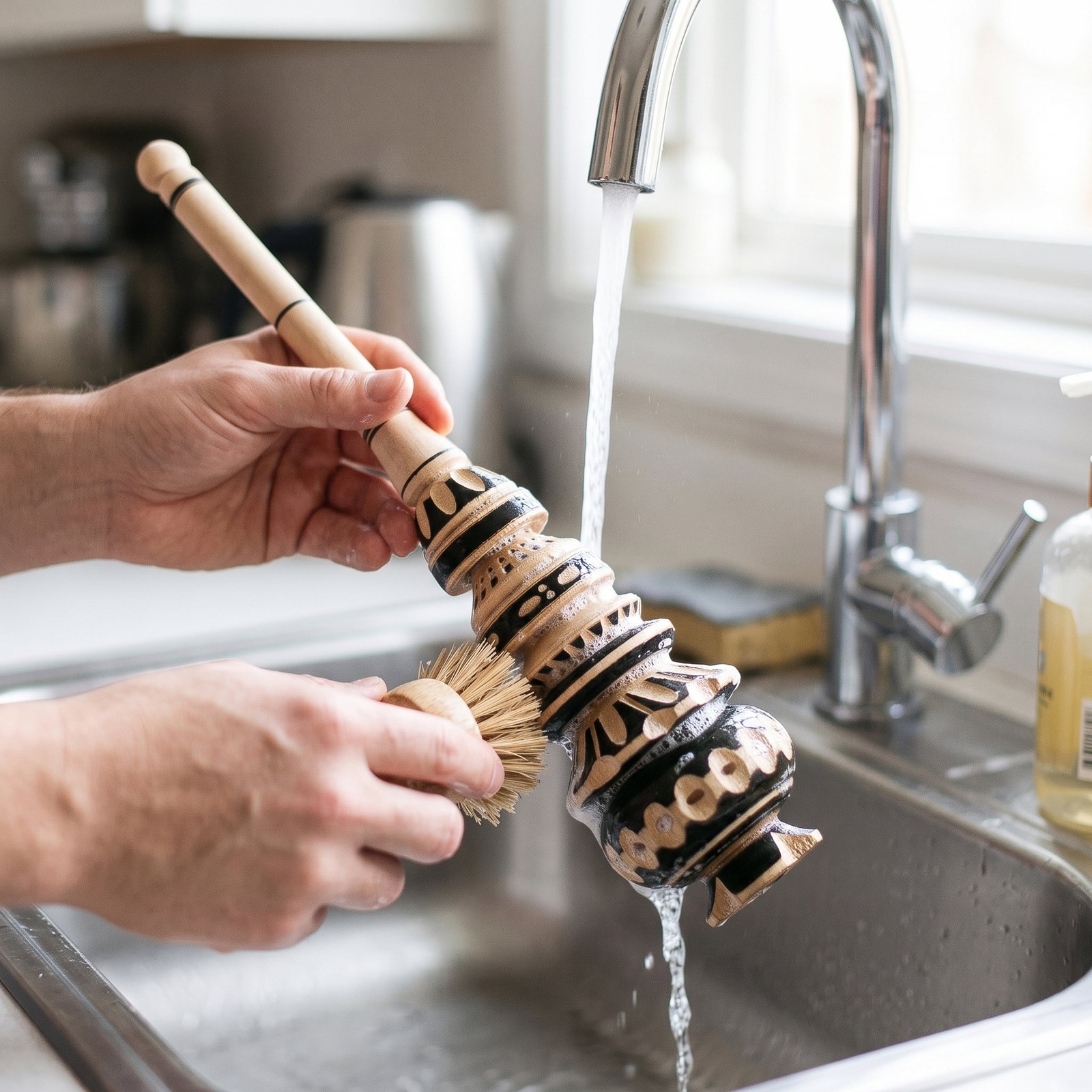
Because it’s solid, uncoated hardwood rather than sealed or plastic-coated cookware, a molinillo needs a bit more attention than a typical kitchen whisk. For the full walkthrough, see our How to Clean a Wooden Molinillo guide.
Rinse the molinillo in warm water as soon as you’re done using it, before any chocolate or masa residue has a chance to dry into the carved rings.
A small brush, like a bottle brush or an old toothbrush, reaches into the carved grooves far more effectively than a sponge or cloth alone.
Dishwasher heat and prolonged water exposure can crack solid wood or loosen the free-spinning rings over time. Hand washing only.
Wash it and move on — don’t leave it sitting in a sink full of water. Extended soaking is one of the more common ways wooden kitchen tools warp or split.
Shake off excess water and let it air dry fully, ideally standing up so water doesn’t pool around the rings, before putting it away.
Some owners occasionally season the wood with a food-safe mineral oil, the same way you’d care for a wooden cutting board. It’s optional, not required.
Because each molinillo is hand-carved rather than machine-molded, it’s worth a quick inspection when it arrives:
None of this is complicated once you know what to watch for — the tool is genuinely low-maintenance day to day. It just rewards the same basic care you’d give any solid wood kitchen tool: rinse promptly, dry fully, and skip the dishwasher.
Summarized from verified Amazon customer reviews on this listing, not copied word for word.
Buyers consistently describe the Large molinillo as beautifully carved and well made, with several specifically praising the length and how effectively it froths hot chocolate and other cacao drinks. Feedback on durability is mostly positive but not unanimous — a handful of reviewers mentioned minor splinters out of the box or a ring breaking on first use, while many more reported no issues at all after regular use. Cleaning draws mixed comments too, which tracks with it being solid wood rather than sealed cookware: reviewers who rinse it promptly and use a small brush on the rings report the fewest problems.
Ratings and review counts reflect this product’s Amazon listing at time of publishing and are subject to change. See the listing for current details.
This product connects to the full Globe Rocket molinillo library — history, technique, and care guides, plus real hot chocolate recipes.
A full walkthrough of the rolling technique, with troubleshooting for thin foam.
Read the guide →
Keeping solid hardwood in good shape wash after wash.
Read the guide →
A deeper look at choosing between the Large and Small sizes.
Read the guide →
Real, tested recipes built around the molinillo.
Browse recipes →The Large Handmade Molinillo measures approximately 13.5 to 14.5 inches in overall length, with a carved head approximately 2.5 inches in diameter. Because each piece is hand-turned from solid wood rather than machine-molded, small measurement variations between individual units are normal.
Yes. The Large size is built for pots, pitchers, and traditional clay jarros that serve more than one person. Its longer shaft and wider carved head are sized to reach the bottom of a standard saucepan or olla, not just a single mug.
The Large Handmade Molinillo is turned from a single piece of hardwood by artisans in Central Mexico. The shaft, collar, and free-spinning carved rings are all cut from that same continuous piece of wood rather than assembled from separate parts.
No. Because it is solid wood, the Large molinillo should be washed by hand with warm water and dried promptly. Dishwasher heat and prolonged soaking can crack the wood or loosen the carved rings over time.
Yes. The same rolling motion that froths Mexican hot chocolate also works for champurrado and atole. Because those drinks are thicker, the Large size’s wider head and longer reach make it easier to work through a full pot without straining.
Choose the Large if you typically prepare hot chocolate, champurrado, or atole in a pot, pitcher, or clay jug for more than one person. Choose the Small if you usually whisk a single mug or small pot. Both share the same single-piece hardwood construction and hand-carving.
The molinillo is sold as bare, hand-carved hardwood without an applied oil finish. Some owners choose to season it with a food-safe mineral oil before first use, similar to caring for a wooden spoon or cutting board, though this is optional rather than required.
The free-spinning rings are carved from the same solid piece of wood as the shaft, so a properly made ring should spin freely without detaching. A small number of buyers have reported a ring breaking on first use or minor splinters out of the box. If that happens, treat it as a manufacturing defect rather than normal wear, and contact the seller.
Yes. While a traditional clay jarro is the classic pairing, the molinillo works the same way in a stainless steel cup, a ceramic mug, or any other heat-safe vessel, as long as the carved head can fully submerge in the liquid.
A well-rinsed, uncoated hardwood molinillo shouldn’t impart a noticeable flavor to hot chocolate, champurrado, or atole. Letting chocolate or masa residue dry on the wood between uses is what leads to lingering off-flavors over time, which is the main reason prompt rinsing after each use matters.
With practice, most people can build a thick, lasting foam within thirty seconds to a minute of rolling. Thinner liquids like standard hot chocolate foam up faster than thicker ones like champurrado, which may take a bit longer since the added masa gives the liquid more body to work through.
Hand-carved from a single piece of hardwood in Central Mexico and sized for a full pot, pitcher, or clay jarro — everything you need to whisk authentic Mexican hot chocolate, champurrado, and atole.
Buy Now on Amazon – $24.99