How Each Tool Operates
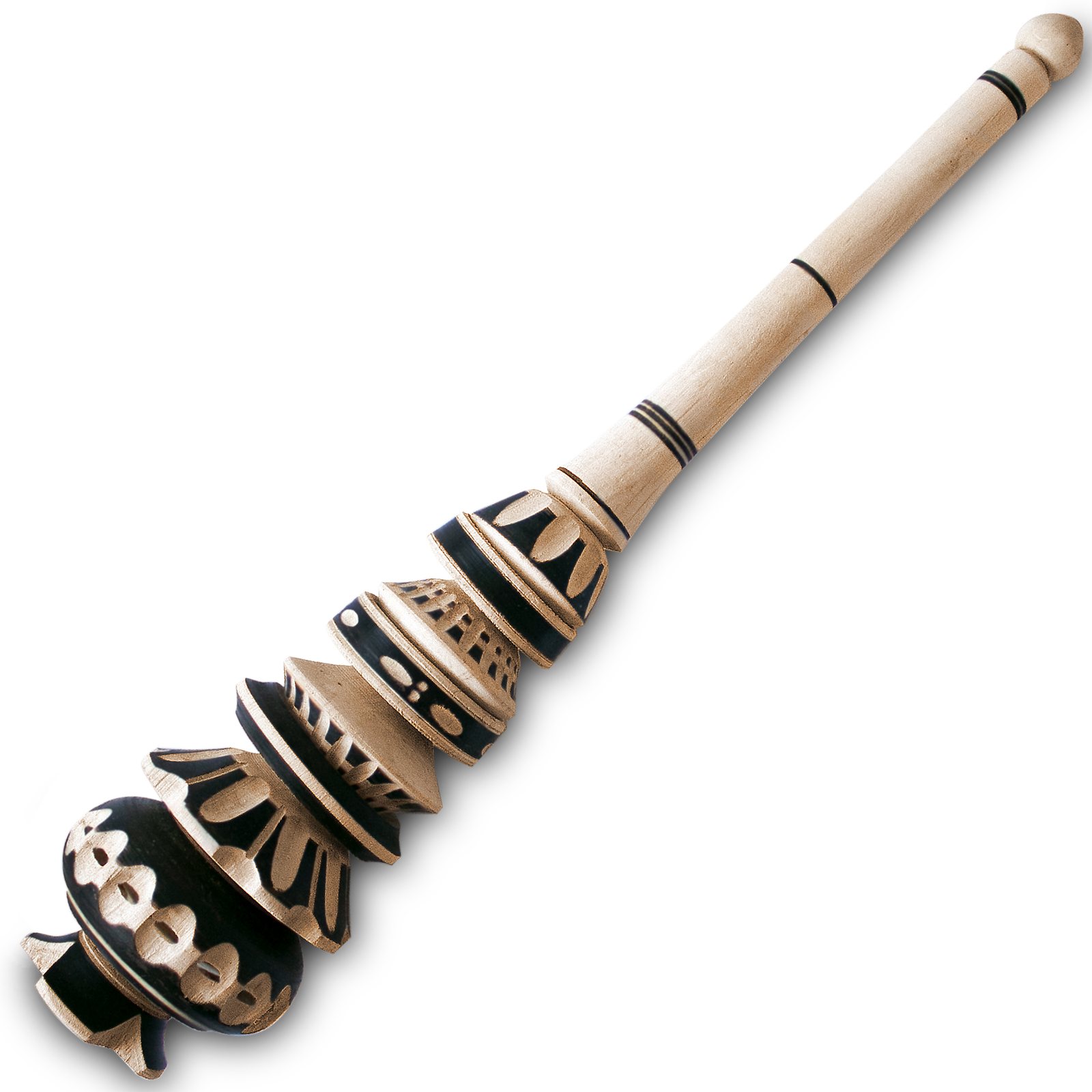
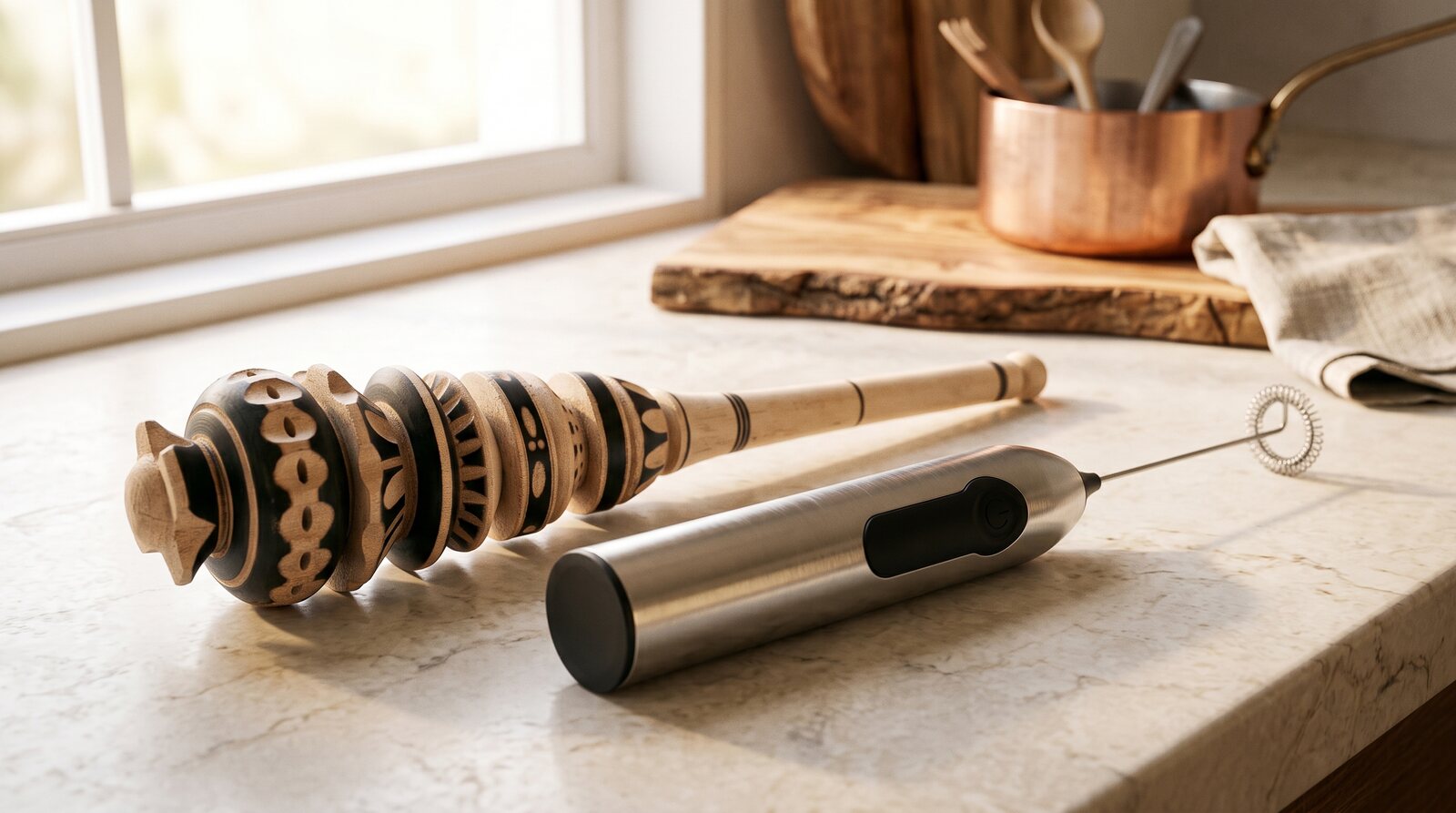
The core difference between the two is manual versus electric operation. A molinillo has no motor, batteries, or charging cable — you submerge its carved head in the liquid and roll the handle briskly between your palms, usually building a thick foam in about 30 to 60 seconds. An electric frother is faster and requires no technique: press a button and its small wire whisk spins on its own.
What Each Tool Is Built to Handle
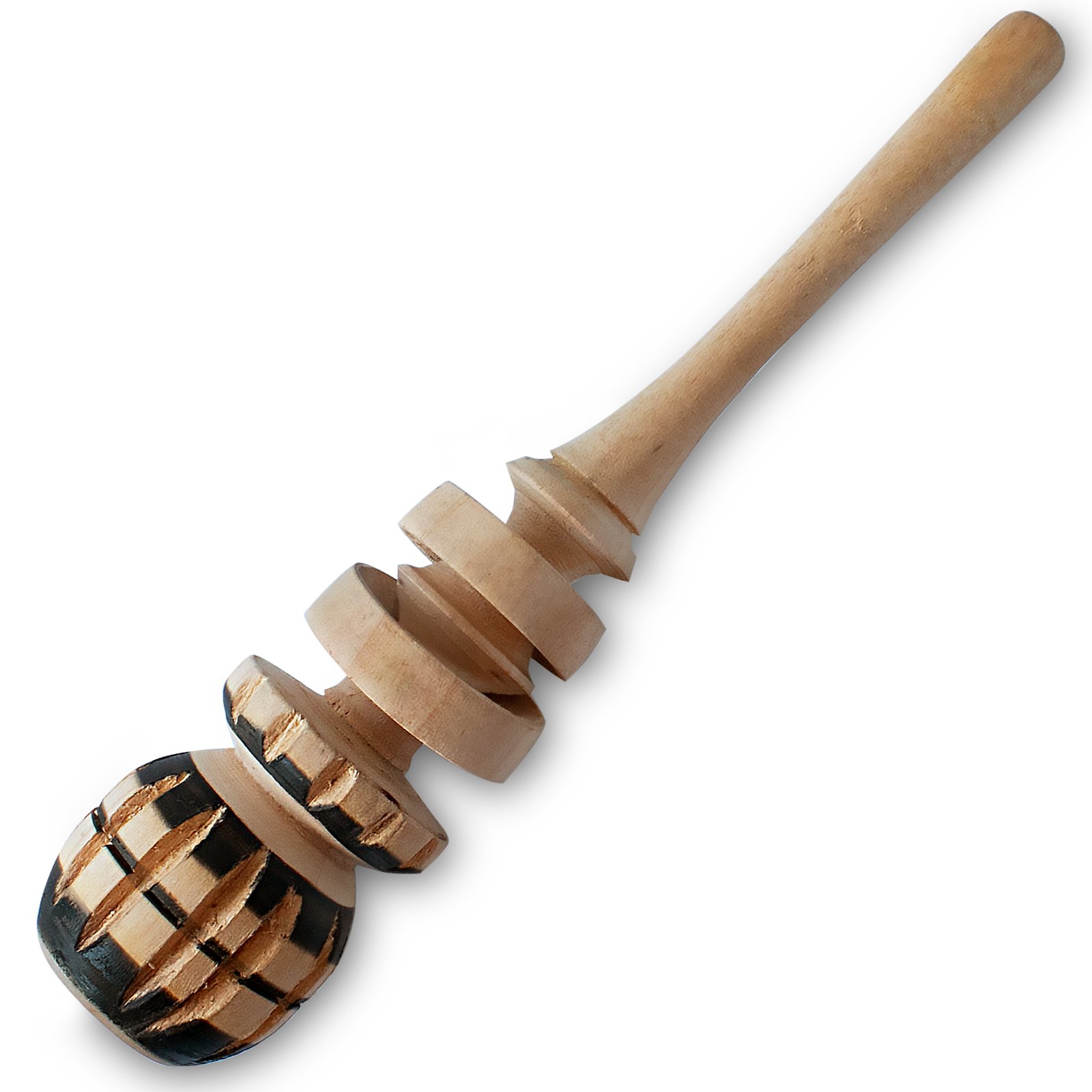
An electric frother usually can't reach the bottom of a full-size pot or pitcher — most are built for a single mug or small pitcher of milk. Their small wire whisks also aren't designed to work through the thicker, masa-based texture of champurrado or atole, and can strain or bog down in it. A molinillo's wide carved head is built for that thicker texture, and the Large Handmade Molinillo in particular is sized to reach a full pot, pitcher, or clay jarro, while the Small Handmade Molinillo is scaled for a single mug or small pot.
Maintenance and What Can Wear Out
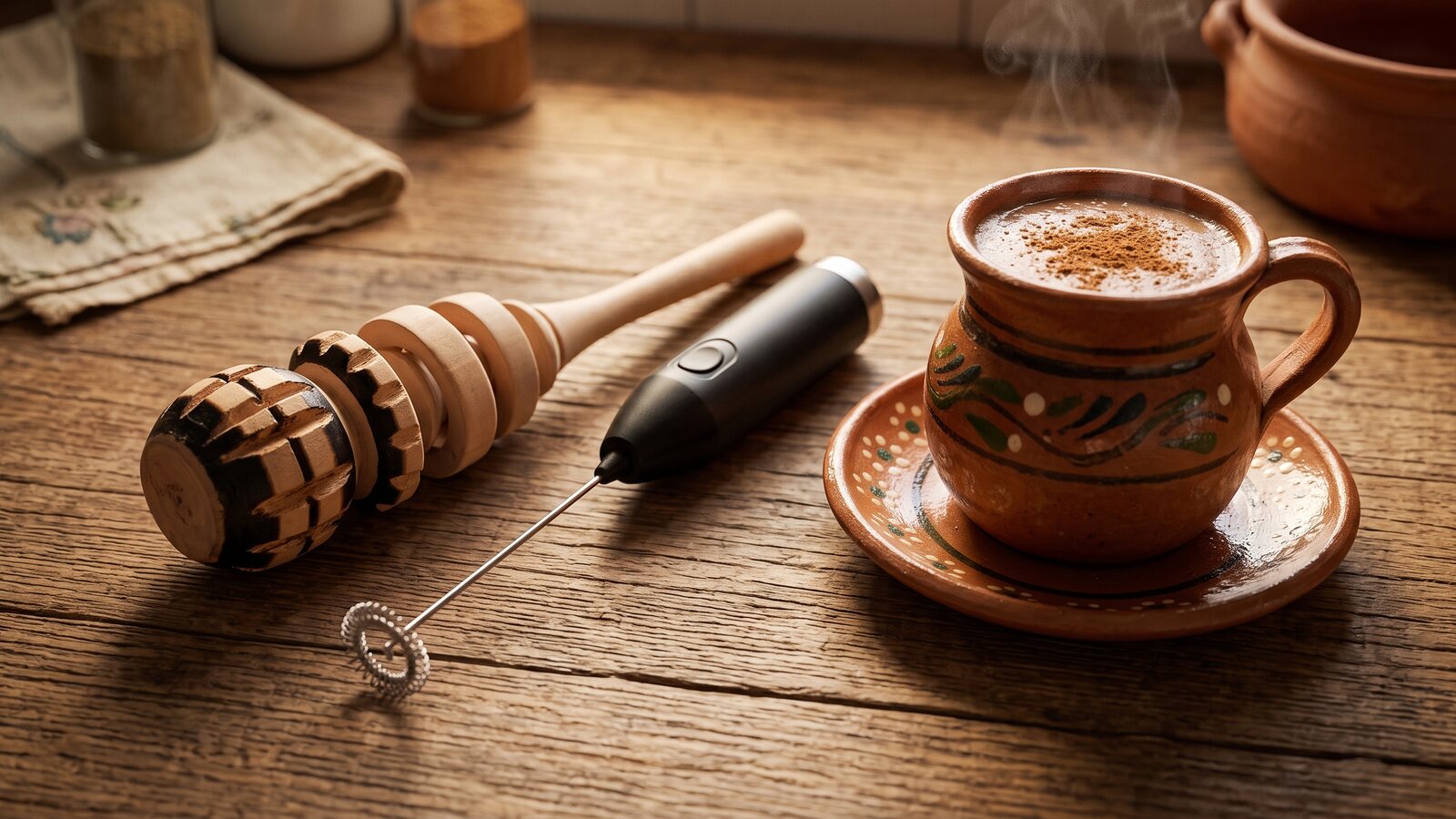
There's a maintenance trade-off between the two as well. An electric frother has a motor and a battery or charging cable that can eventually fail. A solid wood molinillo has no moving mechanical parts beyond the carved rings themselves, so with reasonable care — prompt hand washing and no dishwasher — there's simply less to break. See our How to Clean a Wooden Molinillo guide for the full care routine.
Storage and Convenience
Size also plays into convenience. The Small Handmade Molinillo, at 7.5 to 8.5 inches, stores easily in a drawer or a mug alongside everyday utensils, without a charging cable or a countertop footprint. There's also nothing to keep charged, which matters if you only reach for the tool occasionally and don't want to discover a dead battery right when you need it.
| Molinillo | Electric Frother | |
|---|---|---|
| Operation | Manual — rolled between the palms by hand | Electric — spins automatically at the press of a button |
| Power | None; no batteries or charging required | Battery-powered or plug-in; has a motor and battery or charging cable |
| Typical Capacity | Full pot, pitcher, or clay jarro (Large), or a single mug/small pot (Small) | Most are sized for a single mug or small pitcher |
| Best Suited For | Thicker, masa-based drinks like champurrado and atole, alongside standard hot chocolate | Milk foam; can strain or bog down with thicker, masa-based drinks |
| Moving Parts | No moving mechanical parts beyond the carved rings | Motor and whisk head that can eventually fail |
| Storage | Compact; stores in a drawer or mug with no charging cable or countertop footprint | May need a charging cable and countertop or nearby storage |
Which One Fits Your Needs?
If you want hands-free speed for a single cup of coffee foam, an electric frother is the more practical choice. If you're making Mexican hot chocolate, champurrado, or atole the traditional way — whether a full pot with the Large Handmade Molinillo or an individual serving with the Small Handmade Molinillo — the molinillo is built specifically for that job.
In exchange for that hand technique, a molinillo is also the tool historically and traditionally associated with preparing these drinks — a distinction that doesn't necessarily make it “better” in a technical sense, but is part of what many people are choosing when they pick a molinillo over an electric frother. To understand the tool itself in more depth, see our What Is a Molinillo? and How to Use a Molinillo guides, or work out which size fits your kitchen with our Best Molinillo Size Guide. For the drinks themselves, see Traditional Mexican Hot Chocolate and Champurrado Explained, or browse the full Molinillos Hub.