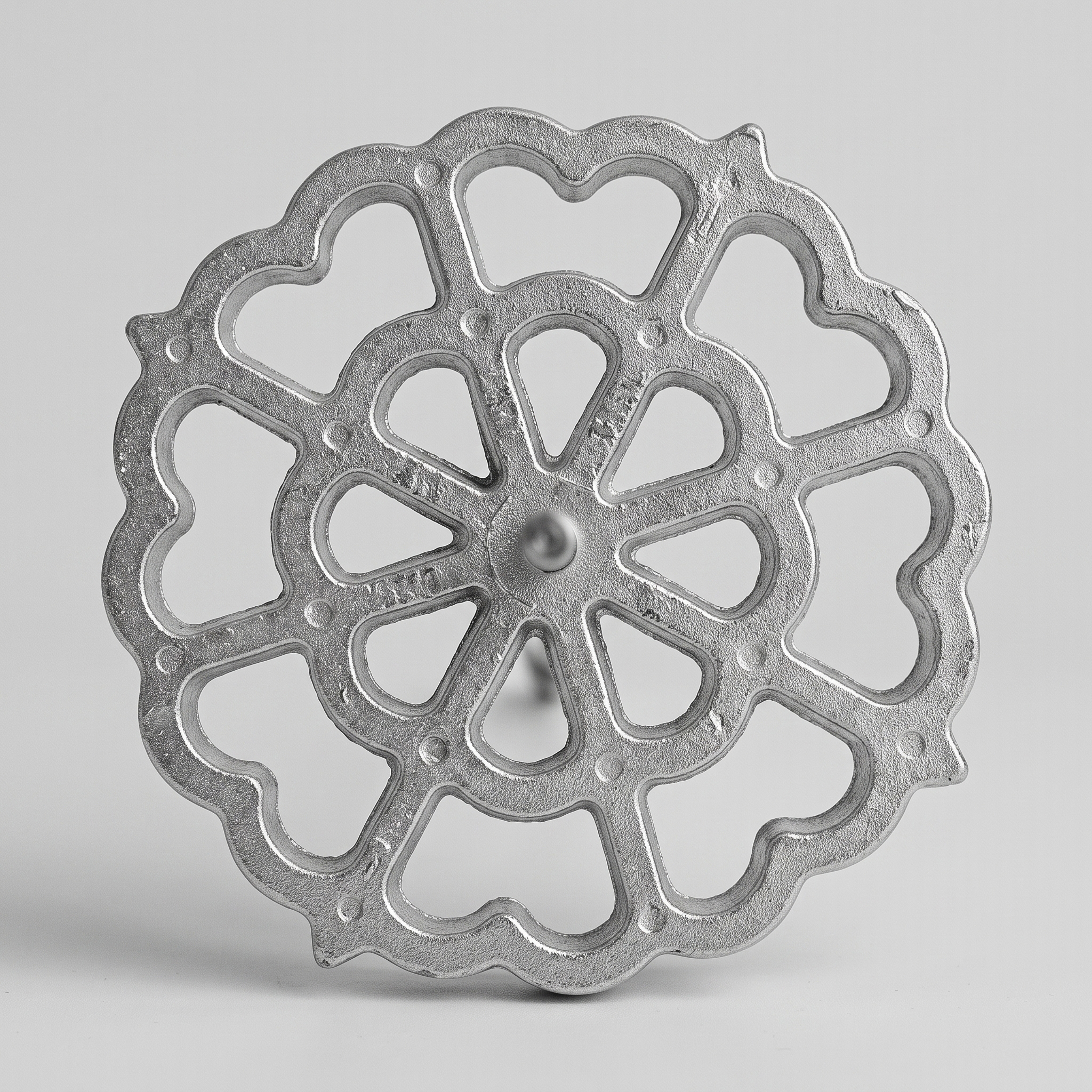
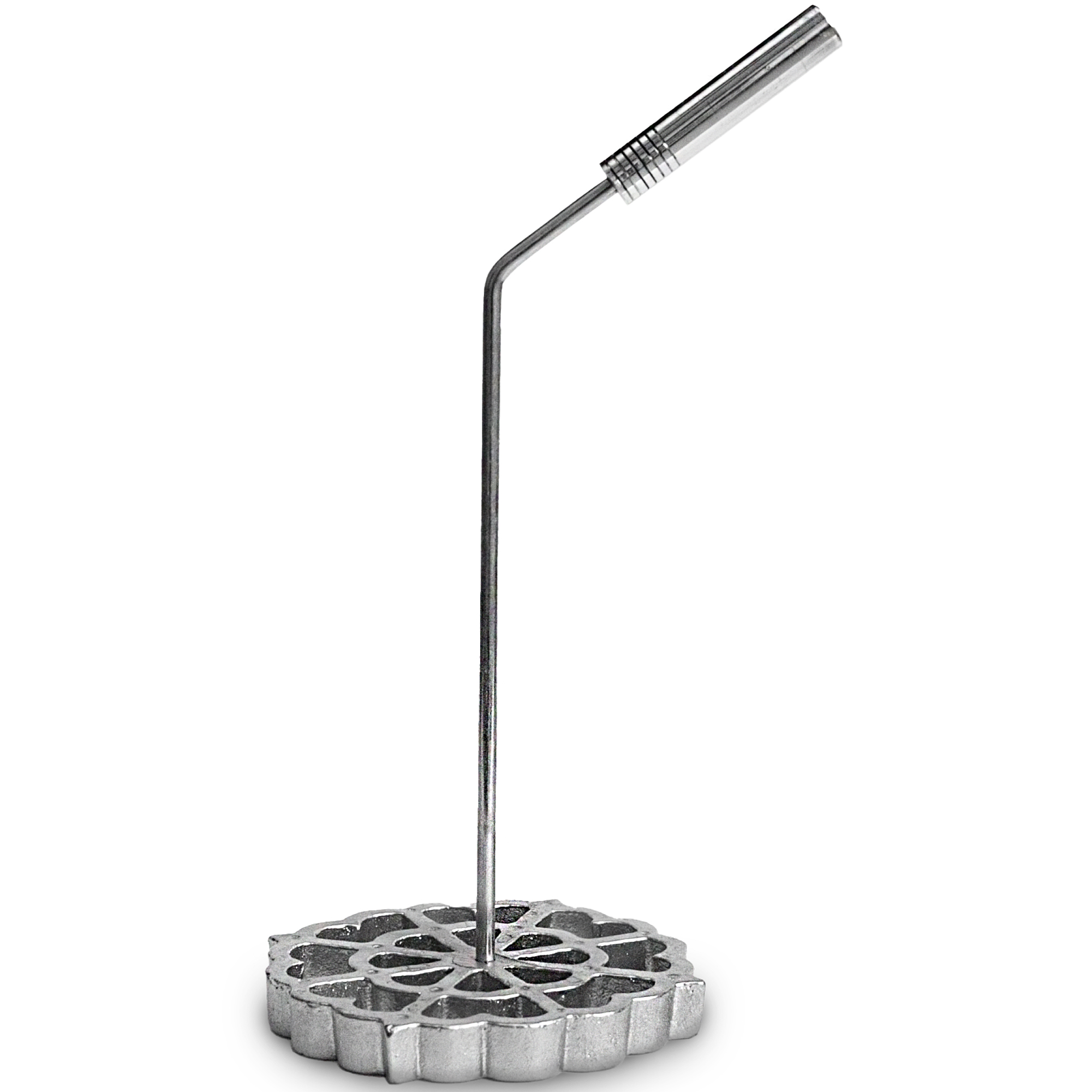
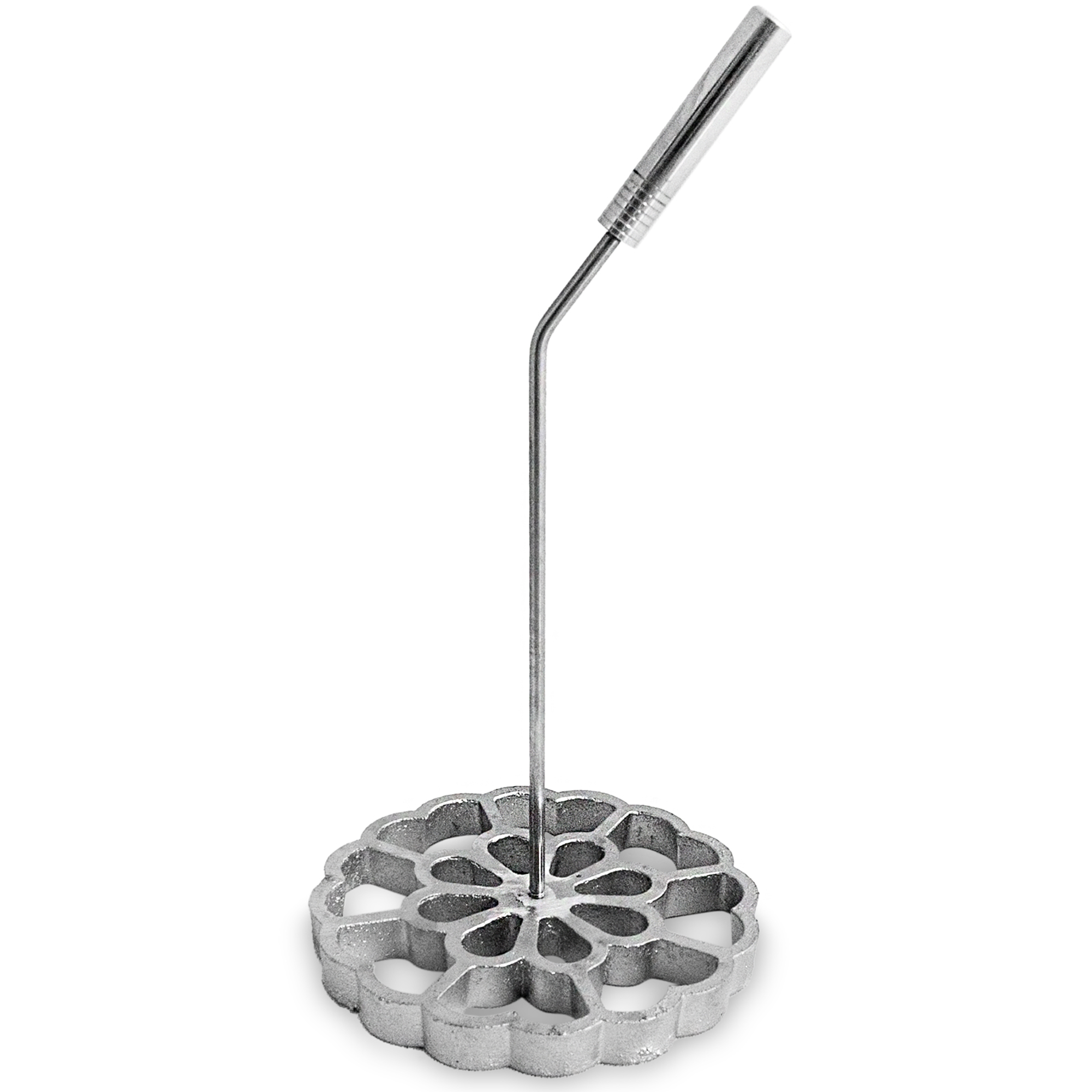
Buñuelos de viento — “wind fritters” — are a thin, crisp, flower-shaped fried pastry made by dipping a hot metal mold into batter, then into oil. This guide covers where the name comes from, how the dish differs from sopapillas and other fried doughs, and how it’s traditionally served.
See the Recipe“Buñuelo” is Spanish for a small piece of fried dough or batter, similar to a fritter or doughnut. Buñuelos de viento (“wind fritters”) refer specifically to the mold-made version made with a flower-shaped rosette mold like this one. They trace back to Spain and were brought to the Americas during Spanish colonization, later developing distinct regional variations across Mexico, Central America, and South America.
In Spain, buñuelos are typically round, puffed fritters made from a choux-like dough, deep-fried and often filled with cream, chocolate, or pastry cream — a different style from the mold-made, flower-shaped Mexican version. In Mexico, “buñuelos” usually refers to a thin, crisp fried treat served during the holidays, in two common styles: a flat, tortilla-like disc made without a mold, and the flower-shaped buñuelos de viento made with a mold.
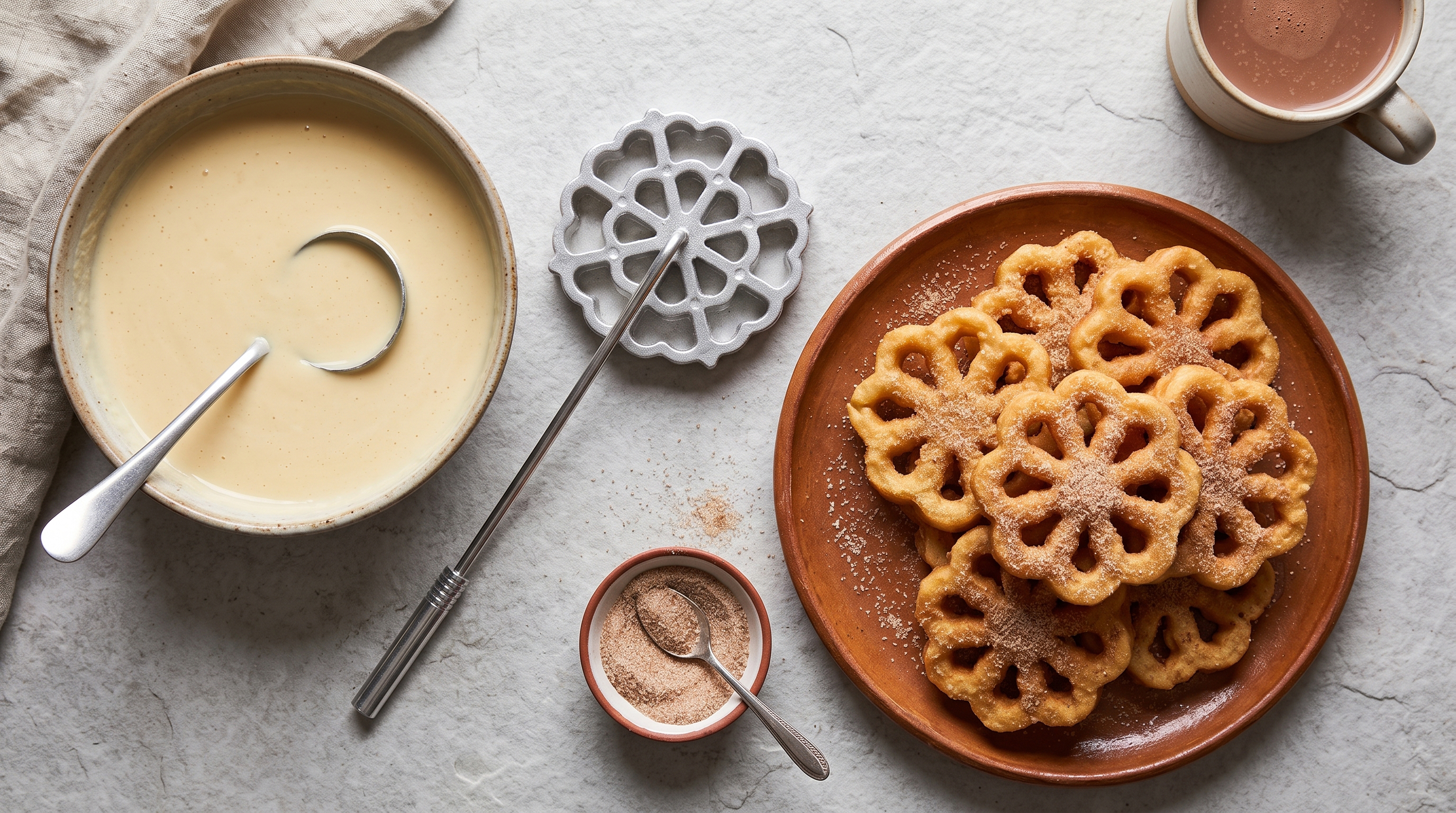
Buñuelos de viento are sometimes confused with sopapillas, another fried dough popular in Mexican-American and Southwestern U.S. cuisine. The two are related but not the same: sopapillas are a leavened dough cut into pieces and fried into puffed pillows, while buñuelos de viento get their lacy, flower-like shape from being formed on a mold before frying. Sopapillas are more closely associated with Mexican-American and Southwestern U.S. cooking than with Mexico itself, though similar fried doughs appear in Mexican cooking under other names, including buñuelos.
Buñuelos de viento are also distinct from beignets, a French-origin fried dough pastry that’s typically square and dusted with powdered sugar. Beignets and sopapillas are similar in concept — both are pillowy fried dough — but differ in dough style and tradition, and neither is made with a rosette mold the way buñuelos de viento are.
Buñuelos de viento are traditionally served warm, right after frying, dusted with cinnamon sugar or drizzled with a syrup such as piloncillo or honey. They are light, crisp, and slightly sweet on their own, with a delicate, almost airy texture from frying — the cinnamon-sugar coating adds most of the sweetness. They are especially common during Christmas and Día de los Muertos, and are often made in batches for family gatherings, alongside other traditional treats like flan, churros, and tres leches cake.
Ready to make your own? The full batter recipe and mold technique are in the Buñuelos de Viento Recipe and the Bunuelos Mold Guide.
Available in two sizes — both share the same cast aluminum construction and detachable, two-position handle.
$22.99
Buy Now on Amazon
$26.99
Buy Now on AmazonNote: prices and specifications reflect each listing at time of writing — confirm current price and availability on Amazon before publishing.
Now that you know what a buñuelo de viento is, choose your mold size and follow the technique guide for the crisp, lacy shell they’re known for.